


Robert Jenssen at the opening of SFI Visual Intelligence. PHOTO: JONATAN OTTESEN / UIT
The official opening of SFI Visual Intelligence was successfully arranged as a digital event today. We are now ready to commence our research and innovation to tackle some of the large challenges in deep learning and AI, along with our partners.
The new Center for research-based innovation, Visual Intelligence, was officially opened today. The center researches artificial intelligence in close collaboration with business and health trusts, and will develop future solutions with a budget of NOK 300 million.

The UiT Machine Learning group and its research environment has been given the status of Center for Research-based Innovation (SFI) - with an allocation of up to NOK 96 million over eight years from the Research Council of Norway. With the support of their user partners, they have a total of NOK 294 million to develop artificial intelligence and image analysis for the future. On Thursday 14 January, they marked the opening of the new SFI with a digital event.
- Starting Visual Intelligence is something we have been looking forward to with great joy and enormous enthusiasm, says center leader and professor at UiT Robert Jenssen.
We have assembled a team of outstanding researchers and partners from academia, business and the public sector. The interdisciplinary approach and our complementary areas of expertise are a key to success, says center leader and professor Robert Jenssen.

UiT's rector Anne Husebekk had the honor of opening the center.
- I am incredibly proud to open a new SFI under the auspices of UiT, says Husebekk.
She talks about the technological development that has taken place since she started as a young researcher in medicine, and studied one cell at a time. At the end of her research career, eight years ago, it was possible to study millions of cells at once.
- And if you can then see millions of cells in many different experiments at once using images from artificial intelligence, you will see something completely different! It is the main point that makes machine learning and artificial intelligence so useful - it is a field of research that adds to usability, both in medicine and many other areas, says Rector Husebekk.
Visual Intelligence will further develop the field of visual intelligence - deep learning from images by artificial neural networks - beyond what is possible with current technology. The approach to the center is interdisciplinary and will create value across innovation areas where analysis of complex image data will have great utility value.
The center will develop better tools for, among other things, detecting heart disease and cancer, monitoring and detecting natural resources such as fish stocks, and monitoring the environment and climate, risks and potential natural disasters. The activities will thus contribute to solving important societal challenges related to health, resource management and environmental and climate monitoring.
Analysis and image data bring the different innovation areas together.
- The analysis methodology we develop in one area can often be useful in other innovation areas. For example, a method for finding cancerous tumors in the body with artificial intelligence could also be used to categorize fish species, says the center's leader, Robert Jenssen.
- With the new status as SFI, we can continue to be a leader nationally and internationally in this type of research, in collaboration with our research partners, the Norwegian Computing Center and the University of Oslo, says Jenssen.
Jenssen heads the center together with the co-directors Line Eikvil and Anne Solberg at the Norwegian Computing Center and the University of Oslo, respectively.
The center is a consortium of major players as its user partners, which cover a wide range of private and public sectors. The University Hospital in Northern Norway, the Norwegian Cancer Registry, GE Vingmed Ultrasound and Helse Nord IKT represent the health field. Equinor covers the energy field and the Institute of Marine Research represents the marine. Within Earth observation, the partners are KSAT and the company Terratec.
- With the help of this special composition of partners, we get close to the issues that are important for these major partners. Through close collaboration, we learn to know their challenges and understand more easily how we can develop solutions they need, says Jenssen.
Media contact person on the occasion of the opening of Visual Intelligence: Robert Jenssen.
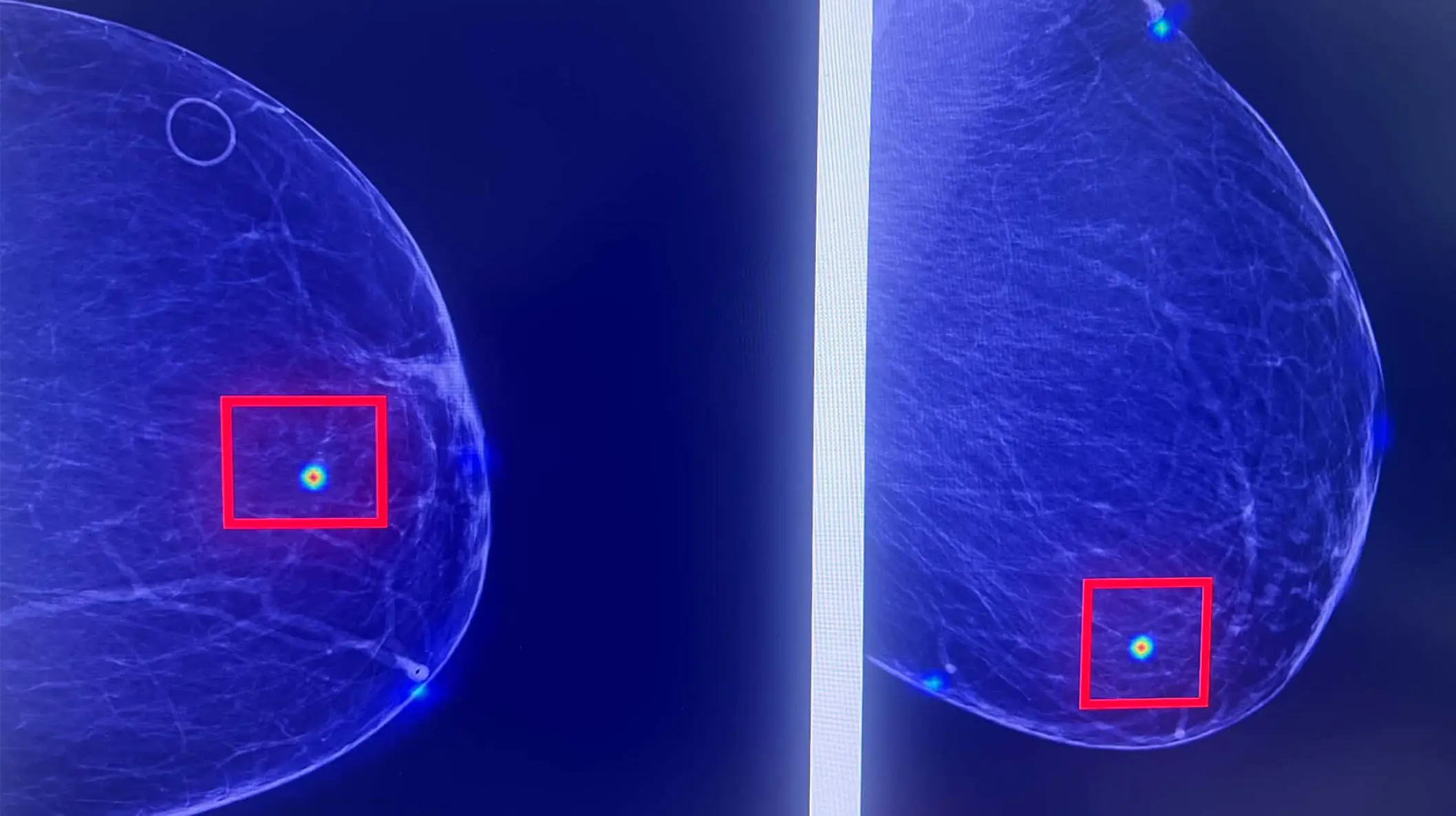
Forskere har utviklet KI til å forutsi risikoen for å få brystkreft innen ett til fem år (Norwegian popular science article on forskning.no).
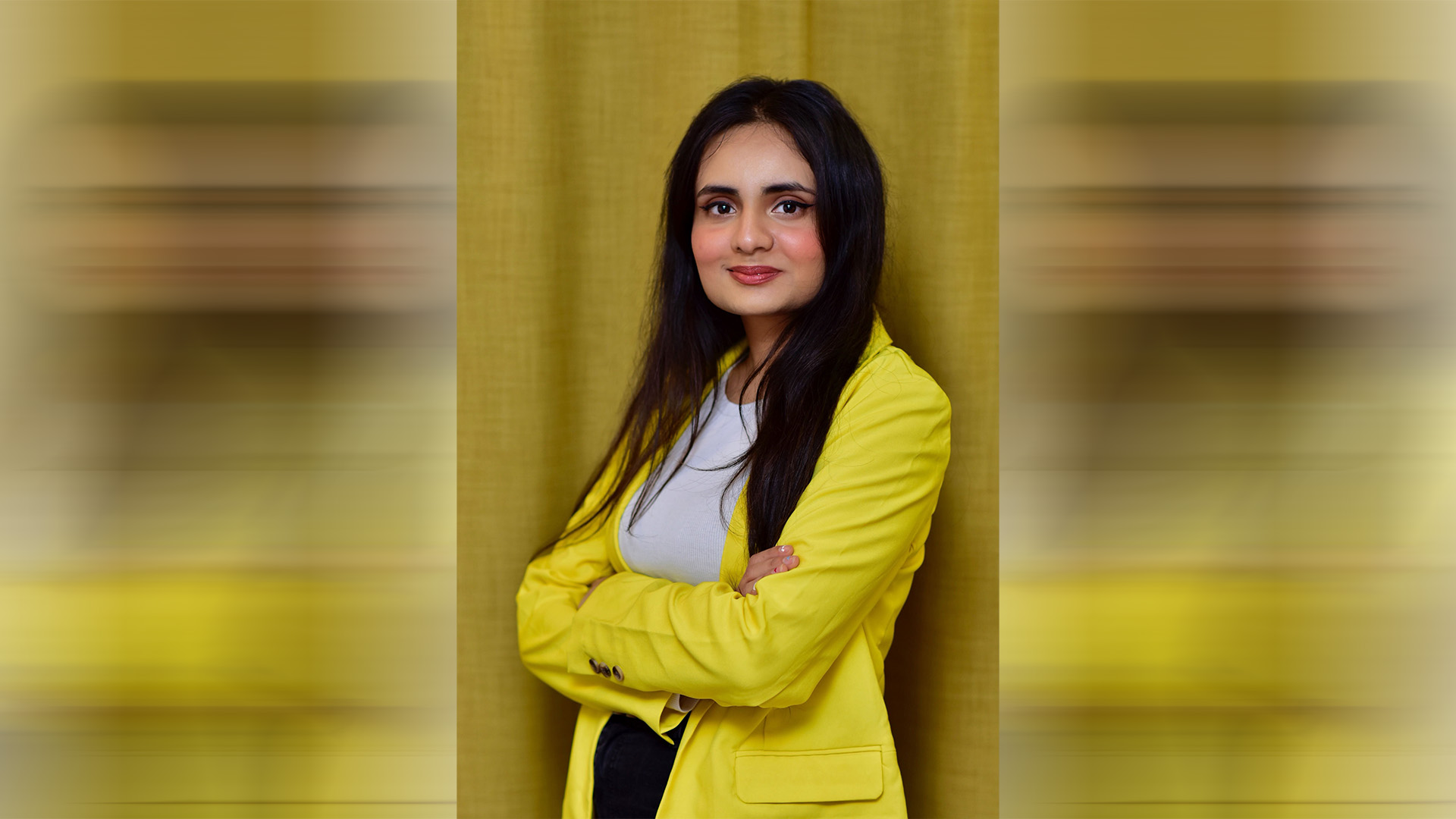
We congratulate PhD Fellow Suaiba Salahuddin, who will start as new Head Engineer at the Climate-Ecological Observatory for Arctic Tundra (COAT)
.jpg)
Researchers at Visual Intelligence have developed AI to predict the risk of getting breast cancer within one to five years. It can help detect more cases of breast cancer earlier.
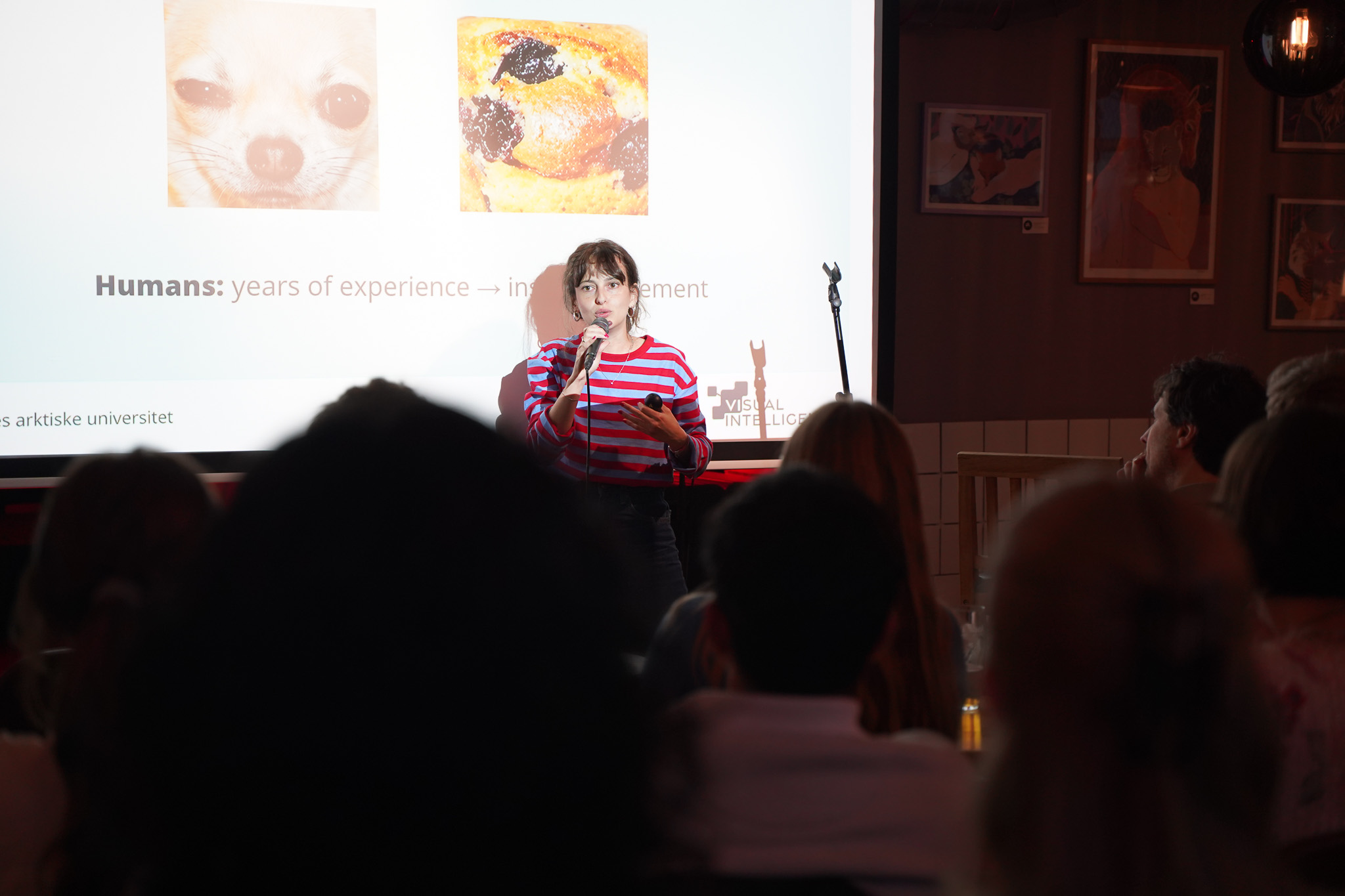
Visual Intelligence researchers contributed with various activities during Forskningsdagene 2026: Norway's annual research festival.
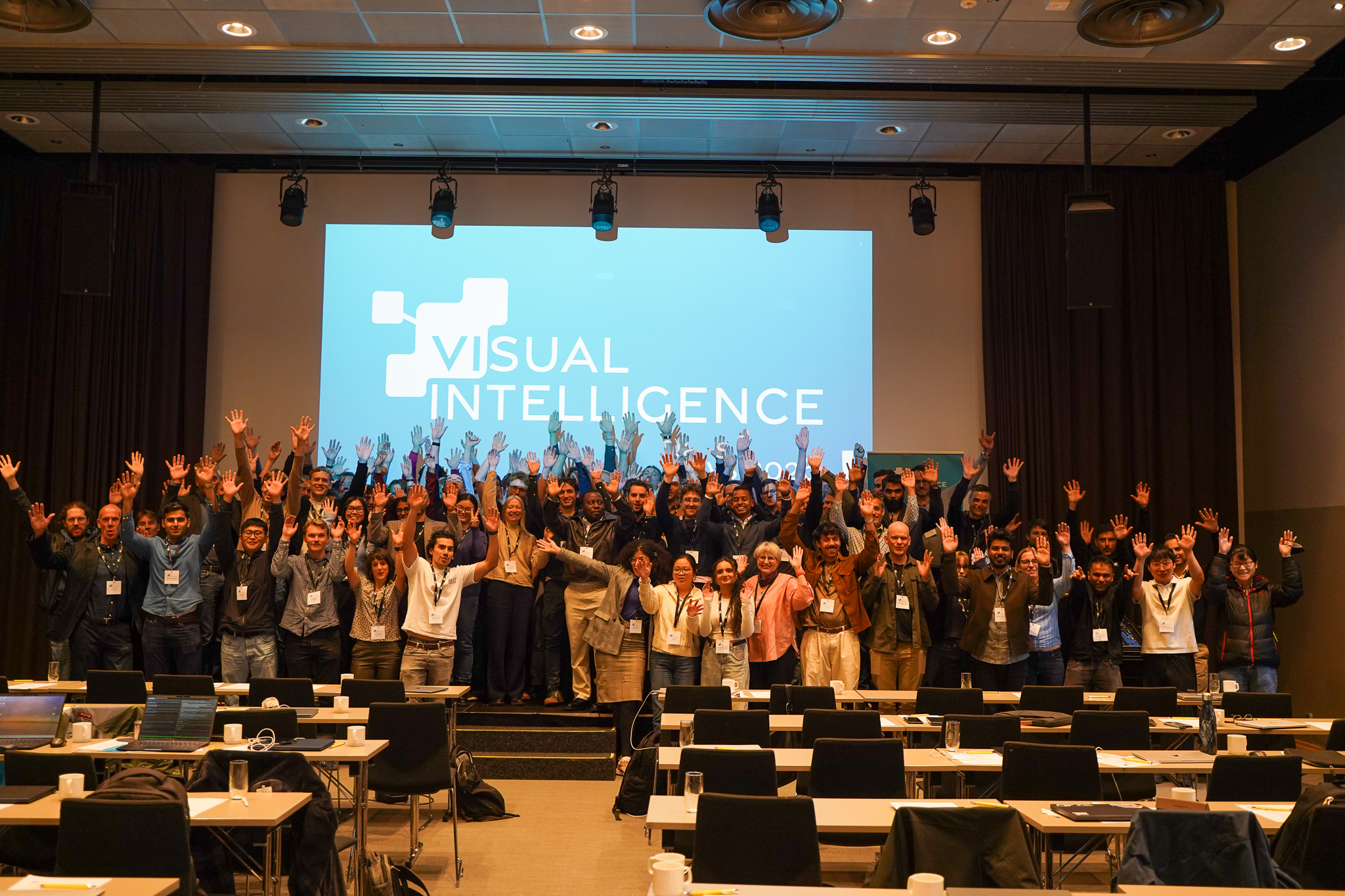
100 researchers, user partners and invited guests gathered in Oslo, Norway for the Visual Intelligence Days: the centre's annual conference for sharing knowledge and updates on the latest research and innovations.
Why should we think twice before using AI as a therapist, romantic partner, or to help out with homework? AI expert Elisabeth Wetzer explains (Popular science article on sciencenorway.no / forskning.no).

Associate Professor Kristoffer Wickstrøm was interviewed by Norsk rikskringkasting (NRK) about the ongoing debate on whether to halt current and future AI development
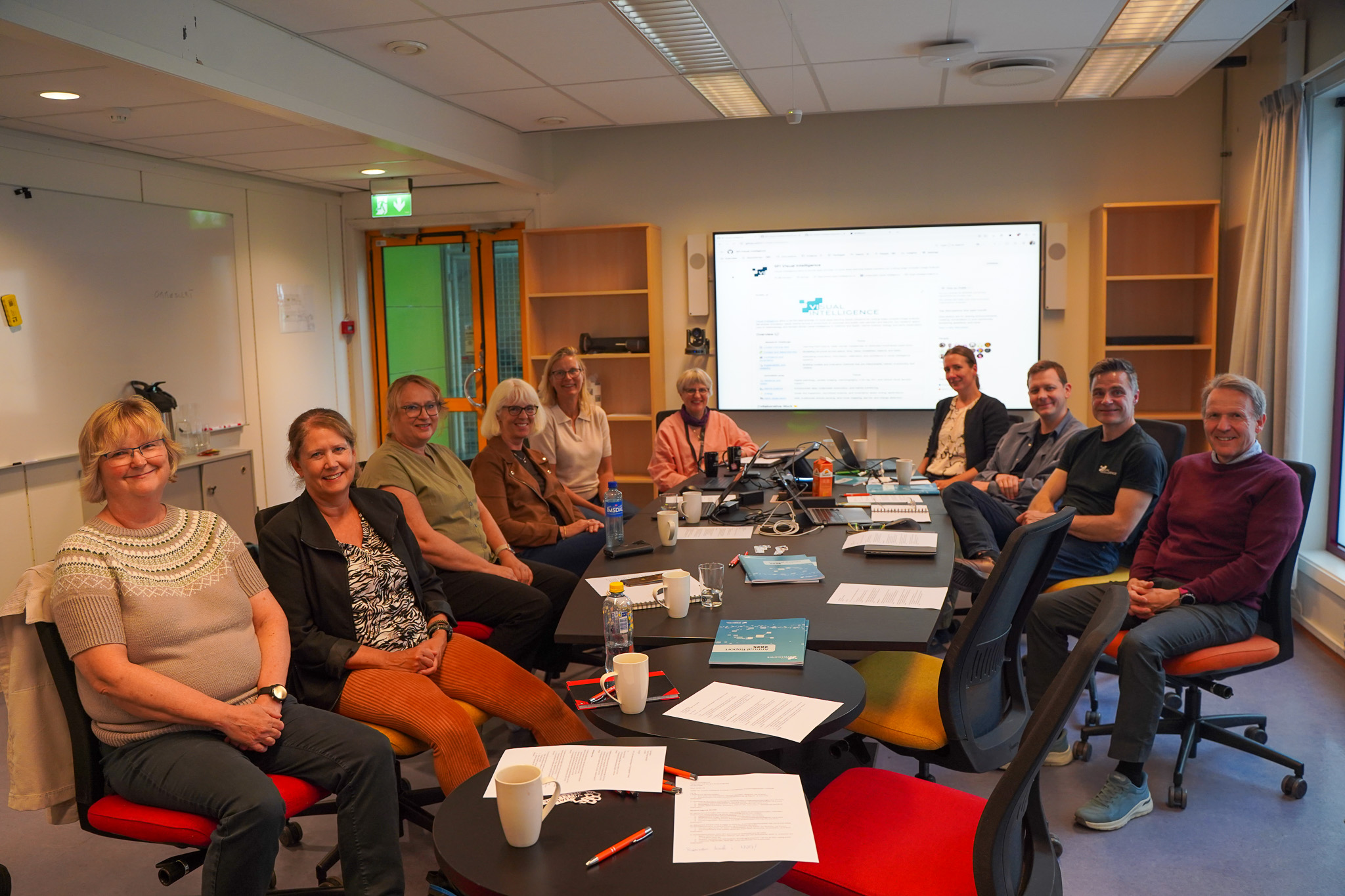
Representatives from the Research Council of Norway came to Visual Intelligence's hub in Tromsø for a site visit meeting.
.jpg)
Harald Lykke Joakimsen, a PhD Candidate at Visual Intelligence's hub in Tromsø, will compete in Forsker Grand Prix: Norway's national popular science competition.
.png)
Congratulations to Centre Director Robert Jenssen, who was appointed as a new fellow of the International Associaton for Pattern Recognition (IAPR).
.jpg)
Why should we think twice before using AI as a therapist, romantic partner, or to help with homework? AI expert Elisabeth Wetzer explains.
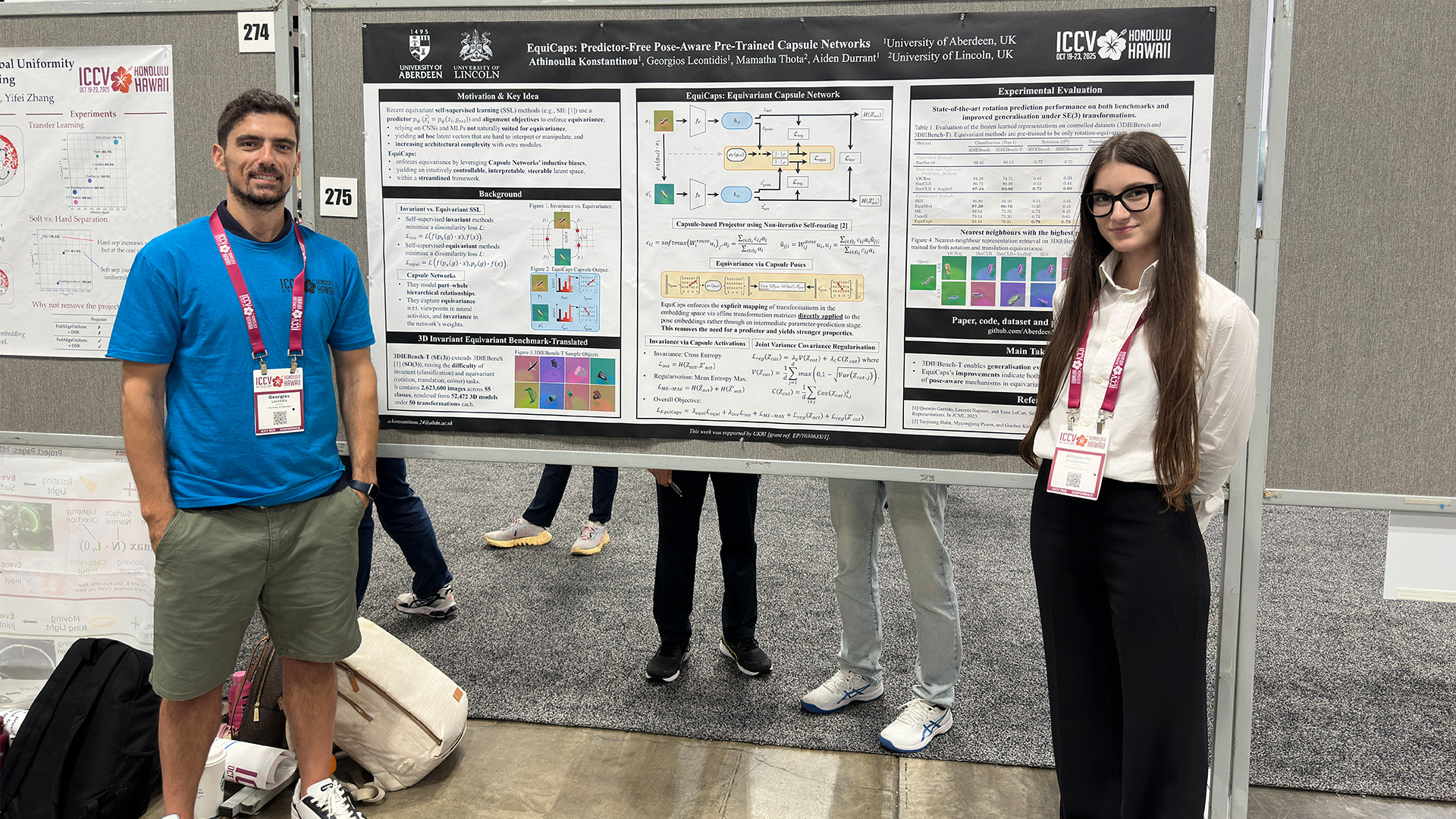
Athinoulla Konstantinou is a PhD student at the University of Aberdeen. She visited Visual Intelligence's hub in Tromsø to work with equivariant modelling.
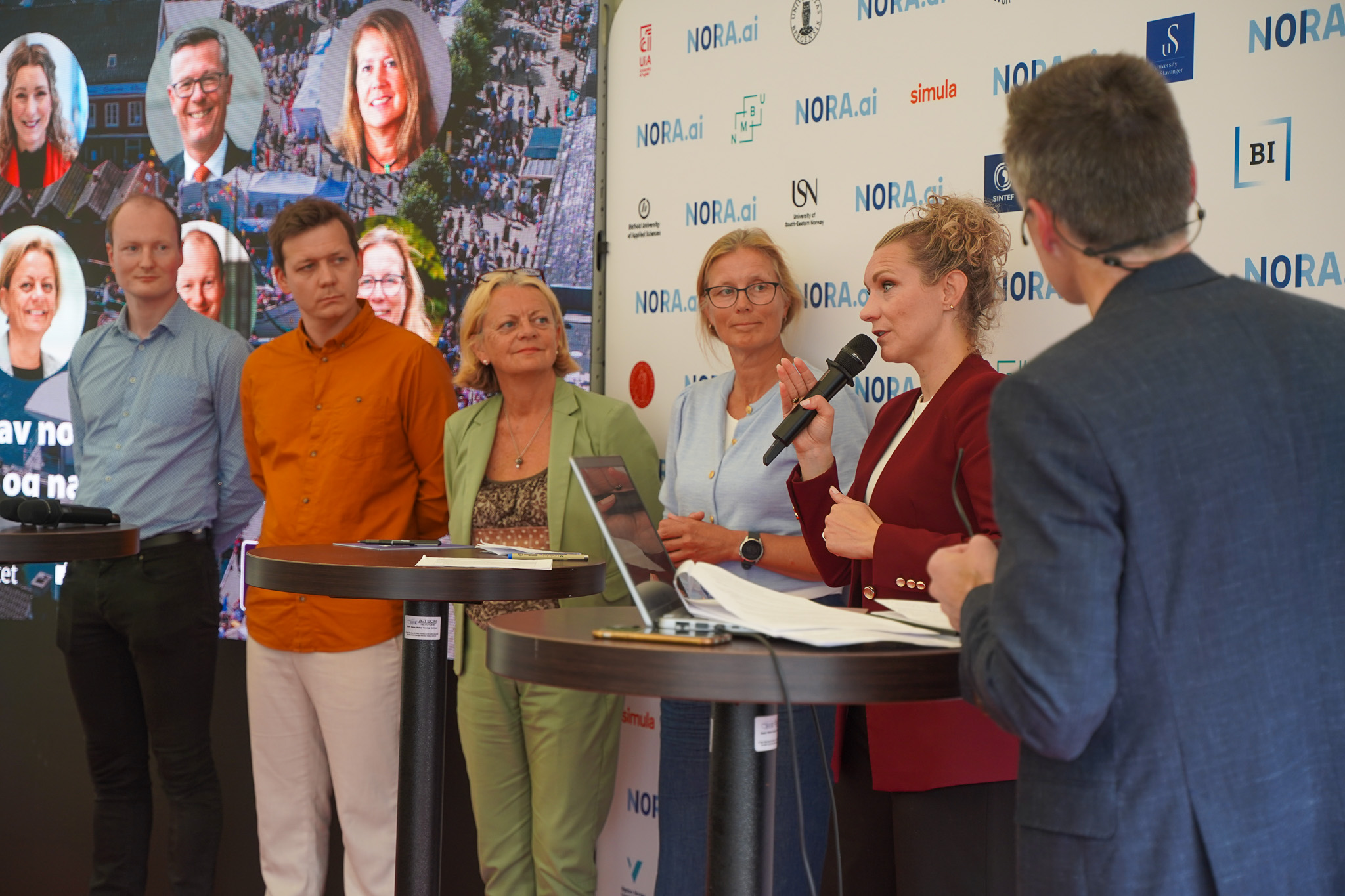
Visual Intelligence gathered experts from Norwegian politics, research council, industry, the public sector, and academia to discuss the value of Norwegian AI competence and Norwegian-developed models.

Visual Intelligence researchers are attending two AI-oriented events at Arendalsuka 2026: Norway's largest annual political festival.
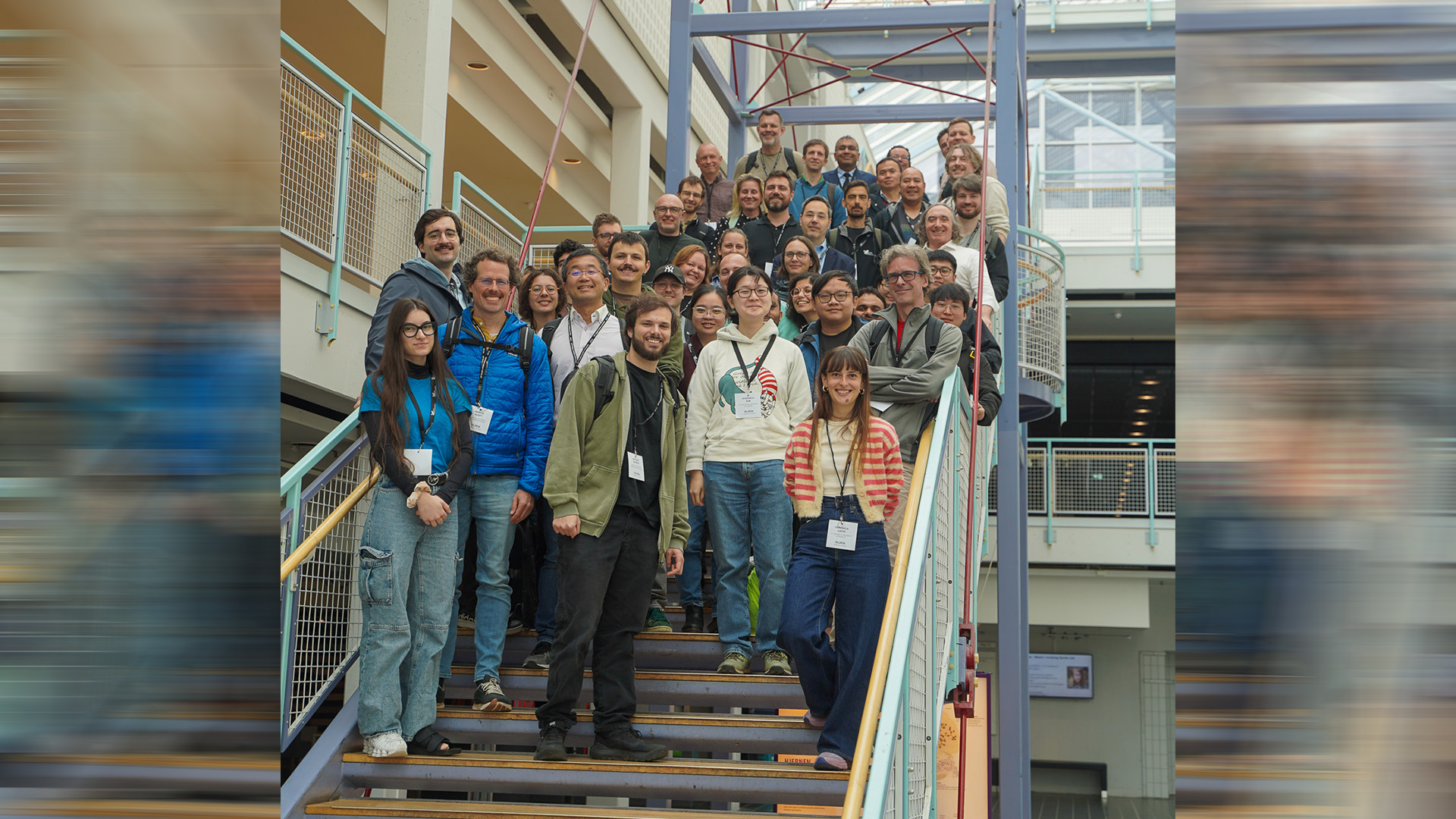
Visual Intelligence hosted over 45 international AI researchers for the DL2026 workshop at UiT The Arctic University of Norway.

Visual Intelligence will be well represented at MICCAI 2026, one of the leading AI conferences on medical imaging and computer assisted intervention, with two accepted research papers.
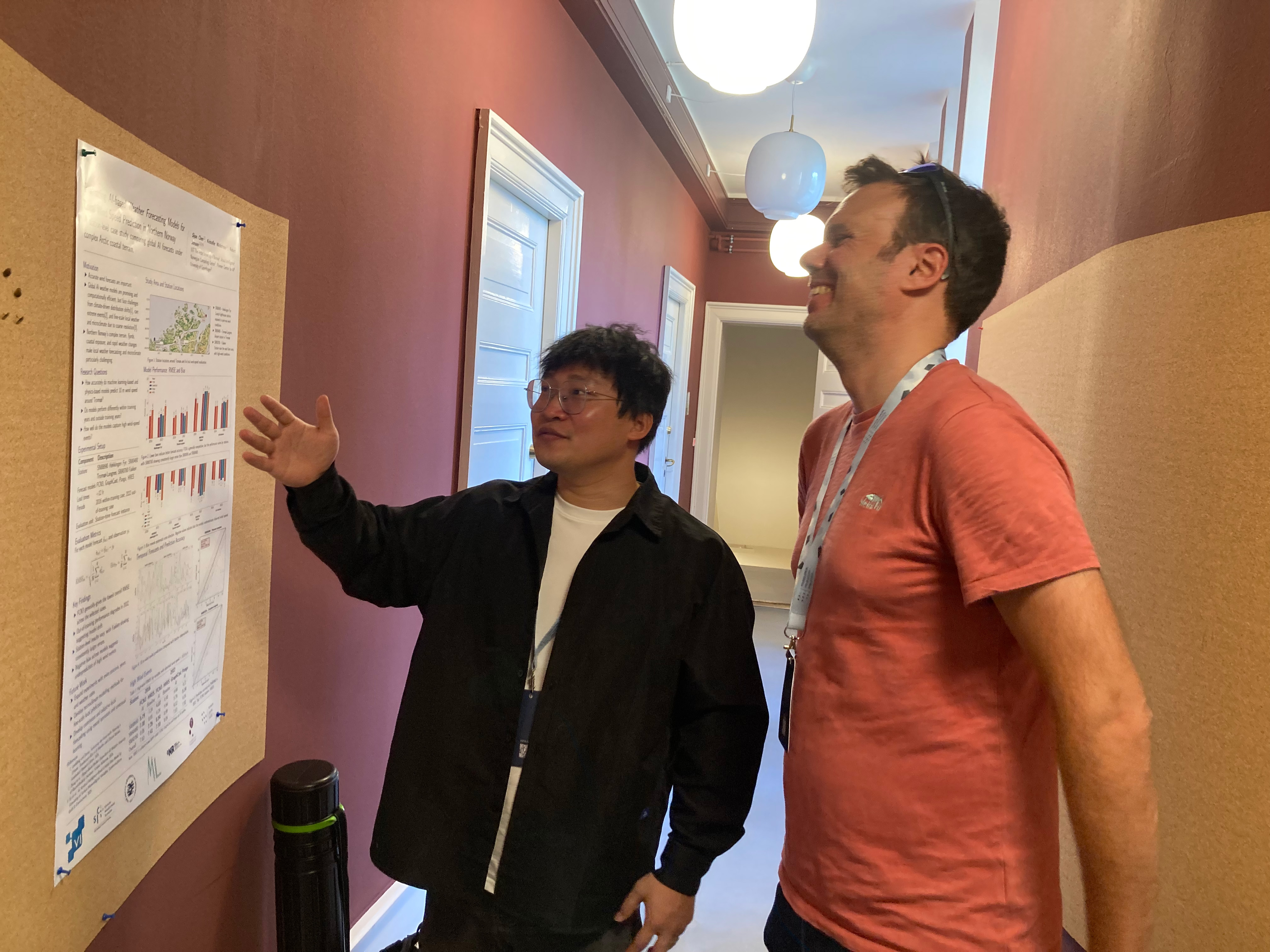
Visual Intelligence co-organized and attended the "Foundations of Arctic AI and Generative Forecasting": an inaugural workshop in the P1 Arctic AI program.
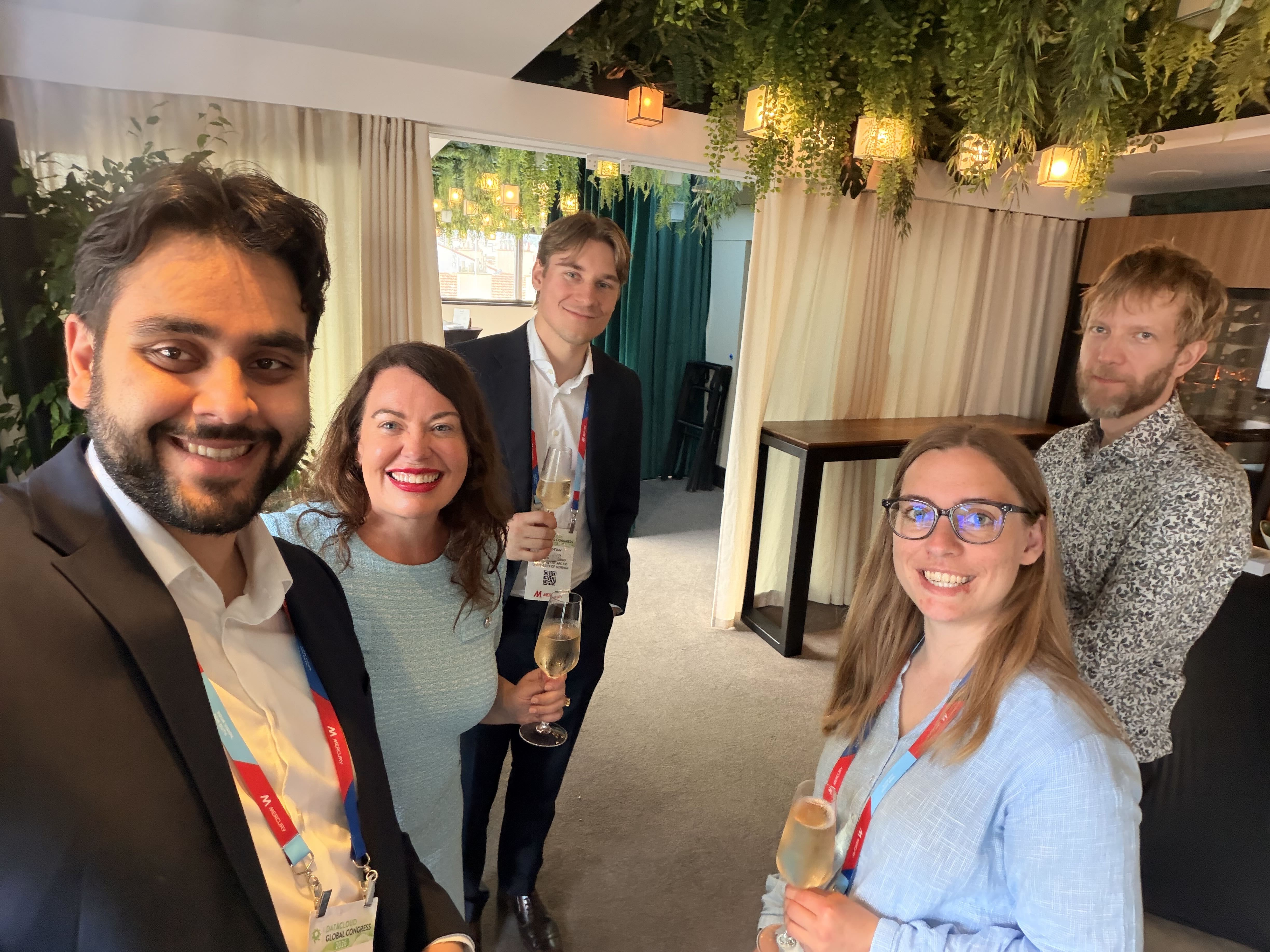
PhD Candidates Solveig Thrun and Christian Salomonsen attended the Datacloud Global Congress' Talent in Tech programme, which invited emerging talent to a unique programme designed to inspire, educate, and connect young professionals with senior leaders from global tech giants.
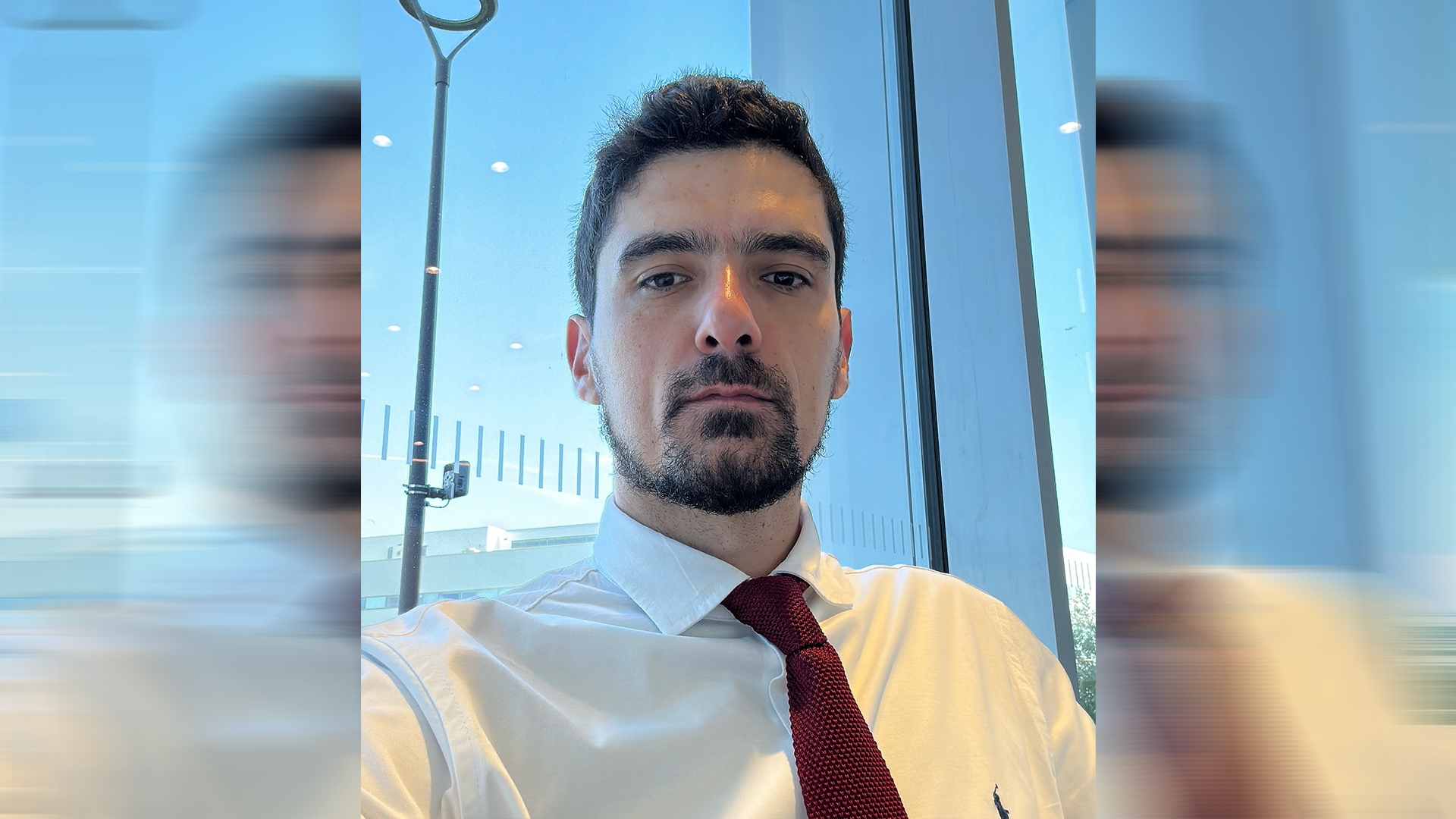
We warmly welcome Georgios Leontidis as a new Professor at SFI Visual Intelligence's hub at UiT The Arctic University of Norway.

Centre Director Robert Jenssen was interviewed by Norsk rikskringkasting (NRK) about the Japan-Norway AI Innovation Forum in Tokyo, Japan.