

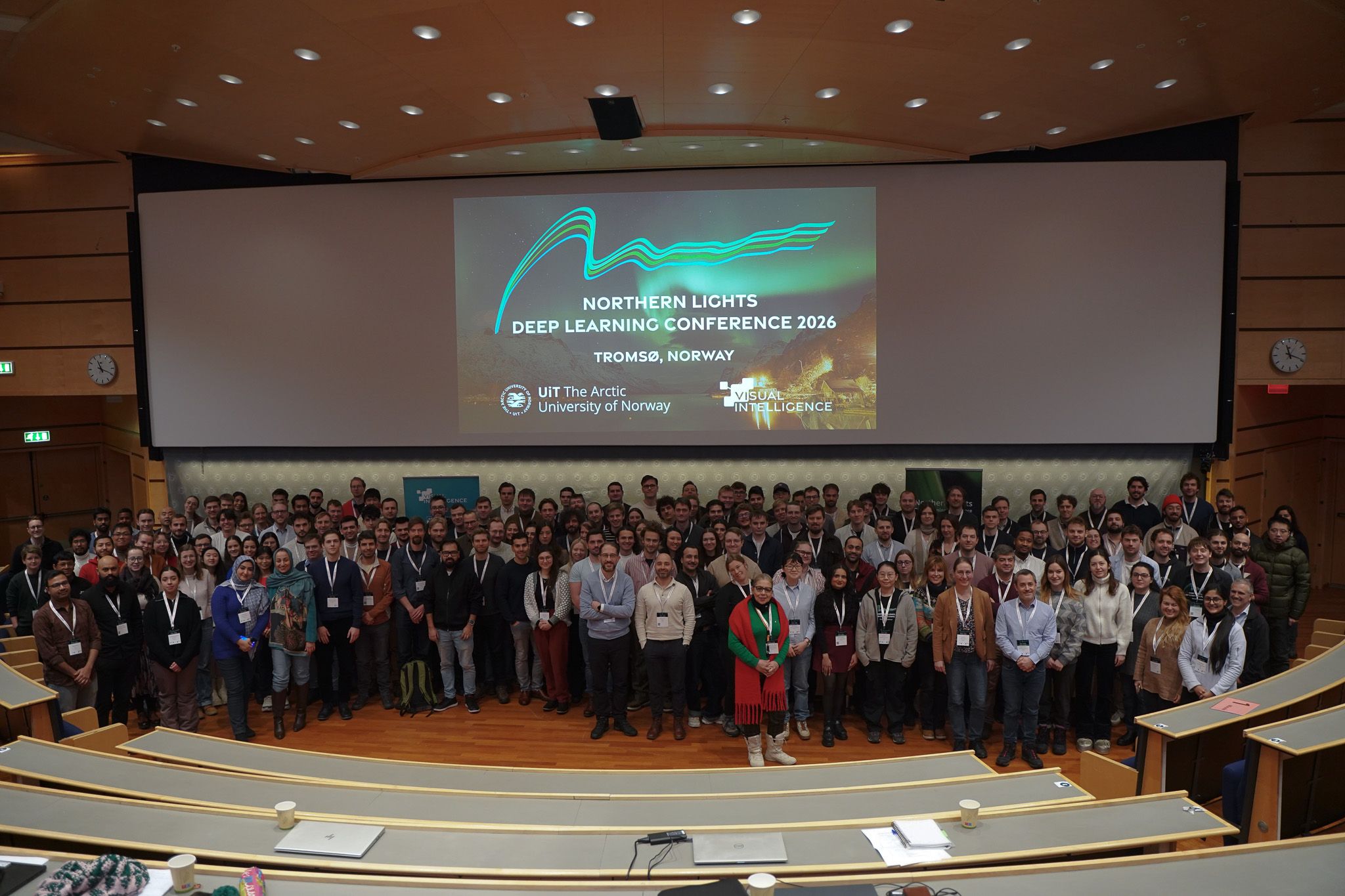
280 deep learning researchers convened for the Northern Lights Deep Learning Conference 2026.
Attracting 280 international AI researchers, the Northern Lights Deep Learning Conference (NLDL) 2026 was successfully organized from January 5th to 9th 2026 at UiT The Arctic University of Norway in Tromsø, Norway.
Attracting 280 international AI researchers, the Northern Lights Deep Learning Conference (NLDL) 2026 was successfully organized from January 5th to 9th 2026 at UiT The Arctic University of Norway in Tromsø, Norway.
By Petter Bjørklund, Communications Officer at SFI Visual Intelligence
NLDL is the world's northernmost deep learning science conference, and gathers researchers from both in and outside of Norway to exchange ideas, encourage collaborations and present cutting-edge research.
The 2026 edition included a solid program of high quality keynotes, Winter School tutorials, scientific showcases through oral and poster sessions, and discussions on topics such as diversity in AI, AI technologies in industry, and the European AI in Science Strategy.
Educating young and aspiring AI researchers is a core focus of the NLDL 2026 Winter School: a 5-day course with interactive tutorials by AI and deep learning experts. 175 participants from the whole world attended this year's winter school program.
The NLDL 2026 Winter School featured four expert tutorials, covering relevant topics such as multimodal learning by Kristoffer Wickstrøm, Michael Kampffmeyer and Rwiddhi Chakraborty (UiT), large language models-based co-pilots and AI agents by Mihaela van der Schaar and Anders Boyd (University of Cambridge / GGD Amsterdam), non-euclidean learning by Aiden Durrant (University of Aberdeen), and ethical challenges in natural language processing by Samia Touileb (University of Bergen).
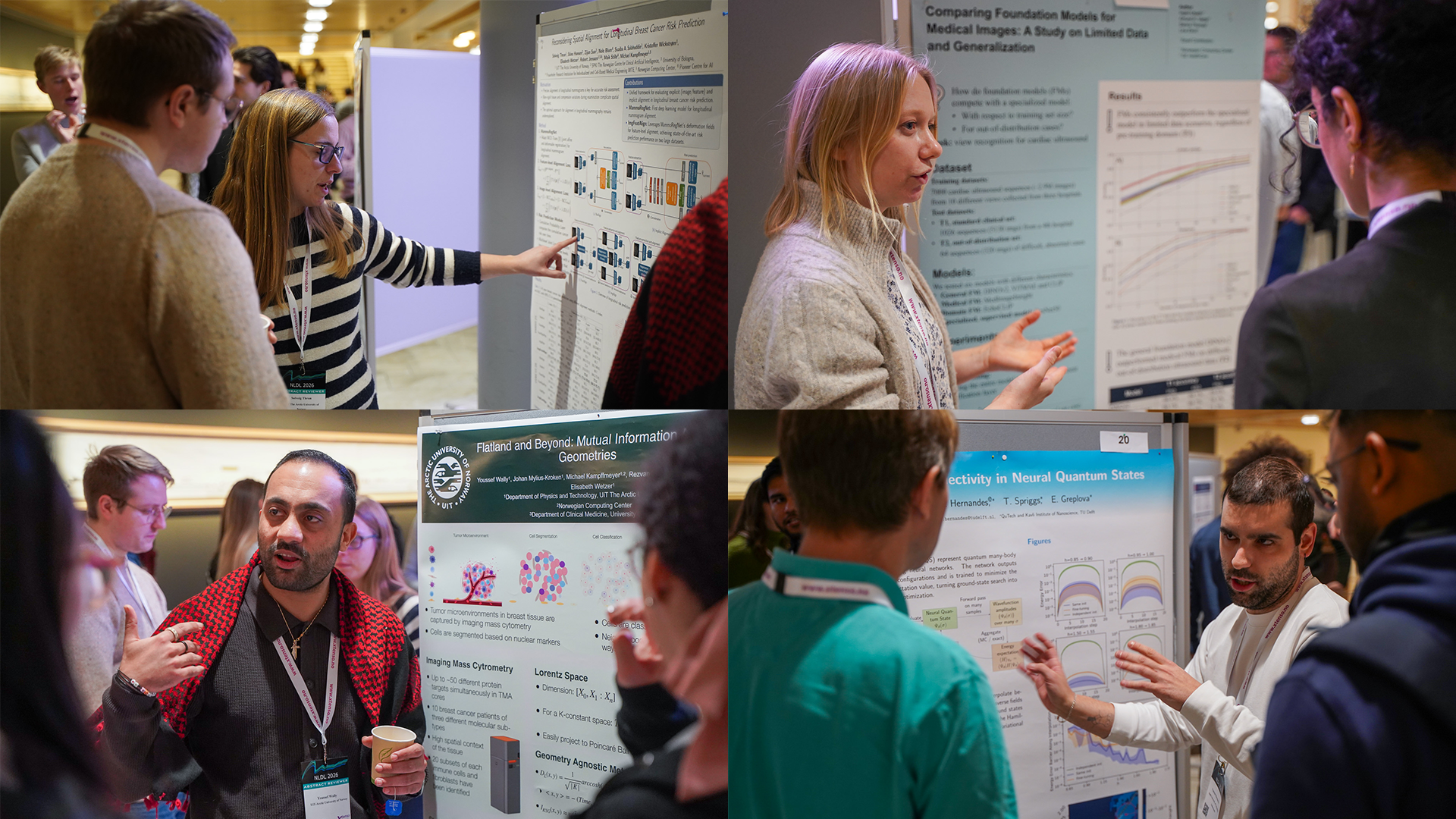
Several Winter School students also showcased their research during a dedicated poster session, spanning topics such as AI-enabled vessel segmentation, algorithms for real-time UAV flight trajectory corrections, and fine-tuning large language models for adversial attacks.
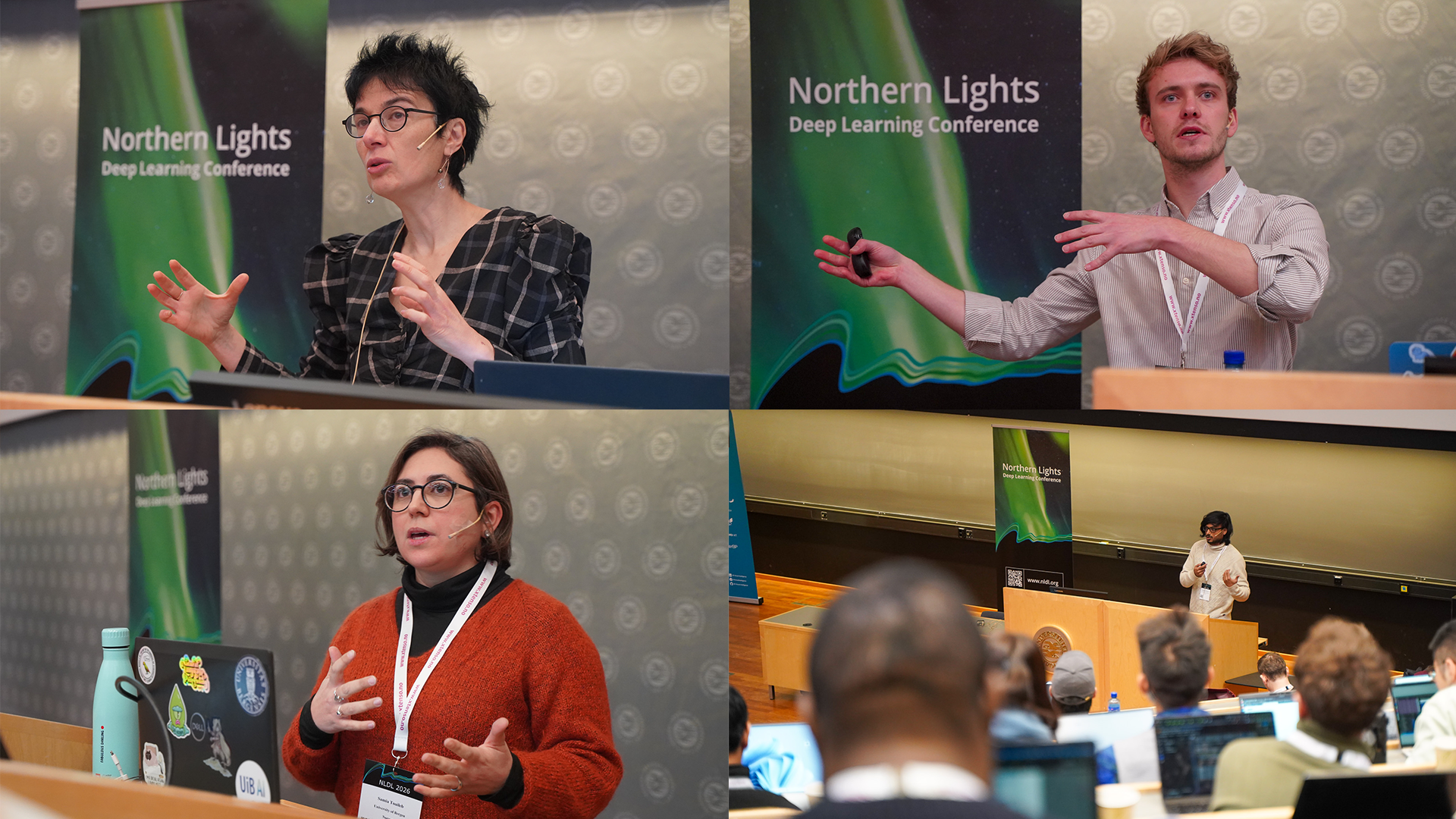
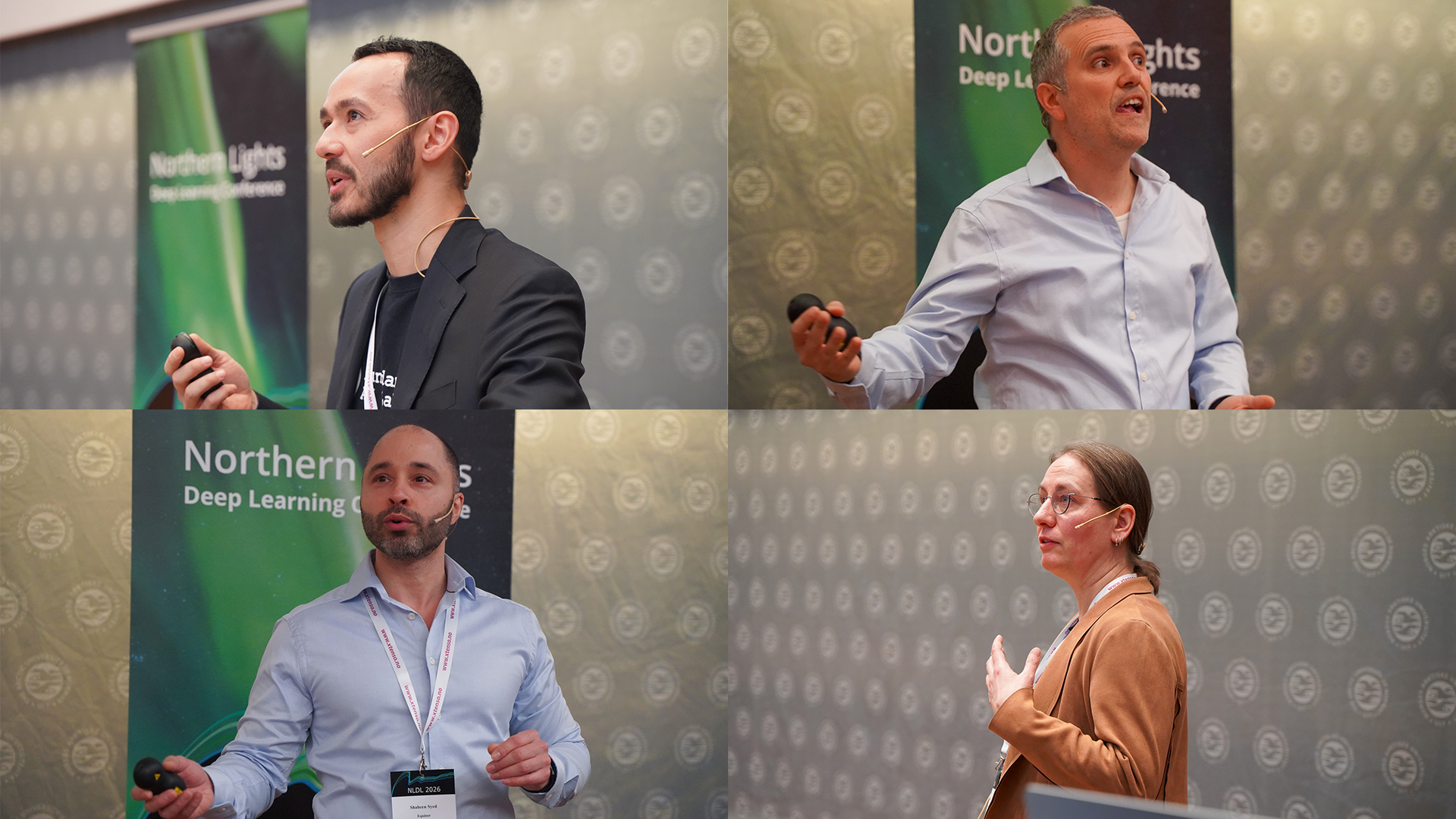
NLDL gathers high profile researchers to share their knowledge and research in Tromsø. The presented keynotes included topics such as self-supervised learning by Yuki Asano (University of Technology Nuremberg), multimodal learning for environmental sciences using masked autoencoding by Devis Tuia (Swiss Federal Technology Institute of Lausanne), robust explanations for classification, clusters and outlies by Ira Assent (Aarhus University), and AI implementations and applications for real-world challenges at Equinor by Shaheen Syed (Equinor).
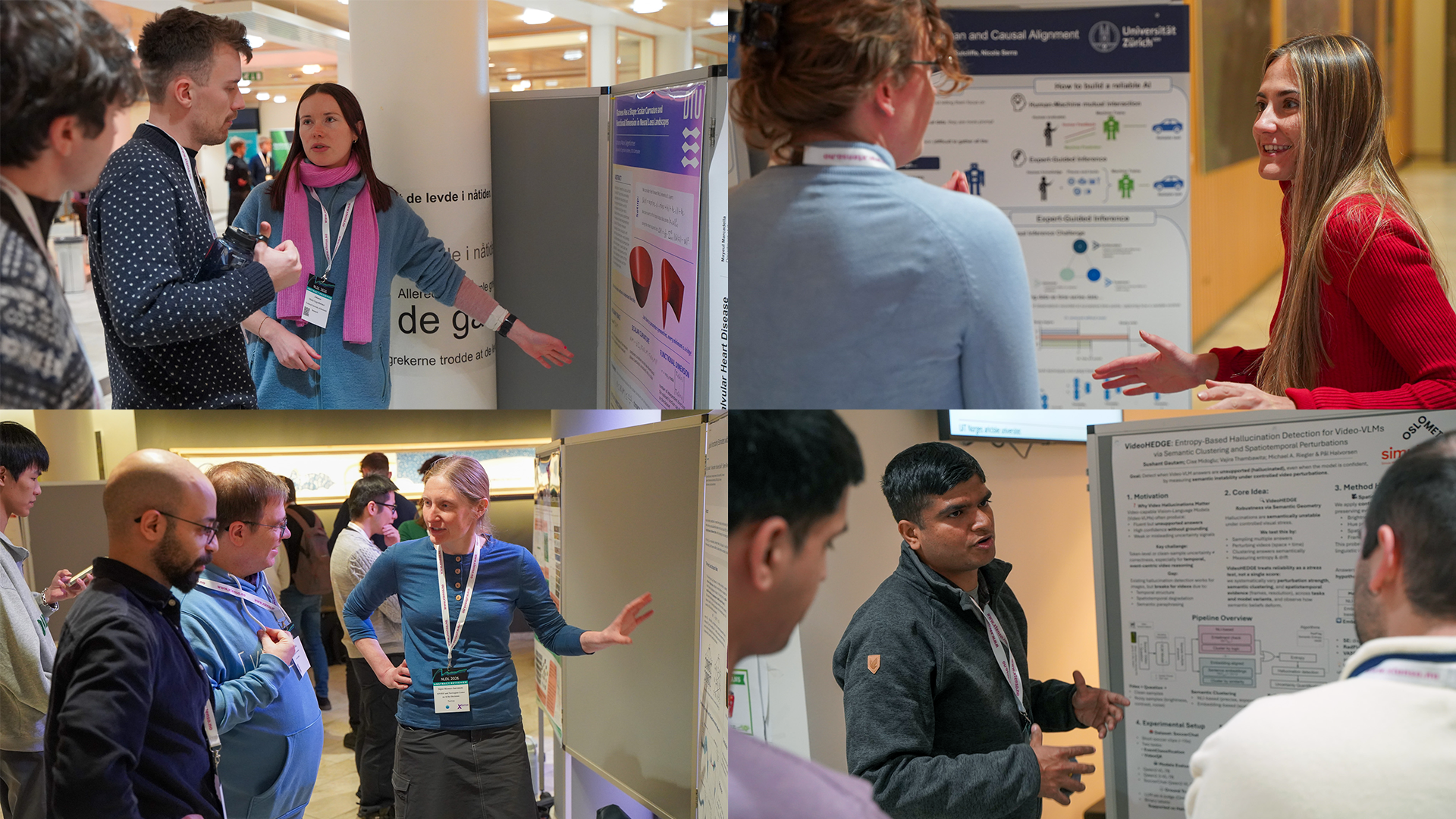
NLDL 2026 featured a high quality lineup of accepted publications, spanning intersectional topics such as foundational models for medical images, uncertainty in 3D segmentation, spatio-temporal landmark detection, large language models for low-resource languages, and oil spill detection via uncertainty-aware deep learning. The research was presented through both poster sessions and oral sessions.
NLDL strives to spreading awareness and facilitate discussion on current AI topics. This year's conference gathered experts from academia, industry, and the public sector to discuss today's disparities in AI, AI's possibilities for industry, and bottom-up perspectives on the top-down European AI in Science Strategy.
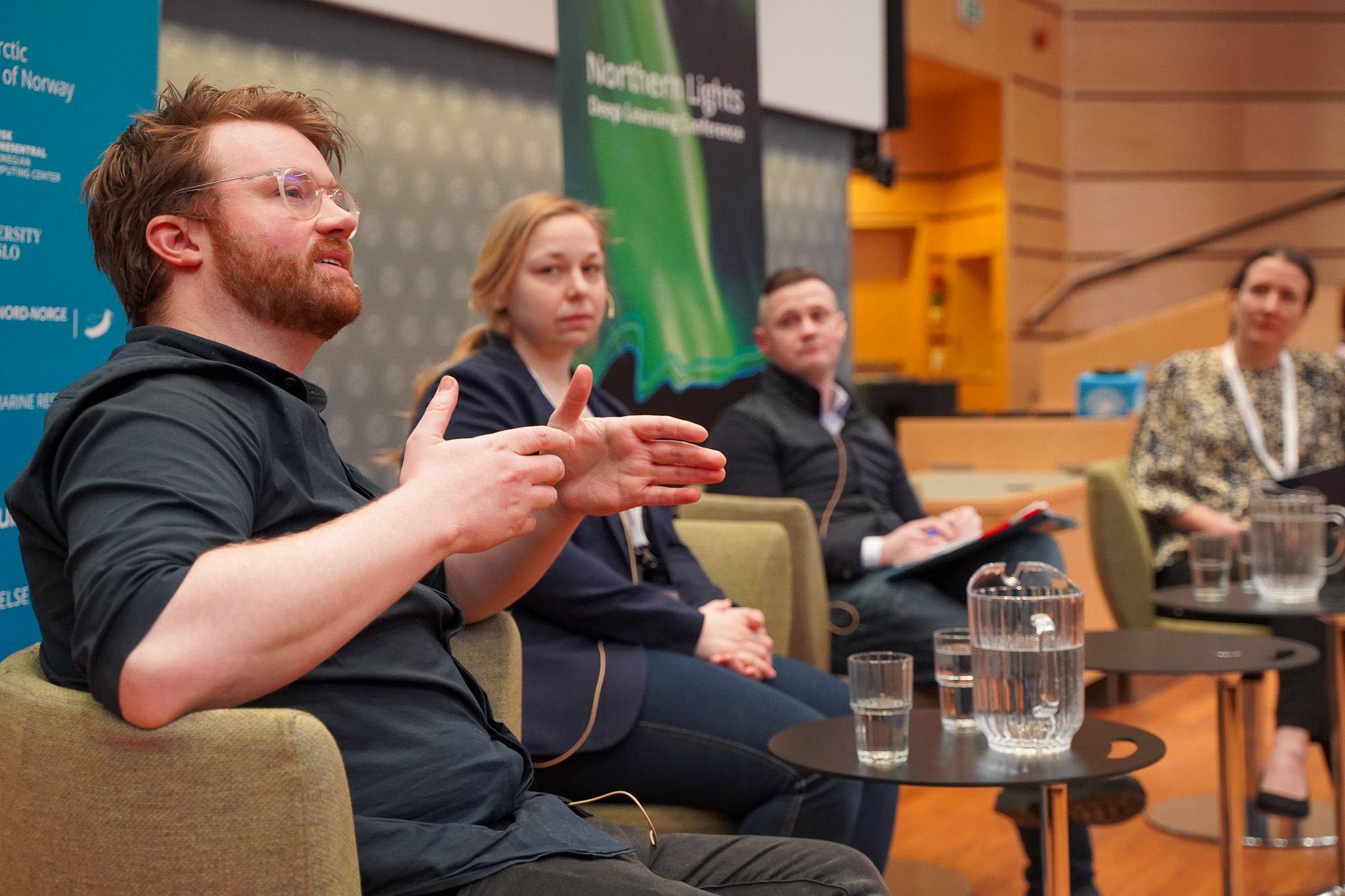
Women, LGBTQ+ people, and people with minority backgrounds are underrepresented in today's AI field. The "Diversity in AI" event delved deeper into how AI inadvertantely reflects and perpetuates societal biases, and how misinformation or flawed data leads to biased AI systems.
The topic was explored through a series of keynotes from a panel of experts – Alex Moltzau (Norwegian Digitalization Agency), Artem Galushko (UiT), and Eva Breznik (KTH Royal Institute of Technology) – and was concluded with a panel discussion moderated by Associate Professor Elisabeth Wetzer (UiT).
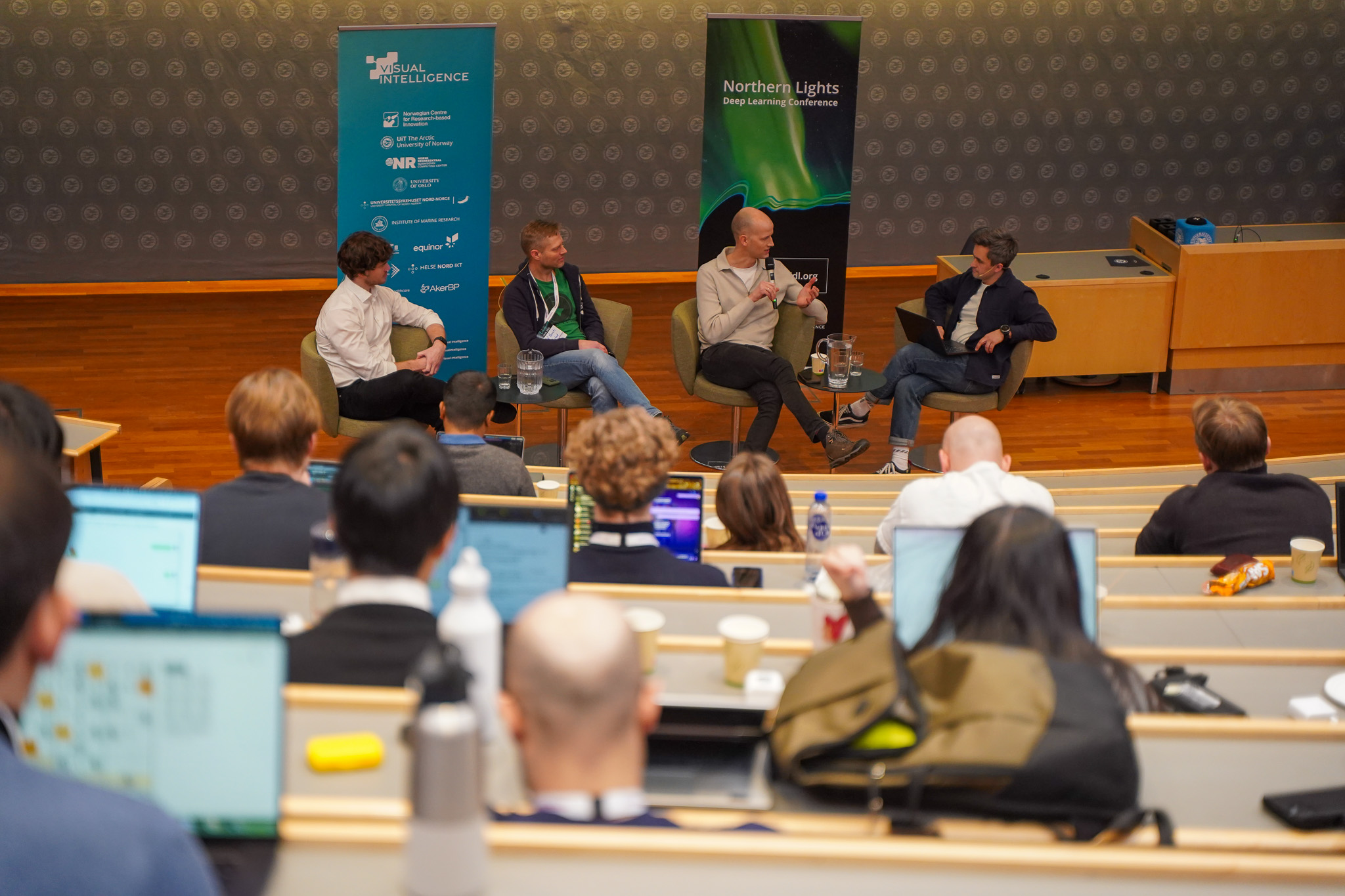
AI is becoming more adopted by industry for various purposes, such as detecting diseases in our bodies, reveal money laundering and fraud, and monitor threatened species. "Industry and AI" gathered industrial professionals Erland Grimstad (Abdera), Njål Borch (Schibsted Media), Karl Øyvind Mikalsen (Centre for Patient-Centred AI / UNN), and Bjørn Fjukstad (DIPS AS) to address important subjects related to AI's role in industry.
These topics included why AI is important for industry, how AI can provide additional value to different industrial sectors, what issues this technology can solve, and how academia and industry should collaborate to facilitate safe and sustainable AI.
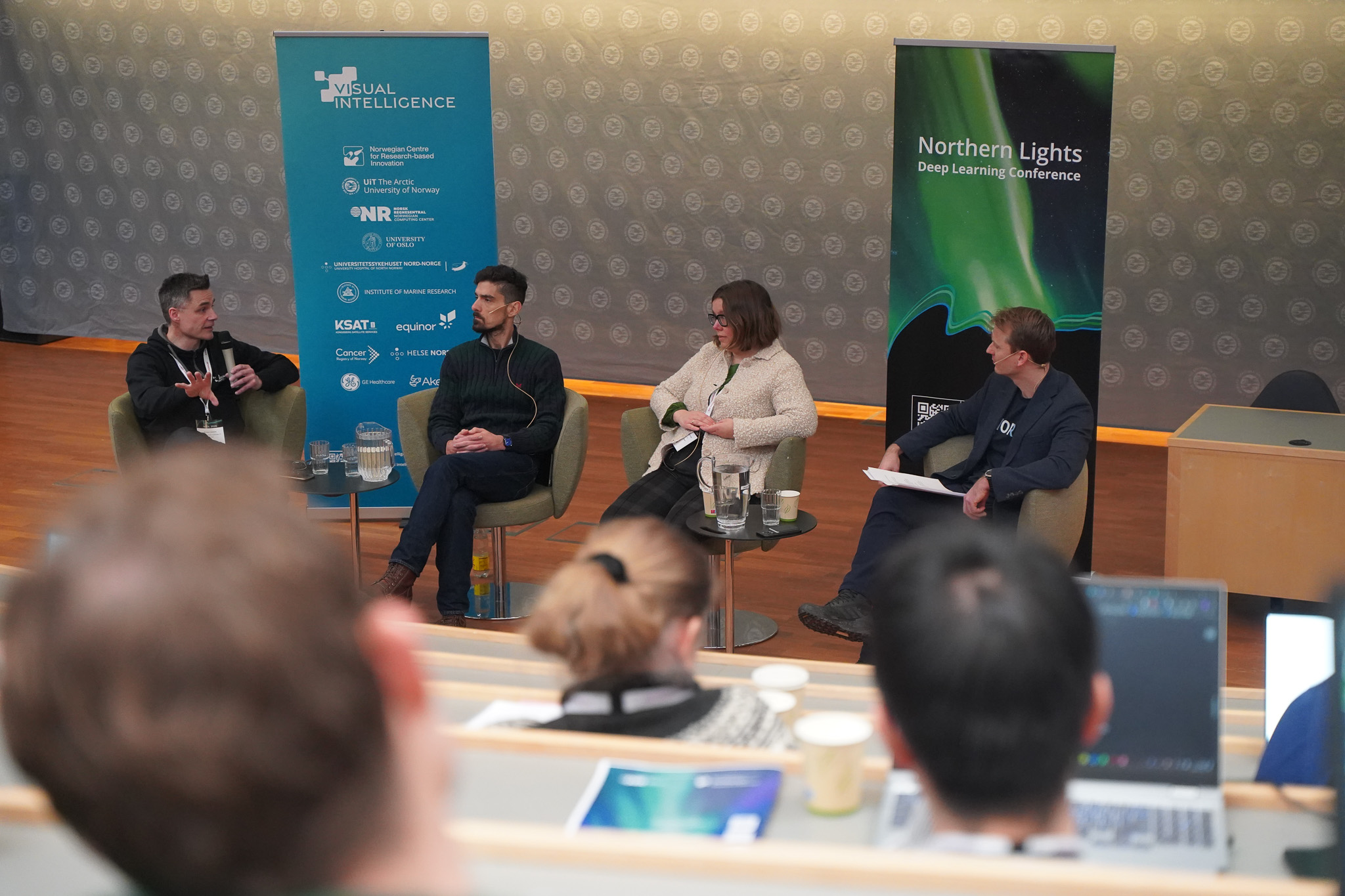
The NORA panel discussion addressed the European AI in Science Strategy, diving deeper into experts Robert Jenssen (VI / UiT), Georgios Leontidis (UiT) and Aasa Feragen's (Technical University of Denmark) bottom-down perspectives on how the strategy's top-down vision reflects the realities of AI-driven science today. The discussion was moderated by NORA CEO, Michael Solvang.
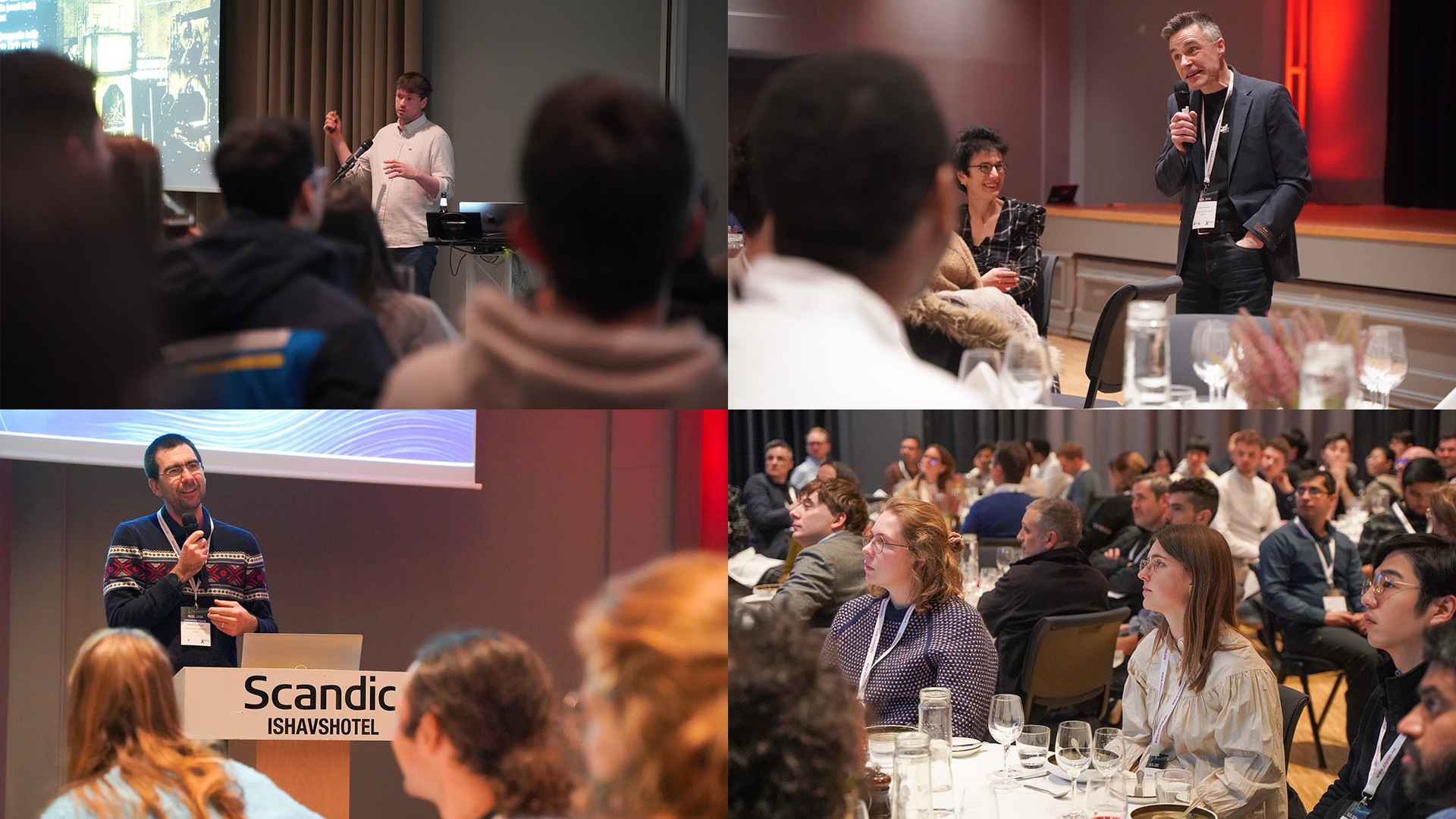
One of NLDL's main goals is to encourage attendees to getting to know each other as a way of forming new research collaborations. This year's social program consisted of an icebreaker event at Polaria aquarium, a northern lights trip to Sommarøy Island outside of Tromsø, a conference dinner at Scandic Ishavshotel, and the "Meet the AI Industry" social event at Storgata Camping.
General Chair Michael Kampffmeyer wishes a big thanks to all invited speakers, guests, and this year's attendees for travelling to Tromsø to participate in the 9th edition of NLDL.
The NLDL program committee is hard at work on planning NLDL 2027, which is slated for January 11th – 15th 2027. See you at NLDL 2027!
NLDL 2026 was organized from January 5th – 9th 2026 by the UiT Machine Learning Group and SFI Visual Intelligence. The conference was co-organized by NORA as part of the NORA Research School.
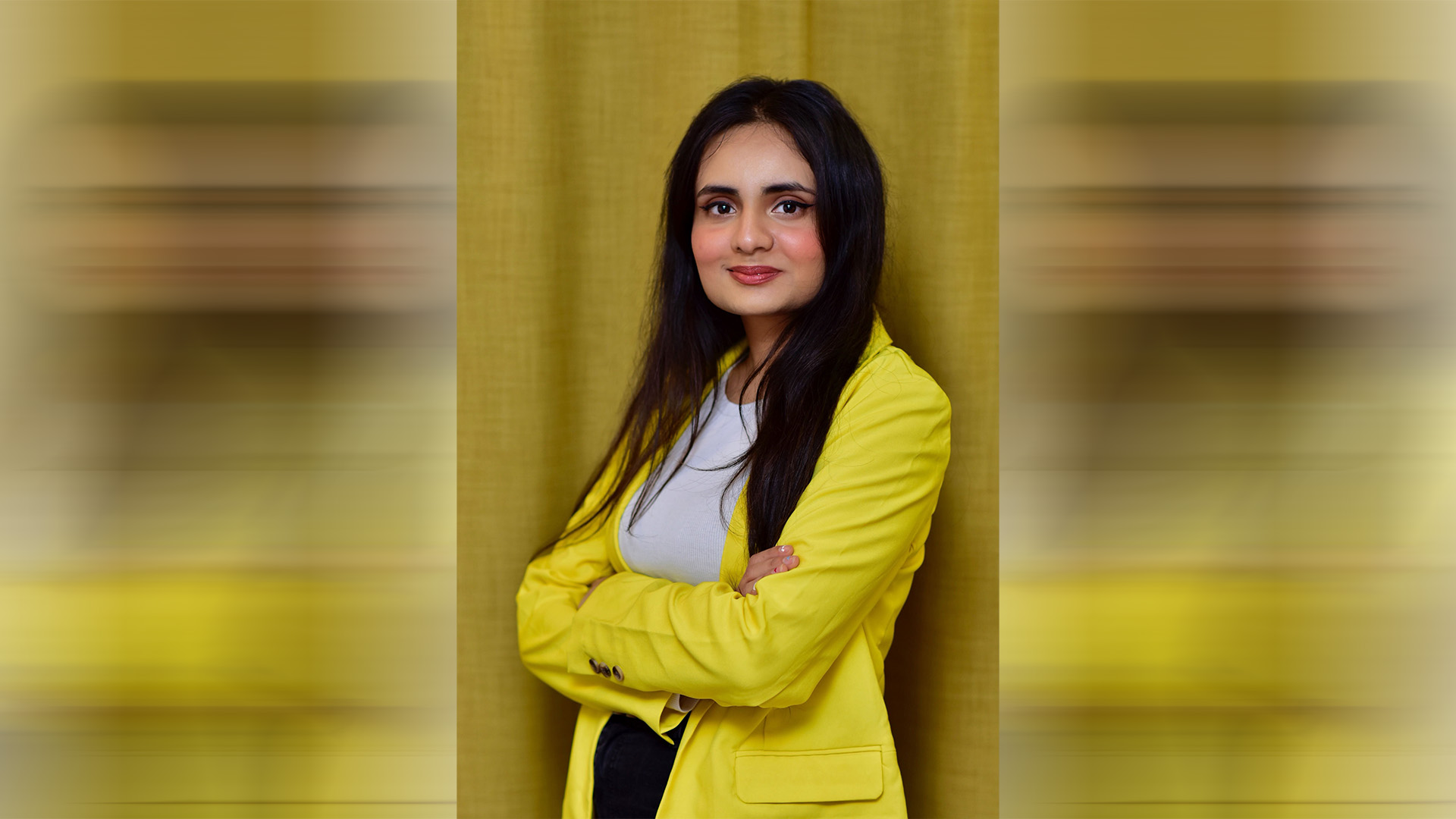
We congratulate PhD Fellow Suaiba Salahuddin, who will start as new Head Engineer at the Climate-Ecological Observatory for Arctic Tundra (COAT)
.jpg)
Researchers at Visual Intelligence have developed AI to predict the risk of getting breast cancer within one to five years. It can help detect more cases of breast cancer earlier.
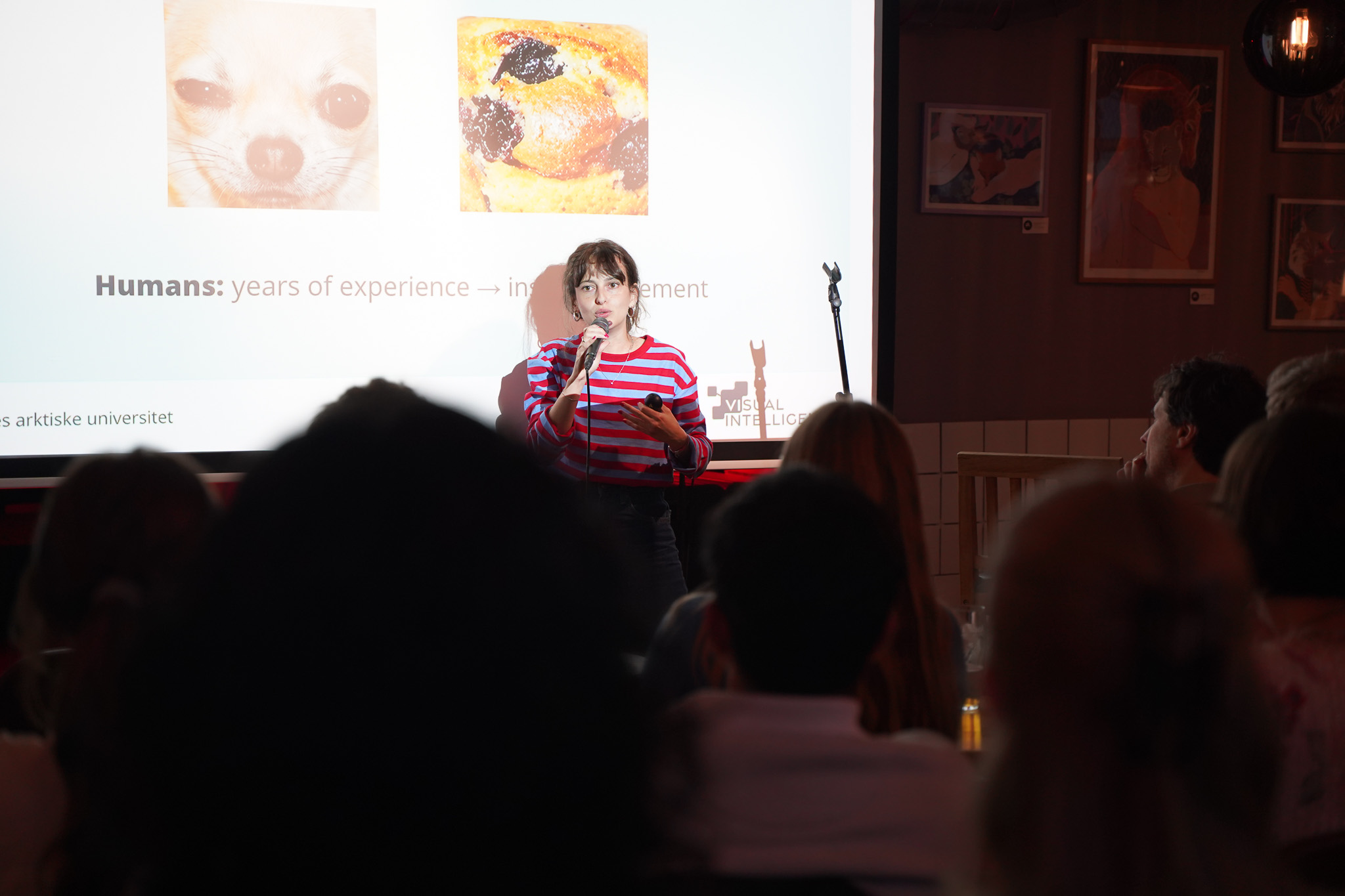
Visual Intelligence researchers contributed with various activities during Forskningsdagene 2026: Norway's annual research festival.
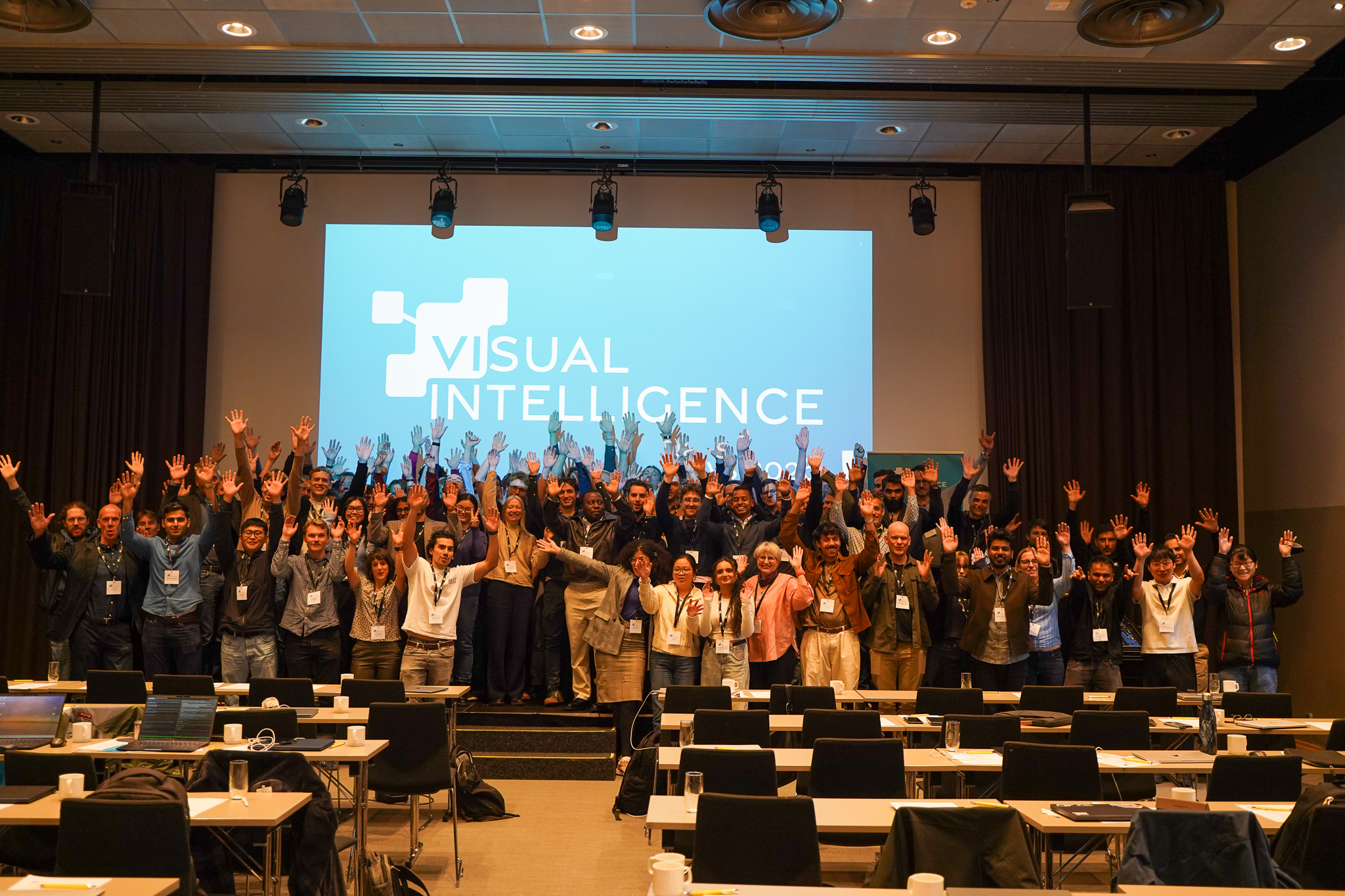
100 researchers, user partners and invited guests gathered in Oslo, Norway for the Visual Intelligence Days: the centre's annual conference for sharing knowledge and updates on the latest research and innovations.
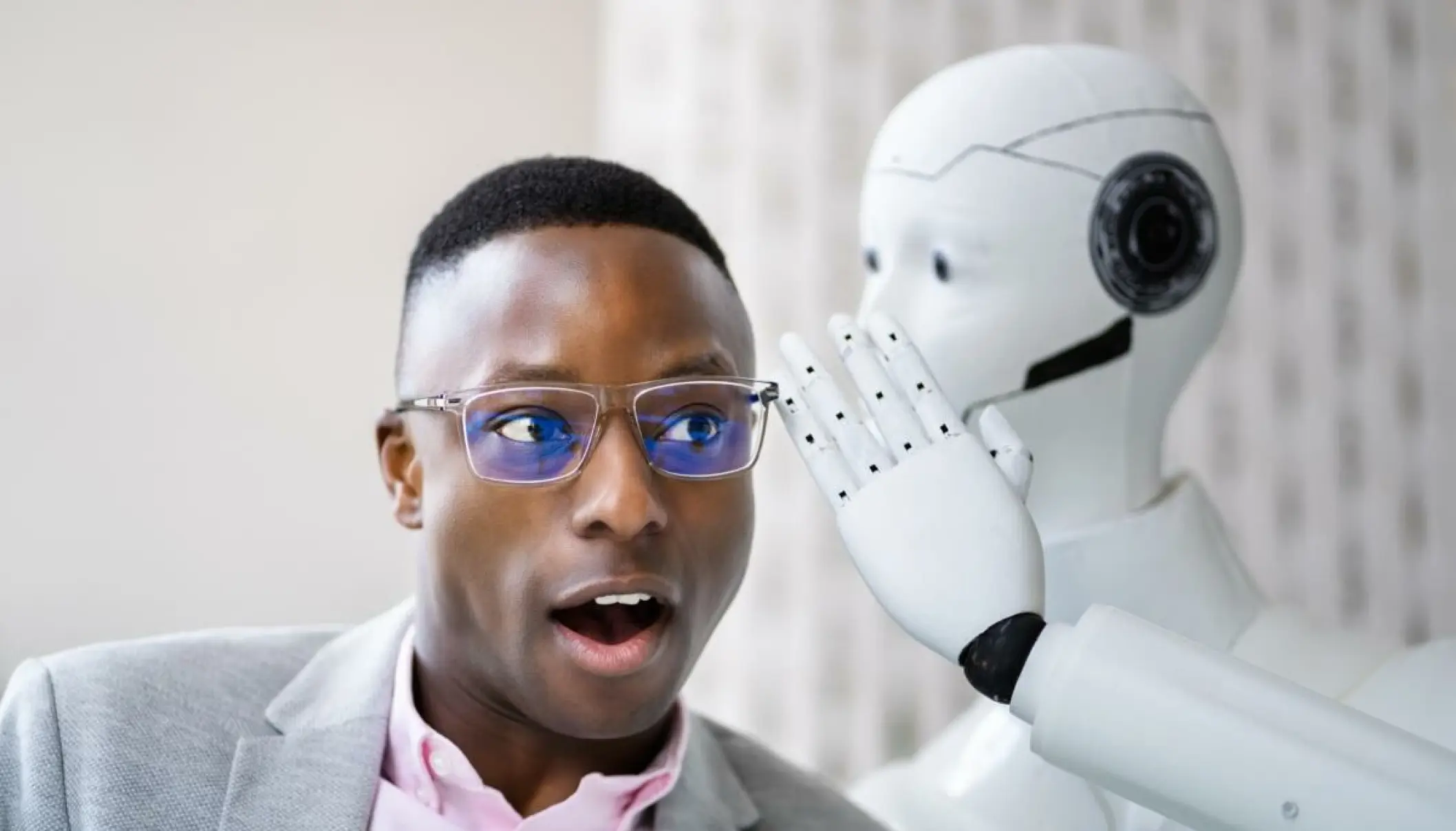
Why should we think twice before using AI as a therapist, romantic partner, or to help out with homework? AI expert Elisabeth Wetzer explains (Popular science article on sciencenorway.no / forskning.no).
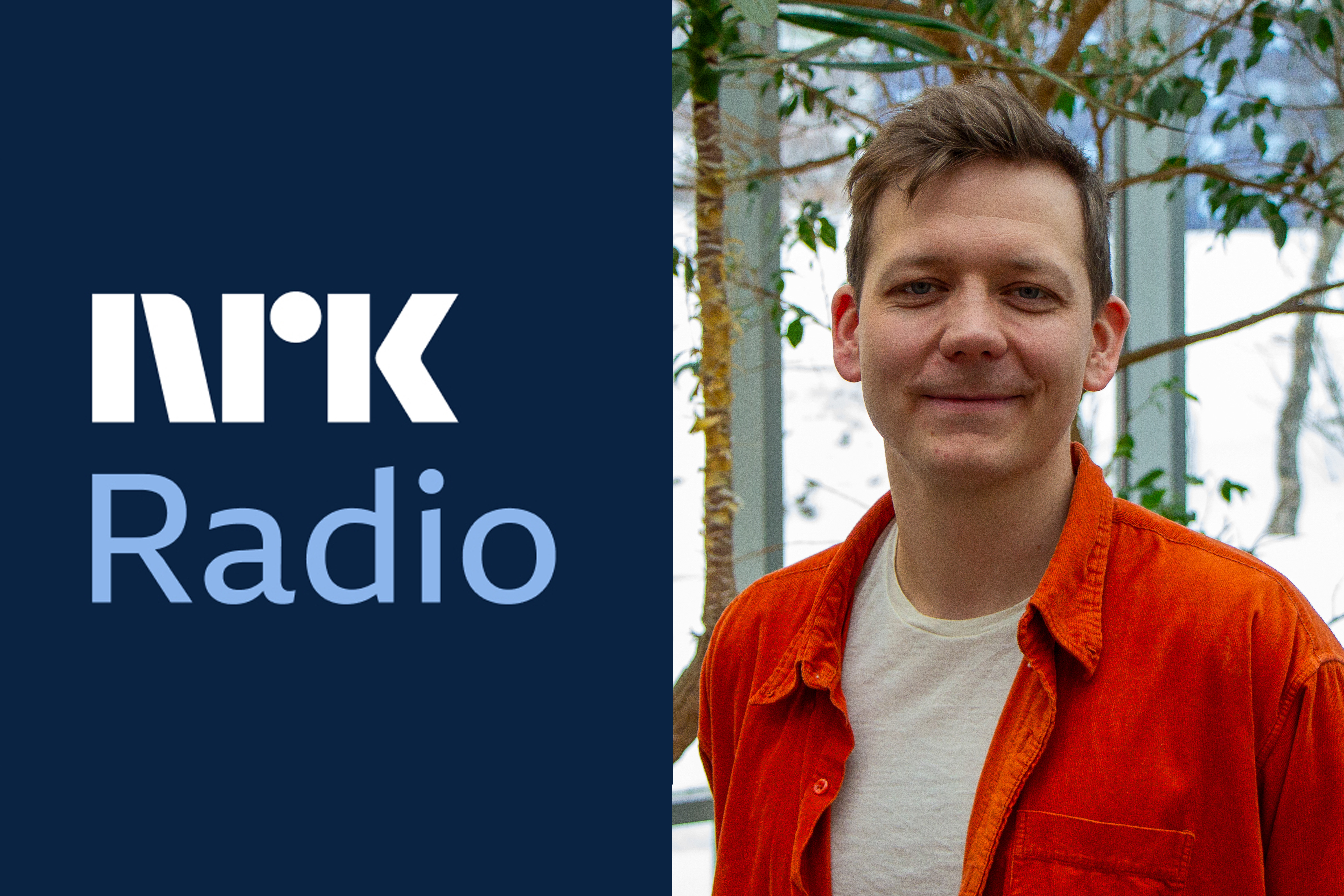
Associate Professor Kristoffer Wickstrøm was interviewed by Norsk rikskringkasting (NRK) about the ongoing debate on whether to halt current and future AI development
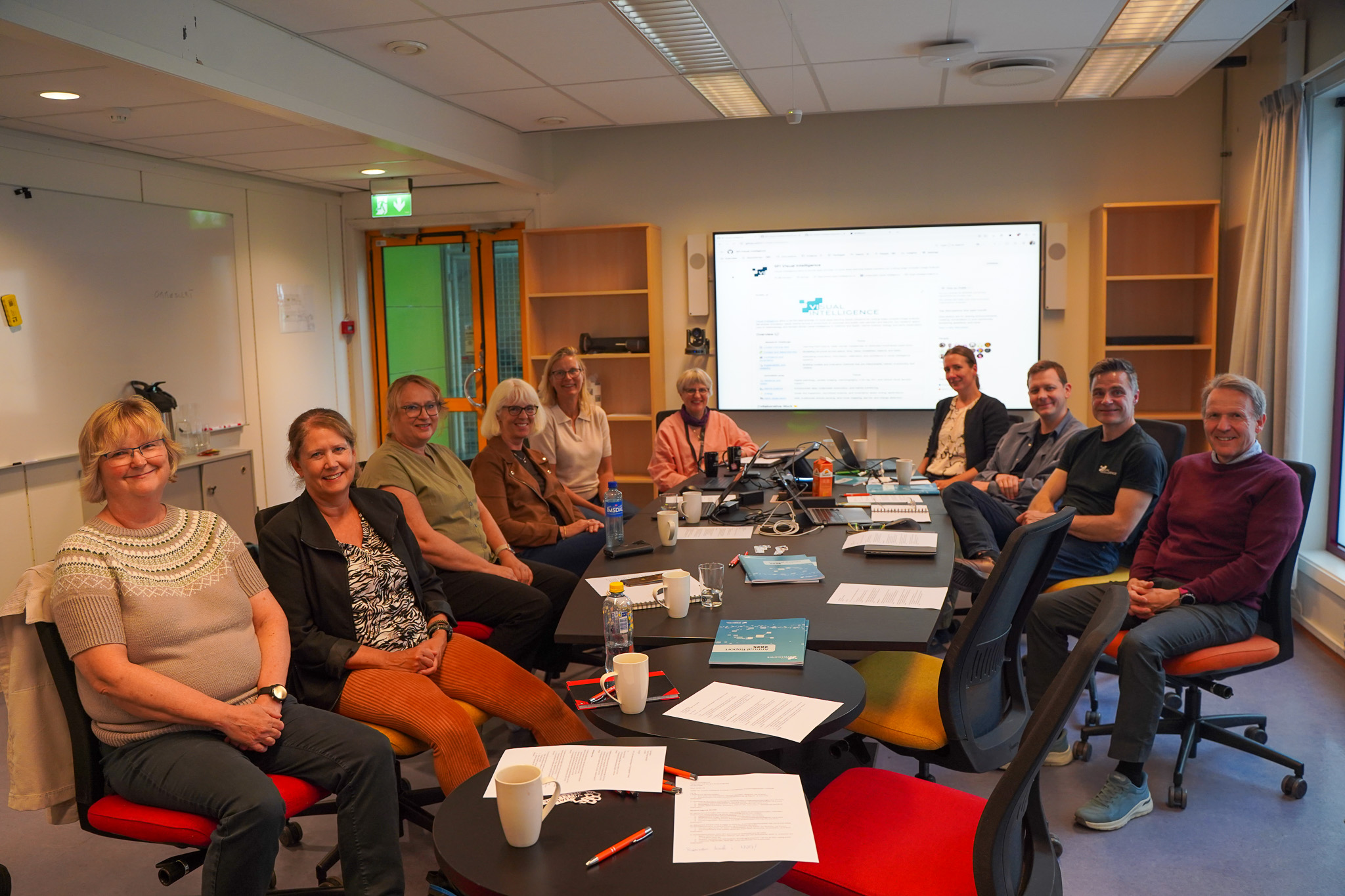
Representatives from the Research Council of Norway came to Visual Intelligence's hub in Tromsø for a site visit meeting.
.jpg)
Harald Lykke Joakimsen, a PhD Candidate at Visual Intelligence's hub in Tromsø, will compete in Forsker Grand Prix: Norway's national popular science competition.
.png)
Congratulations to Centre Director Robert Jenssen, who was appointed as a new fellow of the International Associaton for Pattern Recognition (IAPR).
.jpg)
Why should we think twice before using AI as a therapist, romantic partner, or to help with homework? AI expert Elisabeth Wetzer explains.
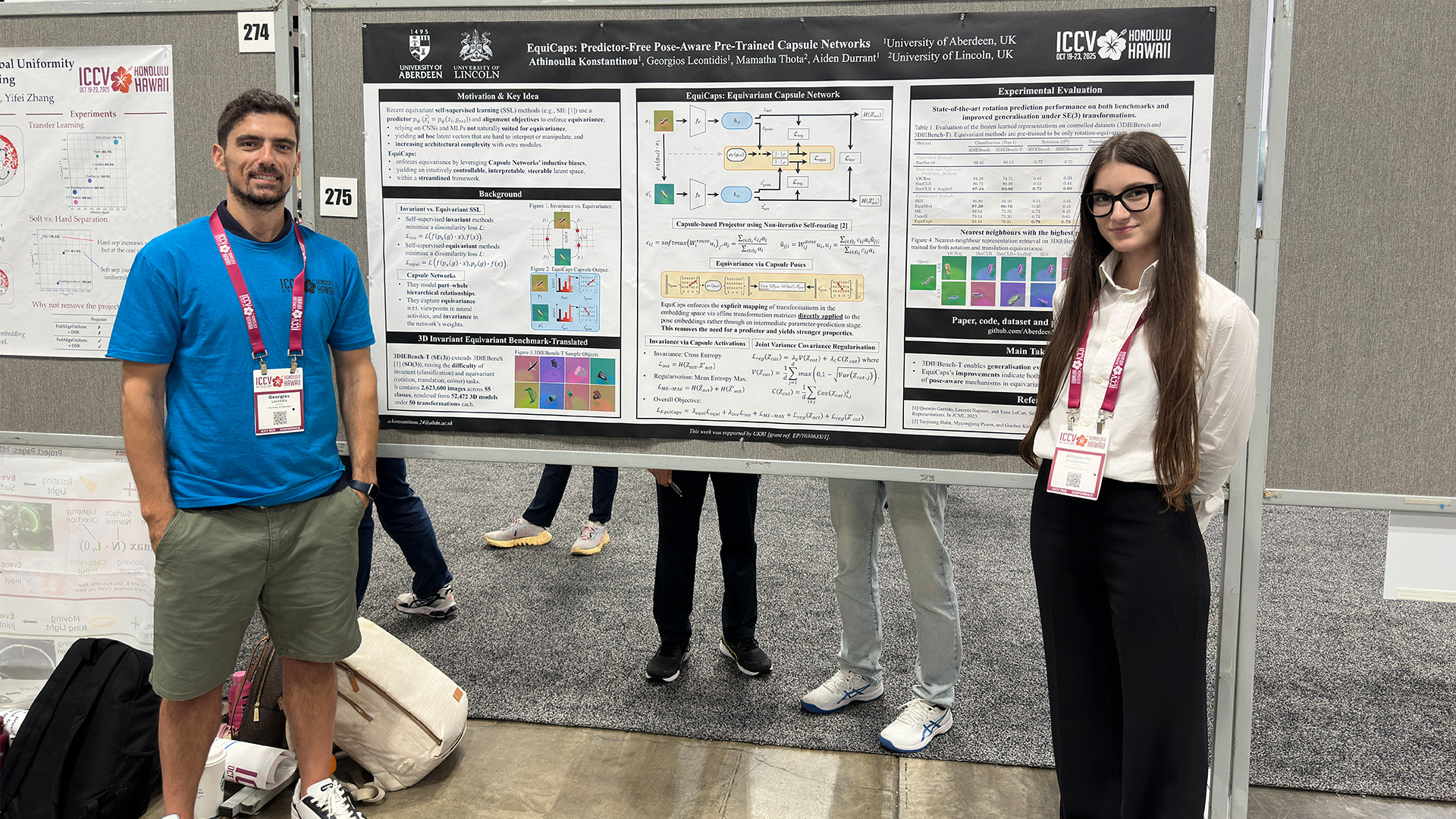
Athinoulla Konstantinou is a PhD student at the University of Aberdeen. She visited Visual Intelligence's hub in Tromsø to work with equivariant modelling.
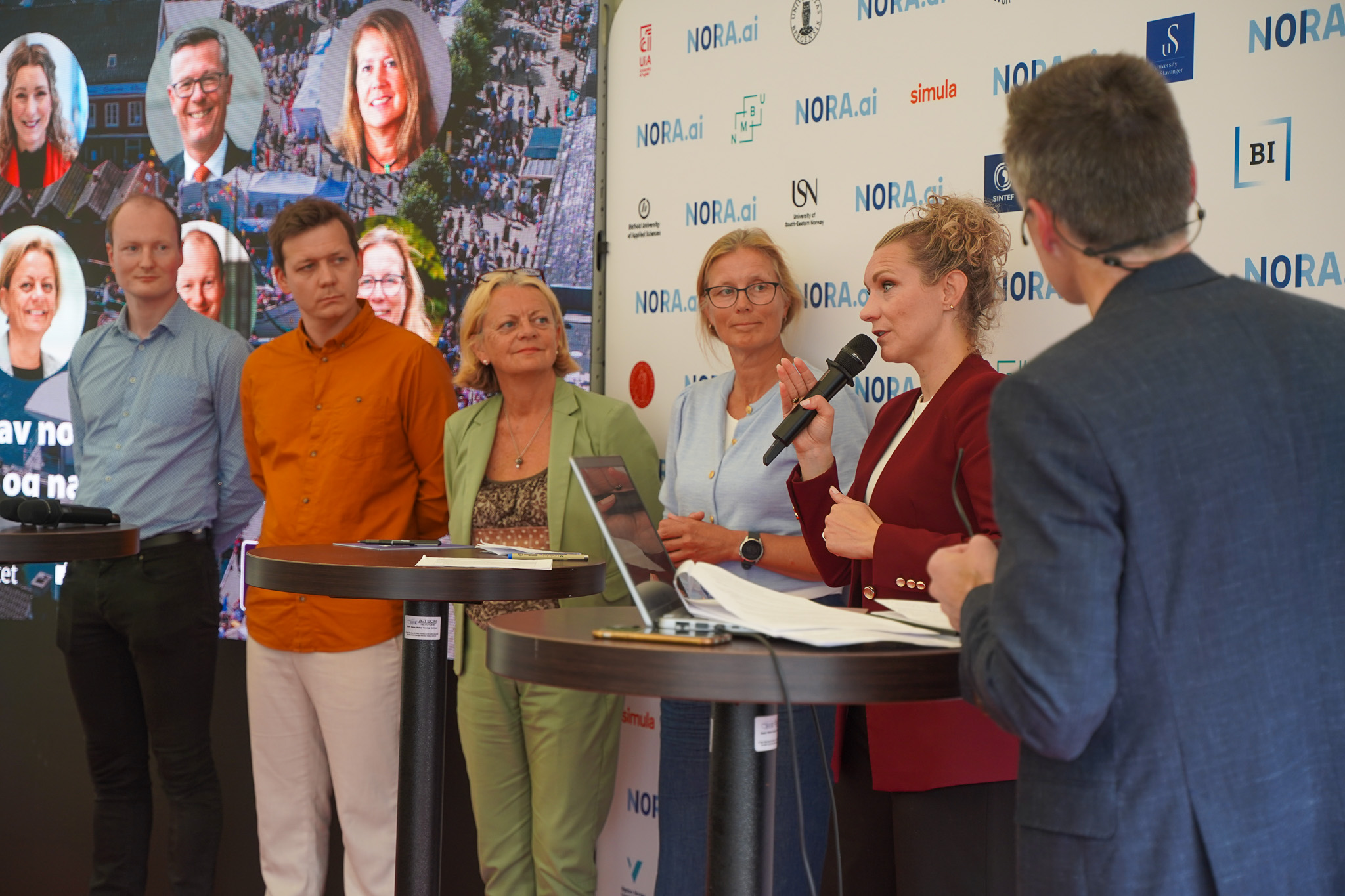
Visual Intelligence gathered experts from Norwegian politics, research council, industry, the public sector, and academia to discuss the value of Norwegian AI competence and Norwegian-developed models.

Visual Intelligence researchers are attending two AI-oriented events at Arendalsuka 2026: Norway's largest annual political festival.
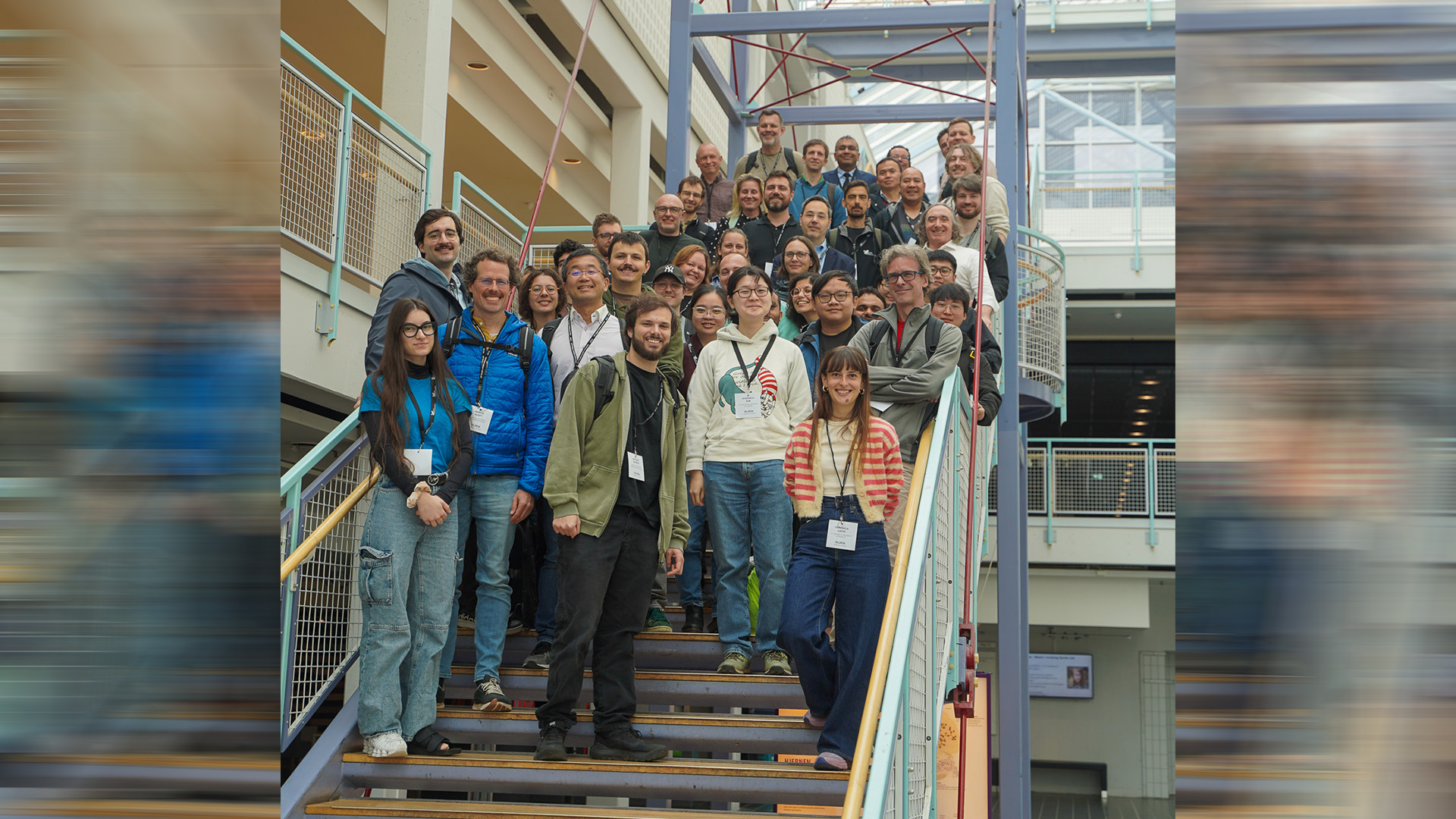
Visual Intelligence hosted over 45 international AI researchers for the DL2026 workshop at UiT The Arctic University of Norway.

Visual Intelligence will be well represented at MICCAI 2026, one of the leading AI conferences on medical imaging and computer assisted intervention, with two accepted research papers.
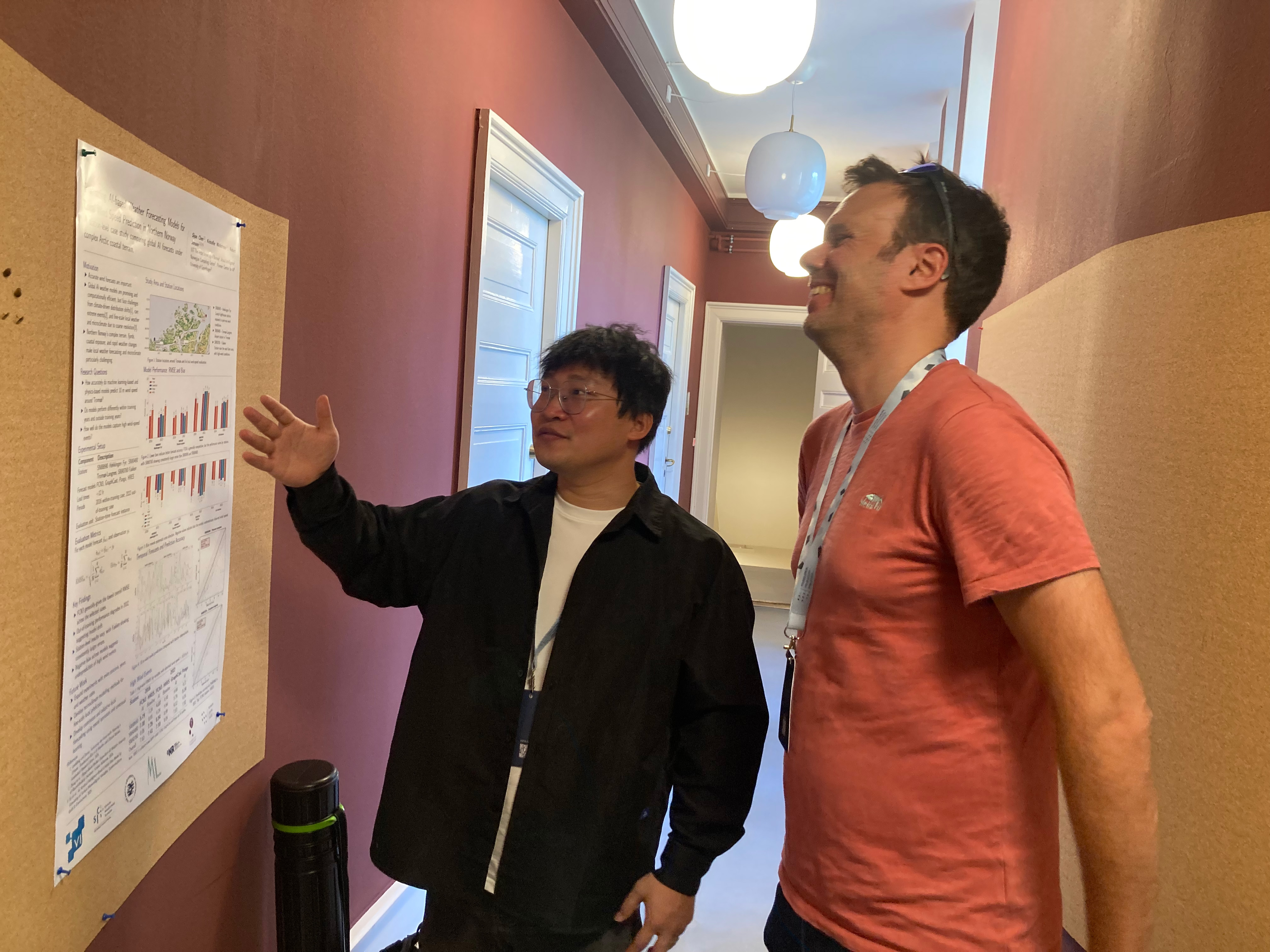
Visual Intelligence co-organized and attended the "Foundations of Arctic AI and Generative Forecasting": an inaugural workshop in the P1 Arctic AI program.
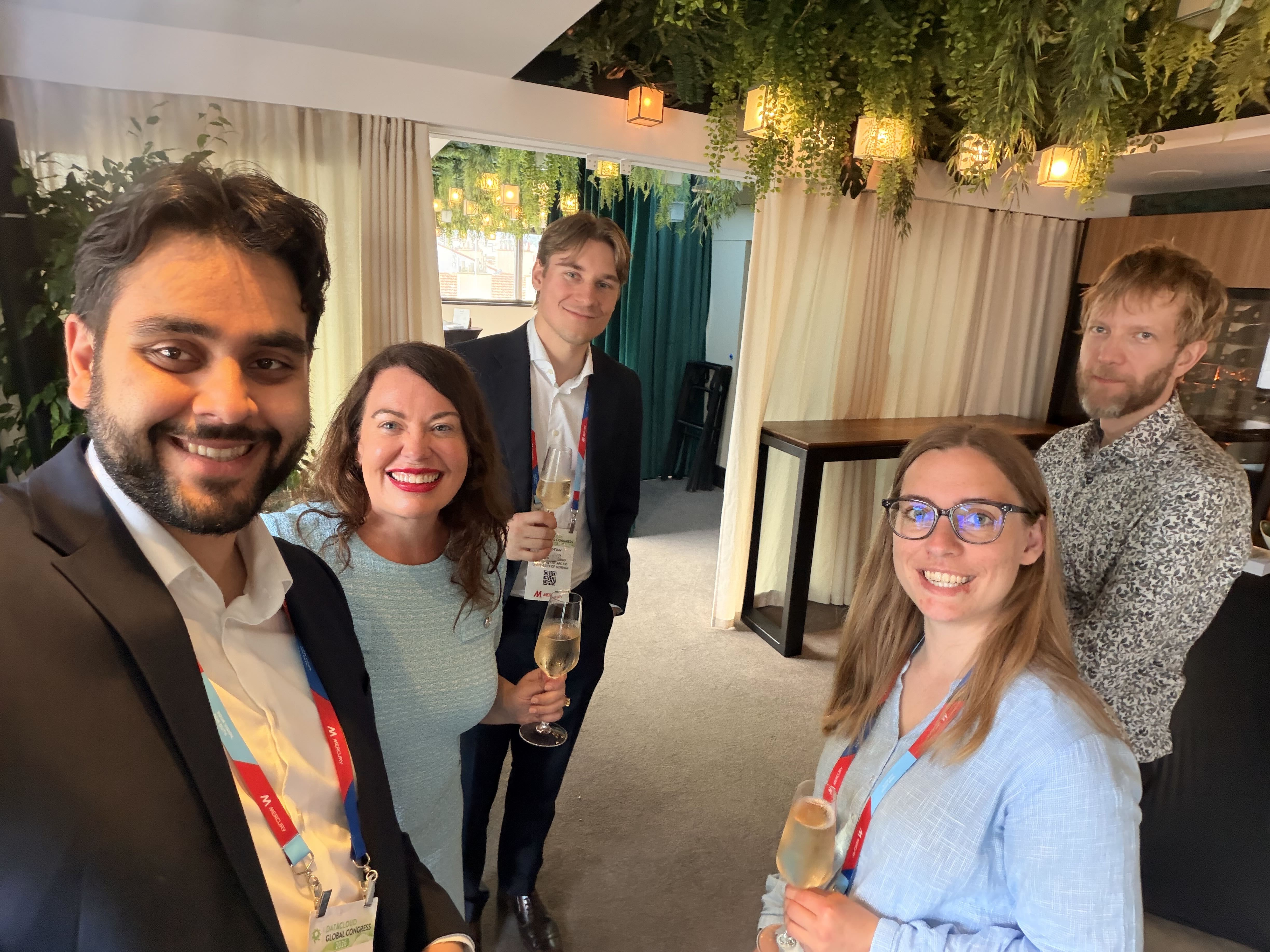
PhD Candidates Solveig Thrun and Christian Salomonsen attended the Datacloud Global Congress' Talent in Tech programme, which invited emerging talent to a unique programme designed to inspire, educate, and connect young professionals with senior leaders from global tech giants.
We warmly welcome Georgios Leontidis as a new Professor at SFI Visual Intelligence's hub at UiT The Arctic University of Norway.
Centre Director Robert Jenssen was interviewed by Norsk rikskringkasting (NRK) about the Japan-Norway AI Innovation Forum in Tokyo, Japan.
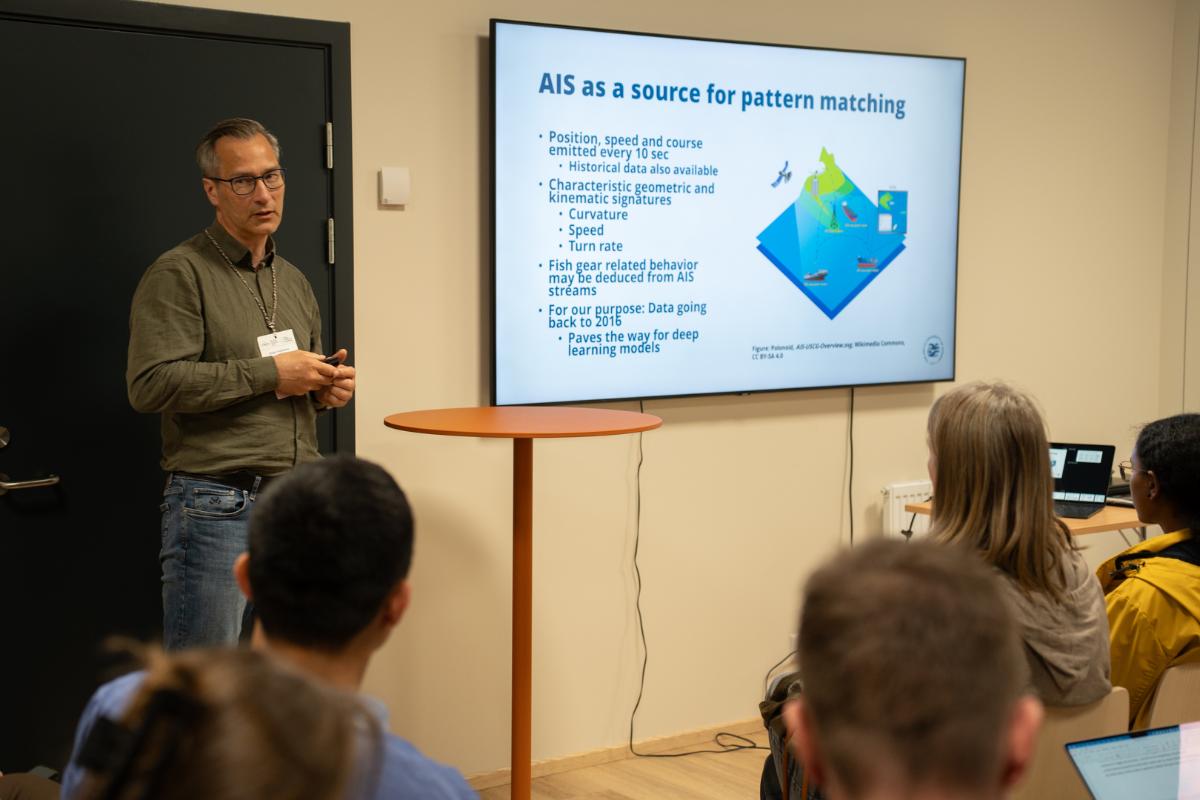
En ny AI-løsning utviklet ved UiT kan gjøre det enklere å avdekke feilrapportering og ulovlig fiske. Nå skal Norges Råfisklag teste teknologien i praktisk bruk (News article on kystogfjord.no)