

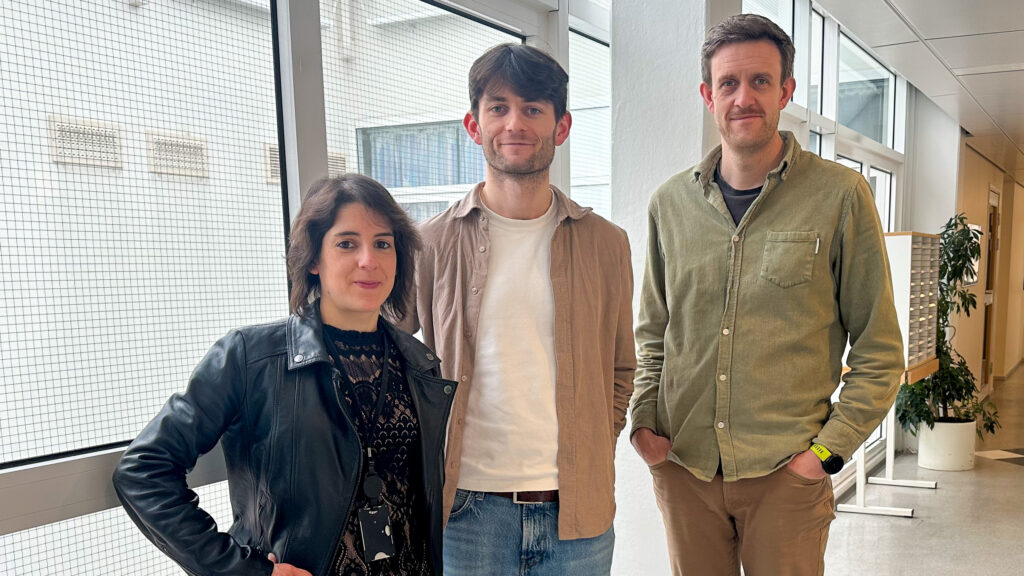
From the left: Senior Research Scientist Alba Ordoñez, Research Scientist Theodor Johannes Line Forgaard, and Senior Research Scientist Anders Ueland Waldeland.
The NCS model, a seismic foundation model trained on data from the Norwegian data repository for subsurface data, is now available as an open-source model, allowing anyone to download, utilize, and further develop the model.
The NCS model, a seismic foundation model trained on data from the Norwegian data repository for subsurface data, is now available as an open-source model, allowing anyone to download, utilize, and further develop it.
By Petter Bjørklund, Communications Officer at SFI Visual Intelligence
Analyzing seismic data is essential for understanding the subsurface. This data is acquired onshore or offshore by sending acoustic waves into the ground to create images of the Earth's subsurface, revealing rock layers and important geological structures.
However, seismic data interpretation is often a time-consuming and resource-intensive task. Now, Visual Intelligence researchers have developed and openly published a foundation model which can provide geologists with more efficient tools for interpreting seismic data.
The model, dubbed the NCS (Norwegian Continental Shelf) model, is trained on data from almost all public seismic surveys available in DISKOS: the Norwegian subsurface data repository. A goal of the model is to contribute to more efficient analyses of seismic data and subsurface structures – to support applications such as energy exploration or carbon capture and storage.
Alba Ordoñez is a Senior Research Scientist at the Norwegian Computing Center. She developed the model alongside NR colleagues Anders Ueland Waldeland and Theodor Johannes Line Forgaard, and says it provides a number of benefits for geologists.
"The NCS model provides a strong starting point for automated seismic interpretation. Because it is trained directly on seismic data, the patterns it learns are better suited to seismic tasks than those learned by foundation models trained on natural images," Ordoñez says.
Foundation models, also called general models, are AI models trained on very large datasets using self-supervised learning.
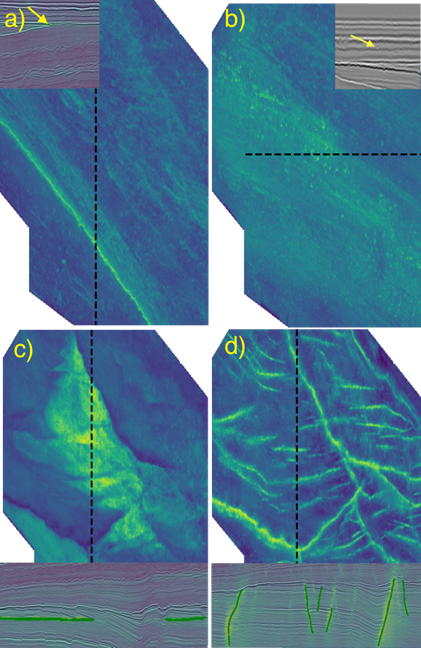
While traditional AI methods usually depend on manual annotations for a specific task, self-supervised learning allows a model to learn directly from the data itself, without needing labeled examples.
"This helps them capture the underlying structure and broader patterns in the data. As a result, foundation models can be adapted to many different applications, such as language, vision, and increasingly in scientific fields like Earth observation and medicine," Ordoñez explains.
The NCS model can be utilized as a basis for developing new AI models for various seismic tasks. As it has taught itself to recognize seismic structures, the model can then be used for purposes such as interactive data interpretation.
Making it open source means that anyone can download, utilize, and further develop the model – which is key for research and innovation, as well as future development of new commercal products and services.
"We released the model as open source to make advanced seismic AI tools accessible to the wider geoscience community, while also enabling faster progress in the field through openness, reuse, and collaboration," Ordoñez says.
User partners Equinor and Aker BP participated in the NCS model project. Their involvement reflects a strong interest in methods that can make seismic interpretation more efficient, scalable, and useful across a wide range of subsurface applications.
The links below provide access to the paper preprint, code, and model weights:
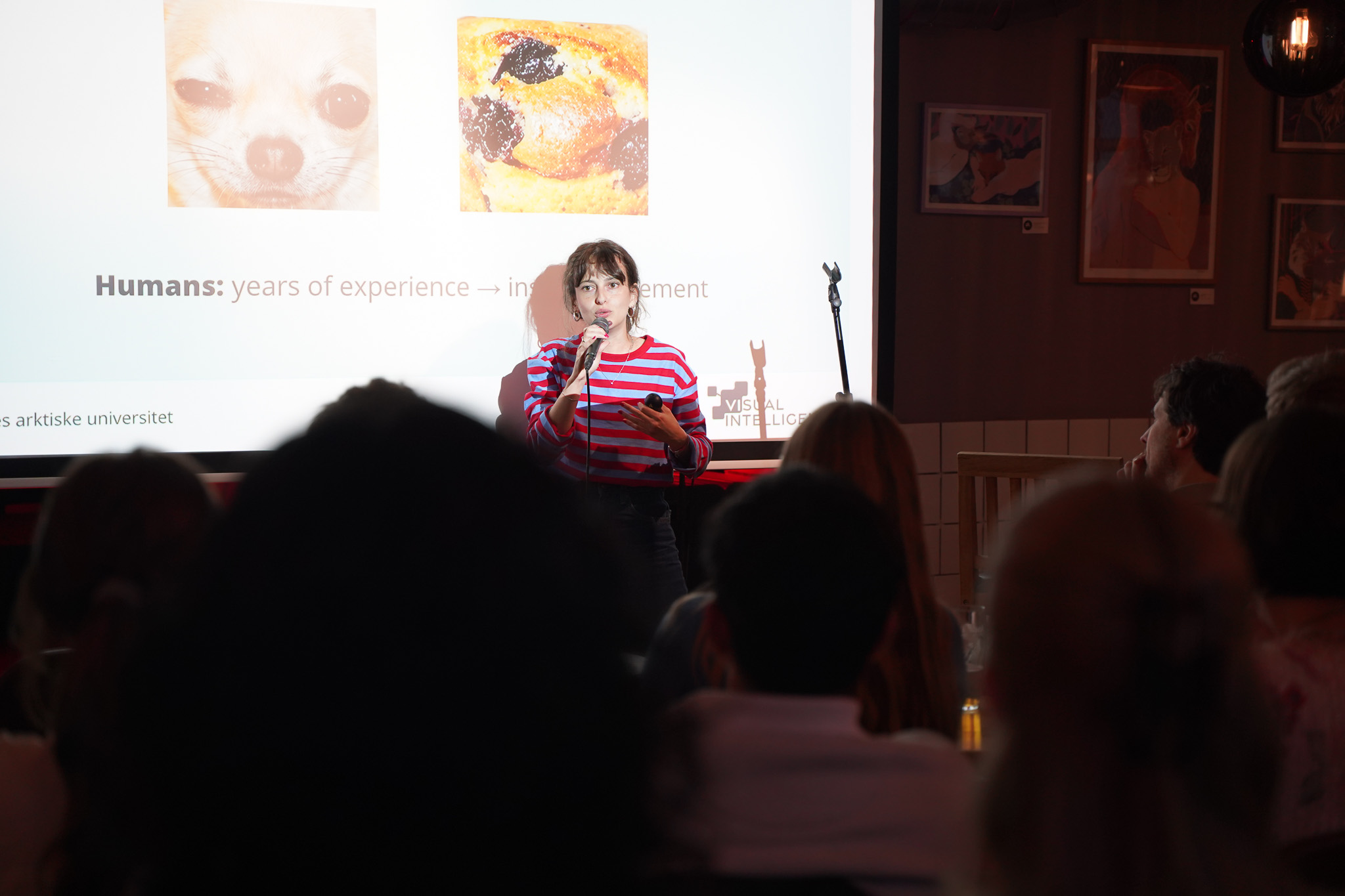
Visual Intelligence researchers contributed with various activities during Forskningsdagene 2026: Norway's annual research festival.
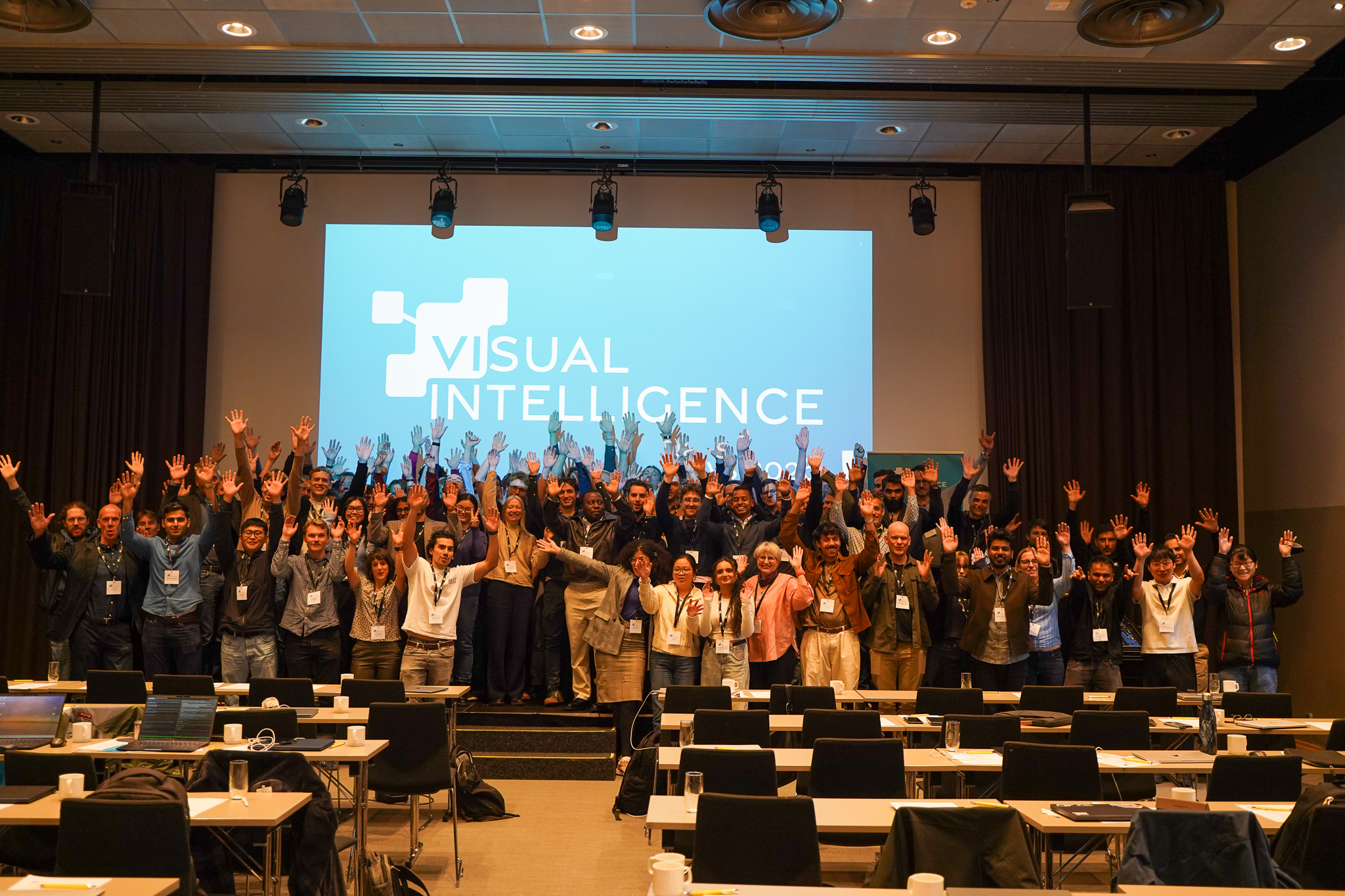
100 researchers, user partners and invited guests gathered in Oslo, Norway for the Visual Intelligence Days: the centre's annual conference for sharing knowledge and updates on the latest research and innovations.
Why should we think twice before using AI as a therapist, romantic partner, or to help out with homework? AI expert Elisabeth Wetzer explains (Popular science article on sciencenorway.no / forskning.no).
Associate Professor Kristoffer Wickstrøm was interviewed by Norsk rikskringkasting (NRK) about the ongoing debate on whether to halt current and future AI development
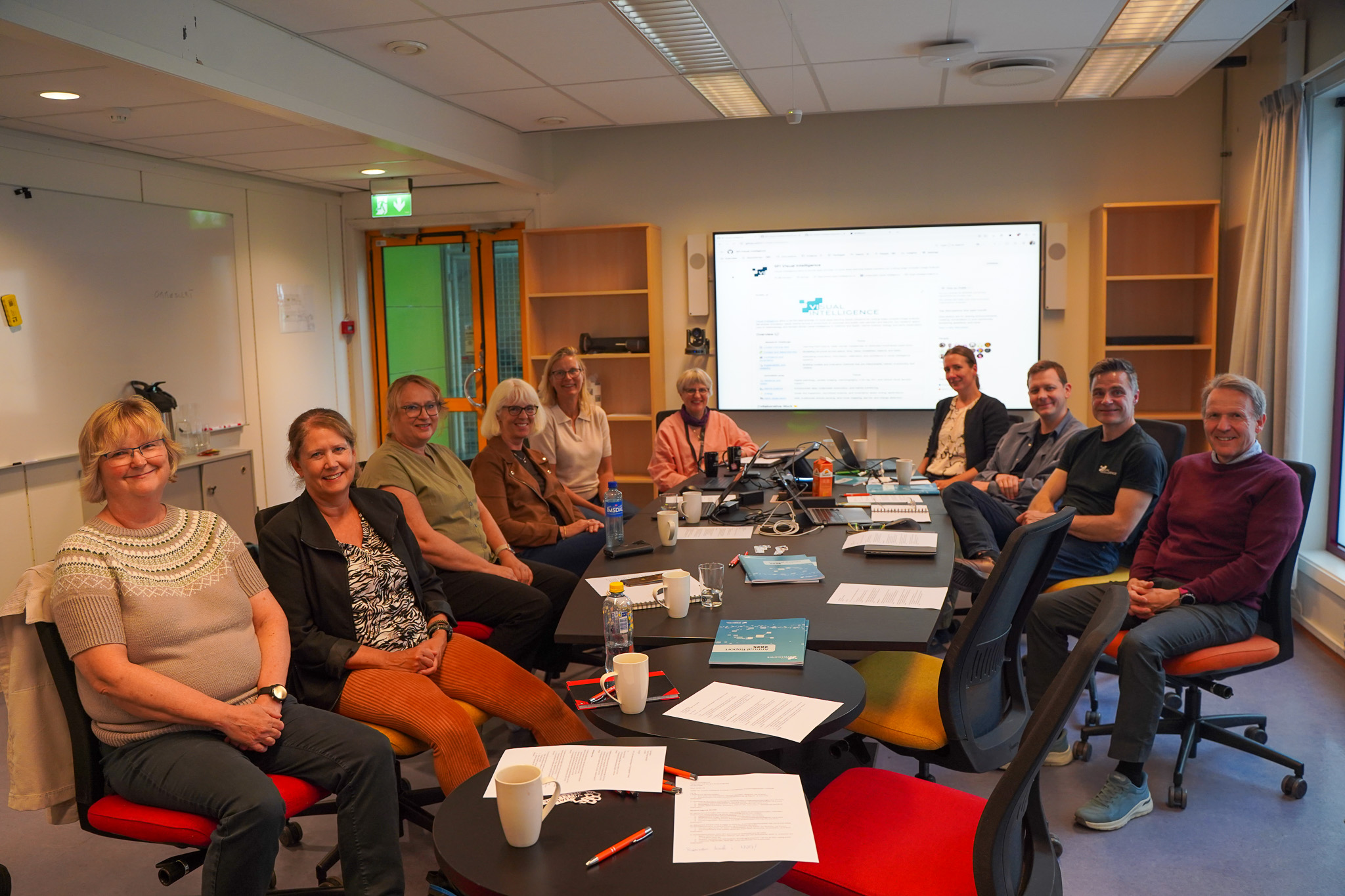
Representatives from the Research Council of Norway came to Visual Intelligence's hub in Tromsø for a site visit meeting.
.jpg)
Harald Lykke Joakimsen, a PhD Candidate at Visual Intelligence's hub in Tromsø, will compete in Forsker Grand Prix: Norway's national popular science competition.
.png)
Congratulations to Centre Director Robert Jenssen, who was appointed as a new fellow of the International Associaton for Pattern Recognition (IAPR).
.jpg)
Why should we think twice before using AI as a therapist, romantic partner, or to help with homework? AI expert Elisabeth Wetzer explains.
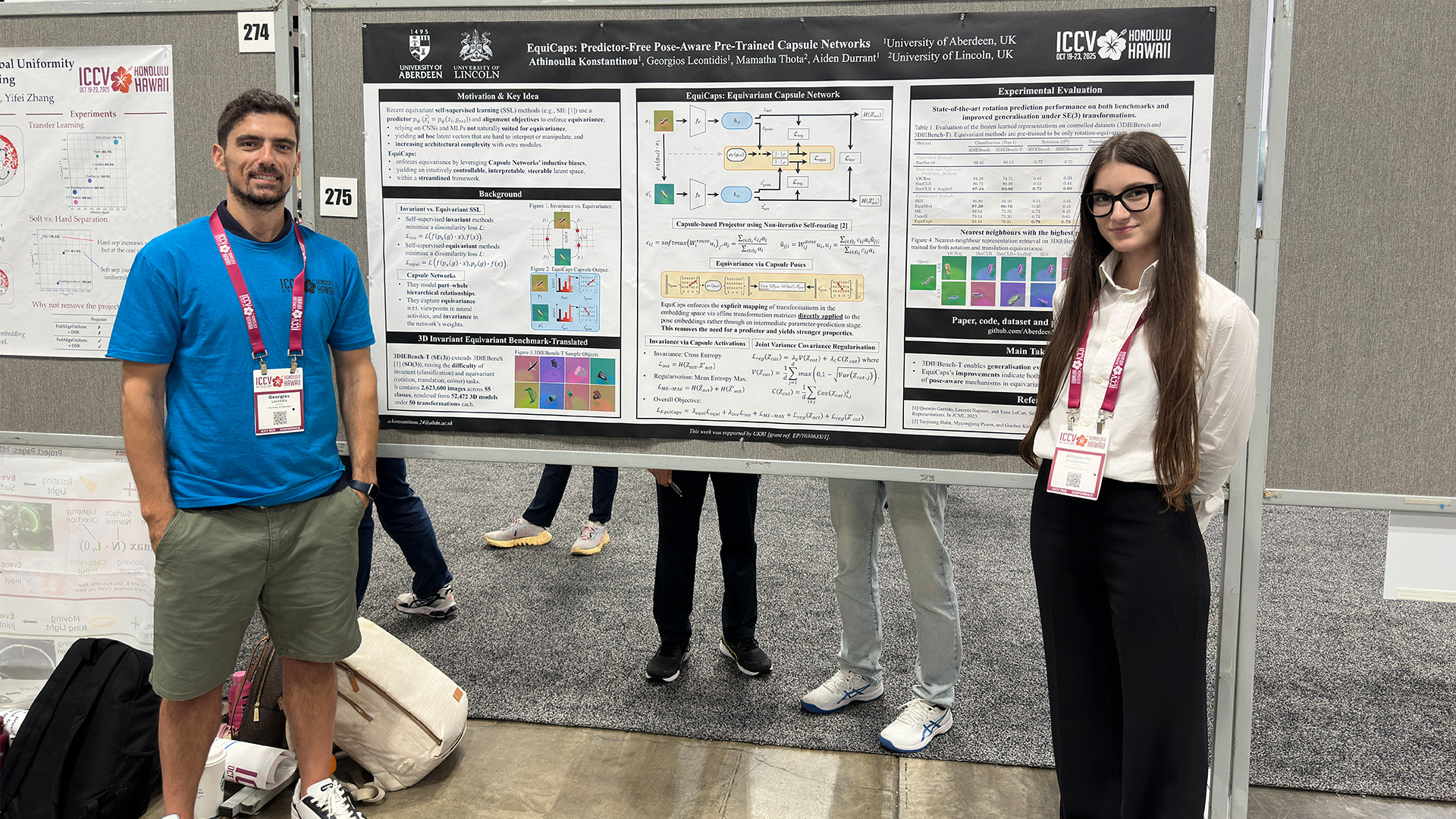
Athinoulla Konstantinou is a PhD student at the University of Aberdeen. She visited Visual Intelligence's hub in Tromsø to work with equivariant modelling.
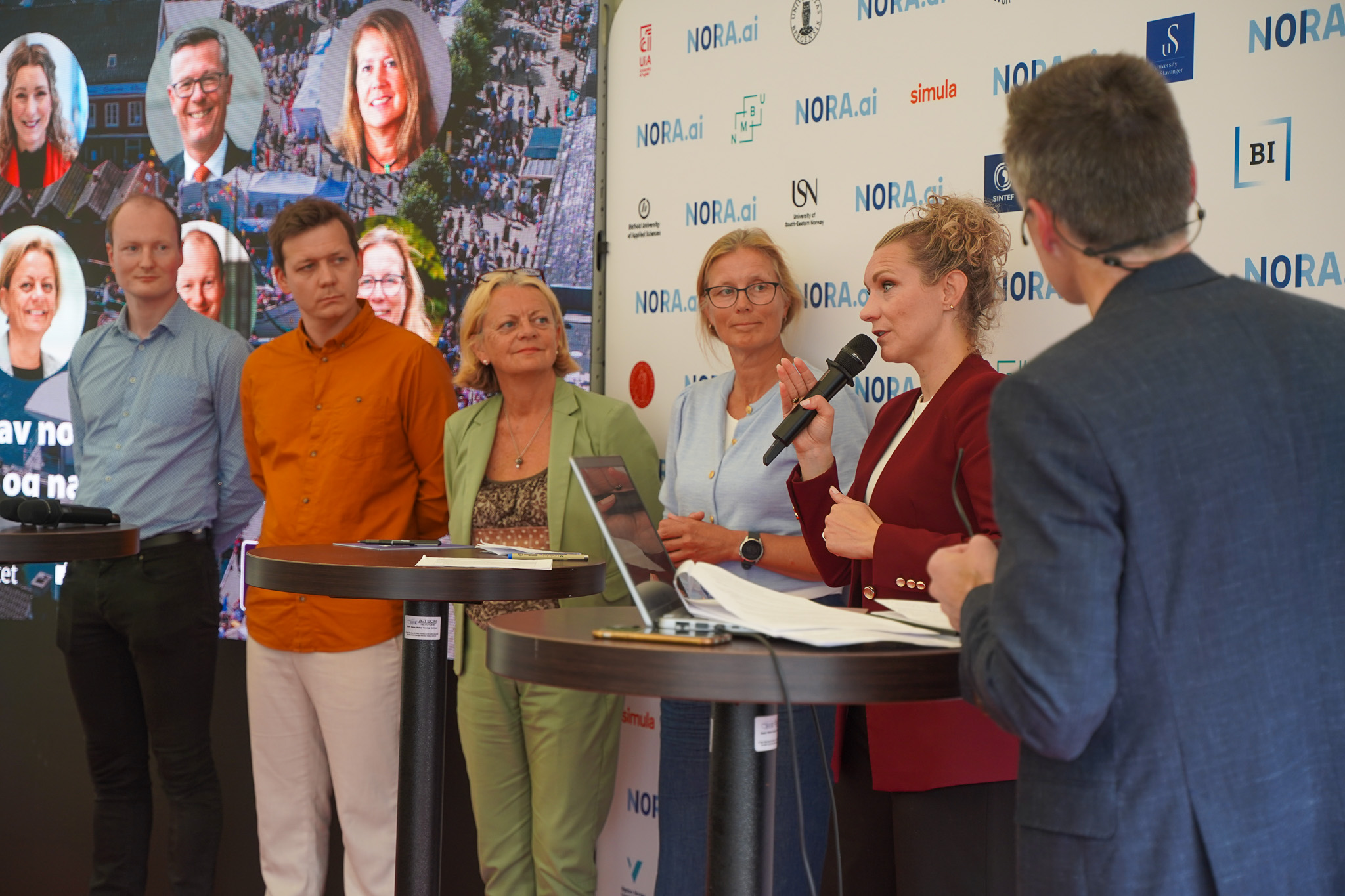
Visual Intelligence gathered experts from Norwegian politics, research council, industry, the public sector, and academia to discuss the value of Norwegian AI competence and Norwegian-developed models.

Visual Intelligence researchers are attending two AI-oriented events at Arendalsuka 2026: Norway's largest annual political festival.
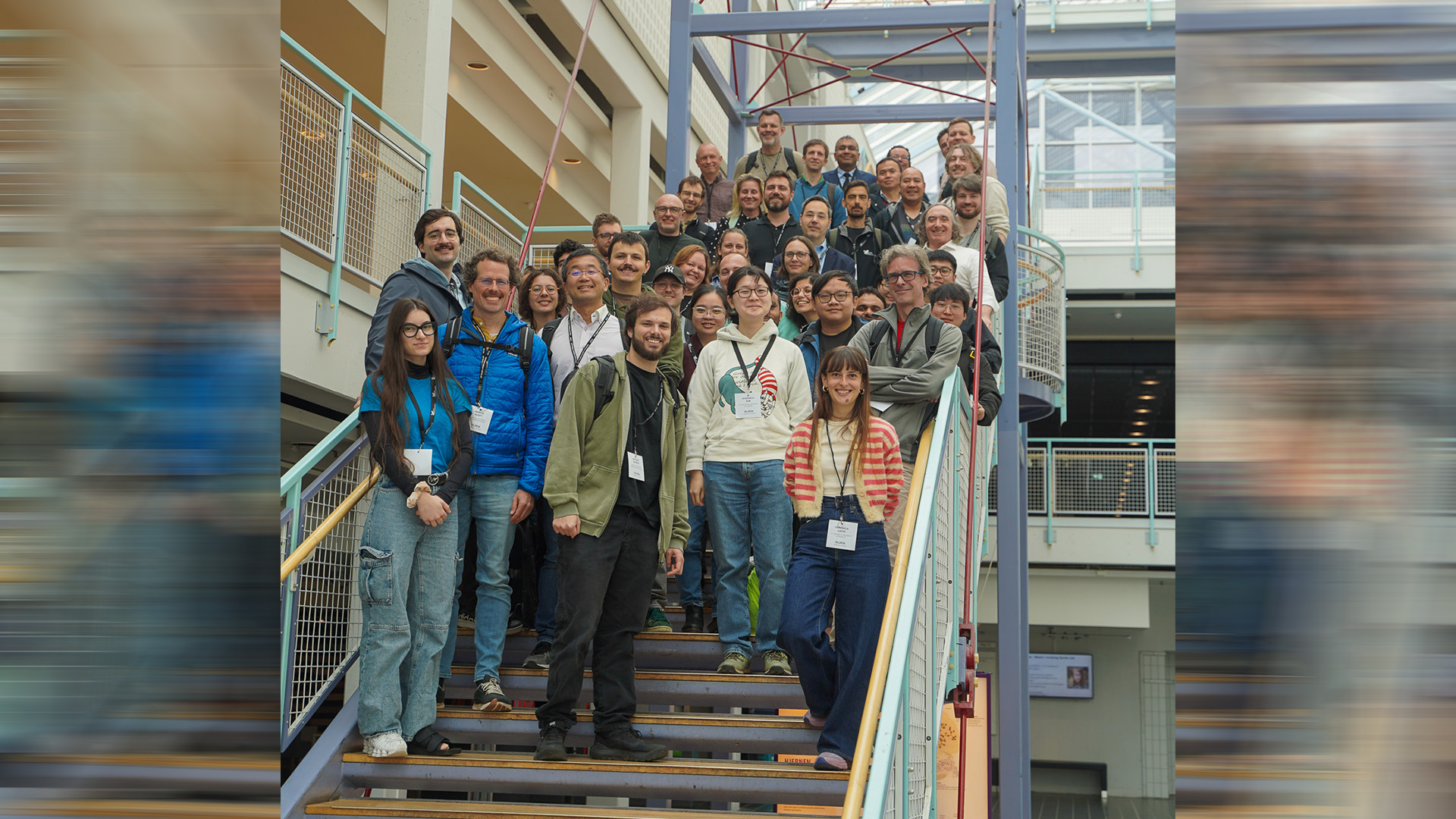
Visual Intelligence hosted over 45 international AI researchers for the DL2026 workshop at UiT The Arctic University of Norway.
Visual Intelligence will be well represented at MICCAI 2026, one of the leading AI conferences on medical imaging and computer assisted intervention, with two accepted research papers.
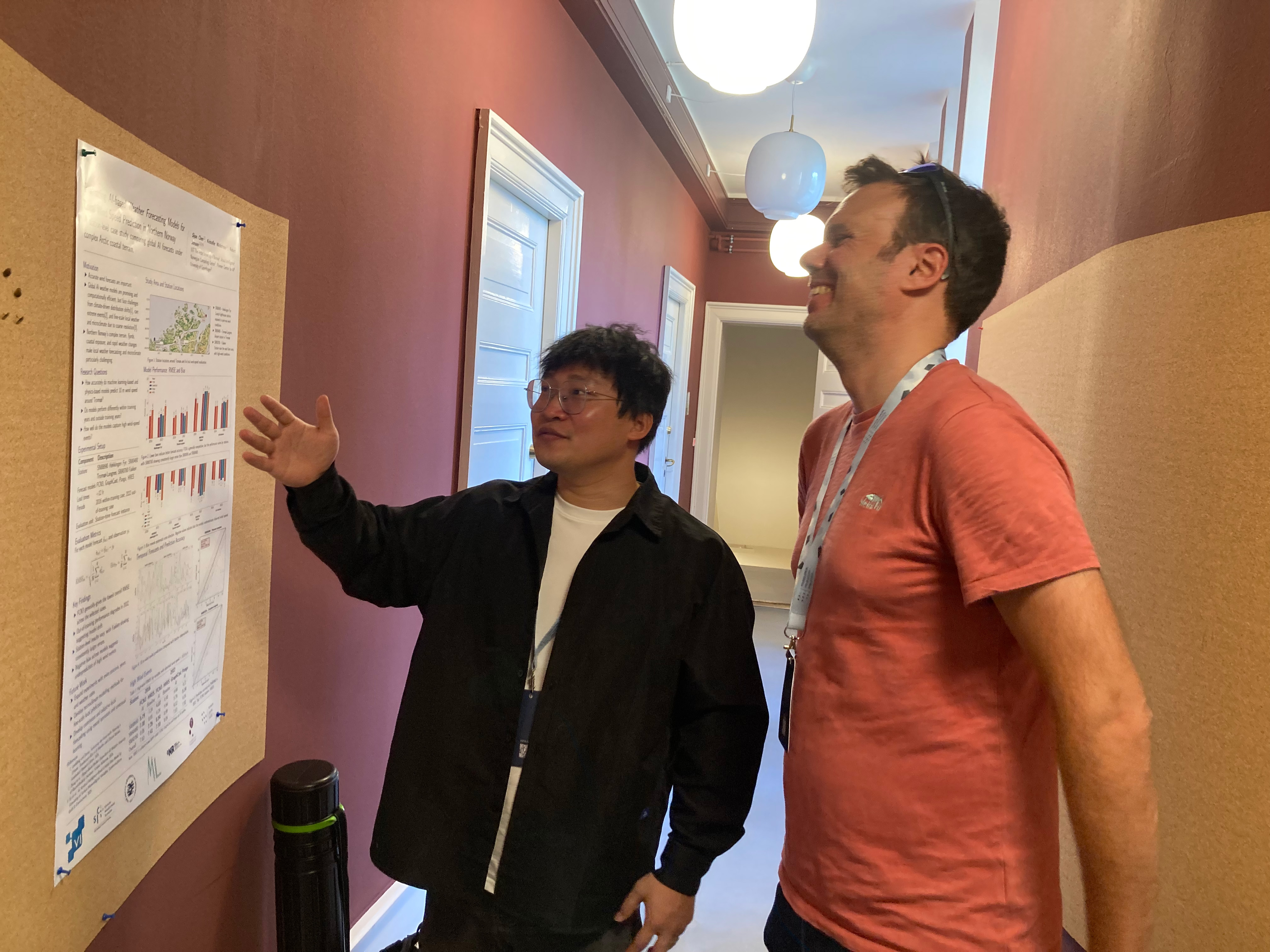
Visual Intelligence co-organized and attended the "Foundations of Arctic AI and Generative Forecasting": an inaugural workshop in the P1 Arctic AI program.
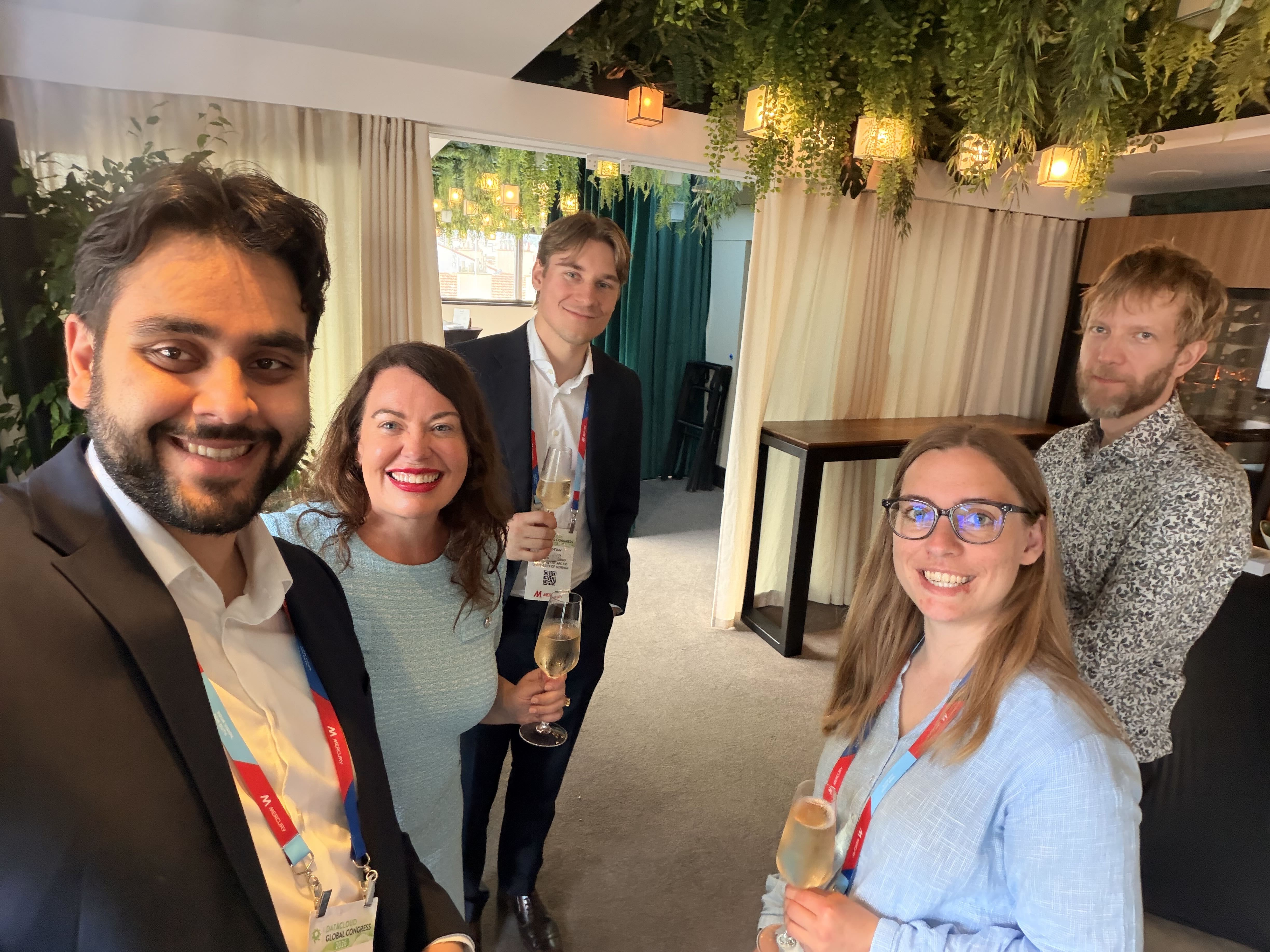
PhD Candidates Solveig Thrun and Christian Salomonsen attended the Datacloud Global Congress' Talent in Tech programme, which invited emerging talent to a unique programme designed to inspire, educate, and connect young professionals with senior leaders from global tech giants.
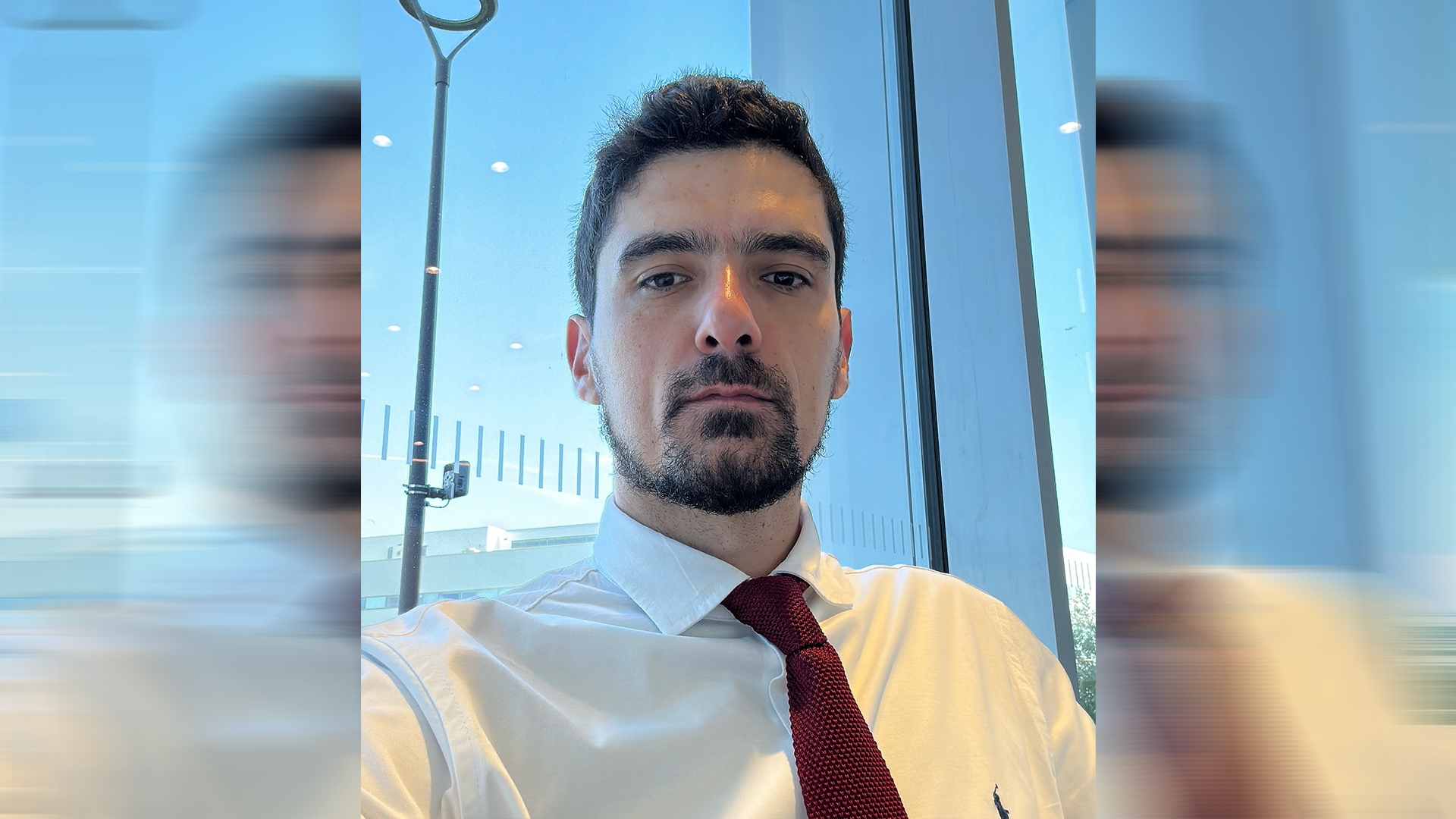
We warmly welcome Georgios Leontidis as a new Professor at SFI Visual Intelligence's hub at UiT The Arctic University of Norway.
Centre Director Robert Jenssen was interviewed by Norsk rikskringkasting (NRK) about the Japan-Norway AI Innovation Forum in Tokyo, Japan.
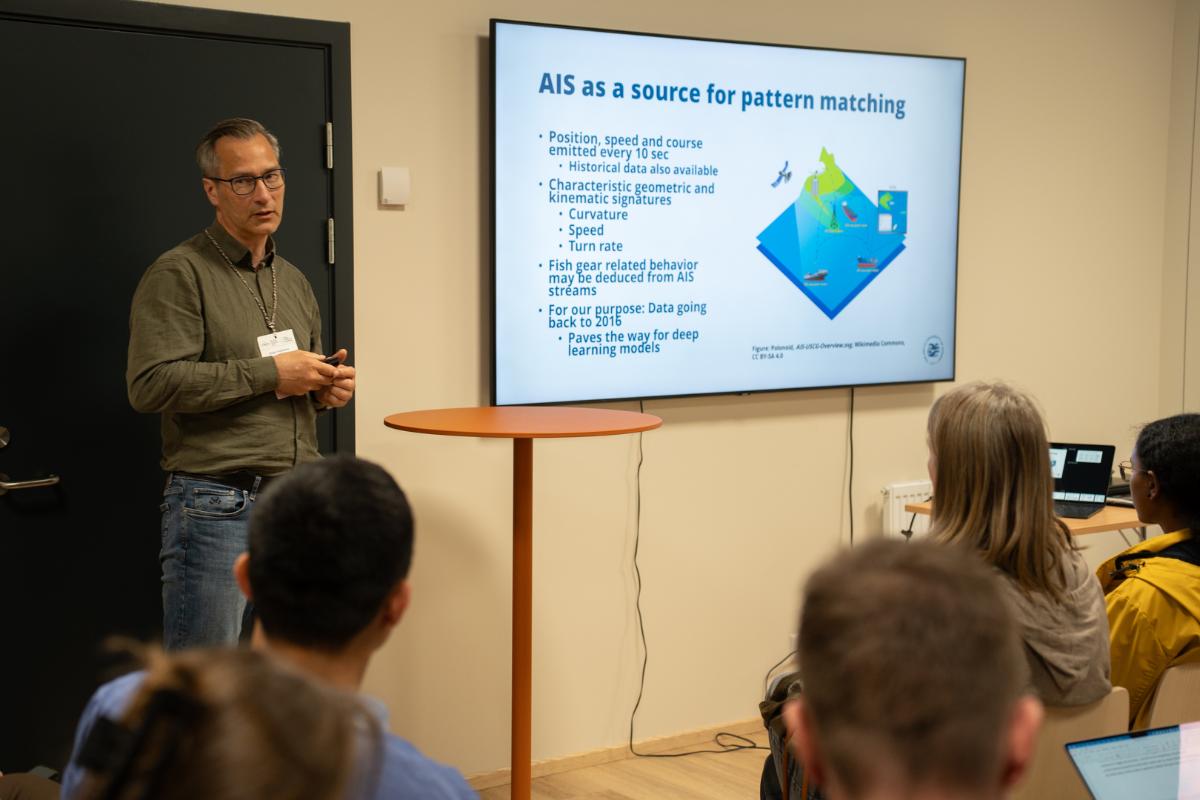
En ny AI-løsning utviklet ved UiT kan gjøre det enklere å avdekke feilrapportering og ulovlig fiske. Nå skal Norges Råfisklag teste teknologien i praktisk bruk (News article on kystogfjord.no)
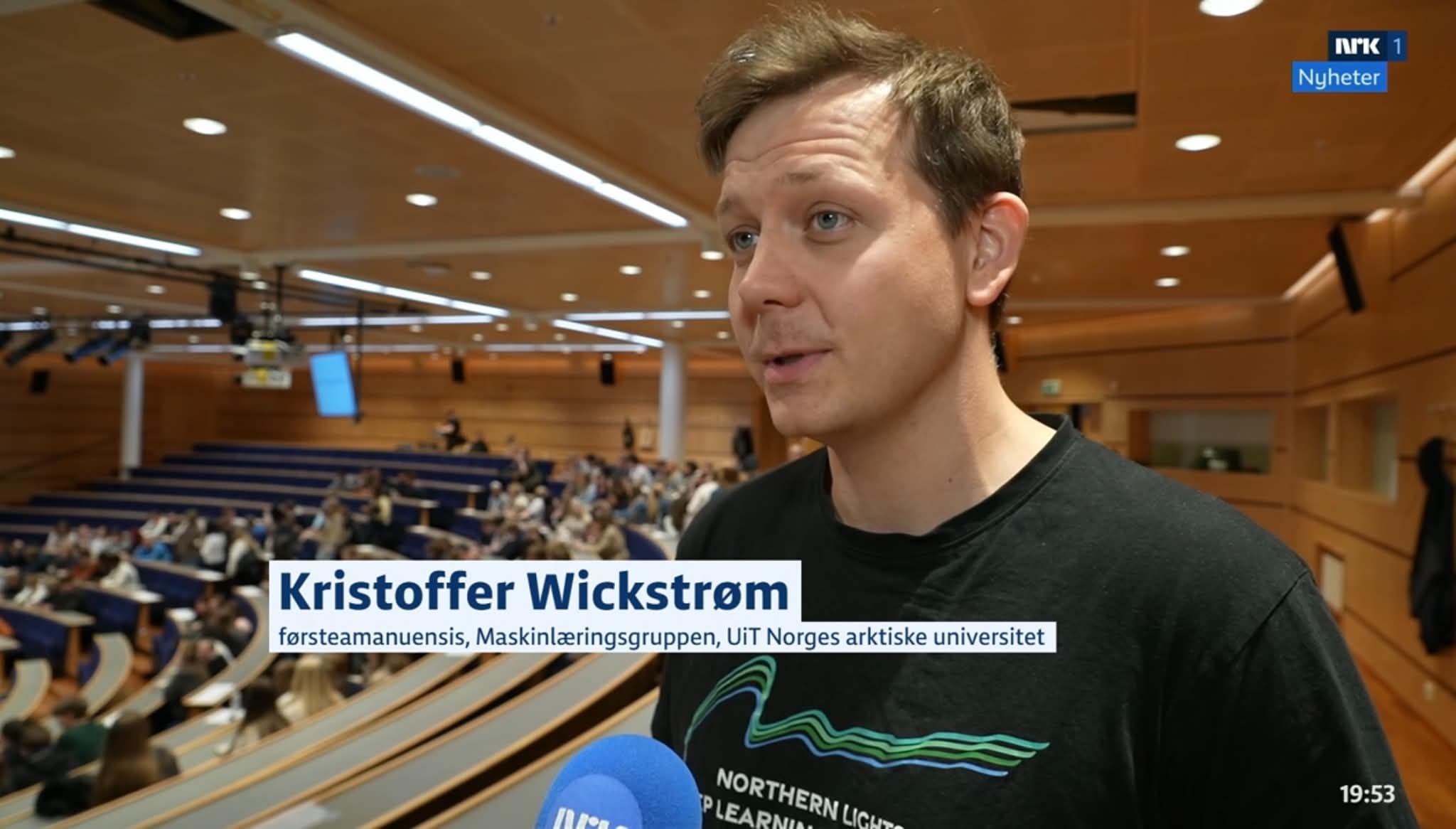
Principal Investigator Kristoffer Wickstrøm was interviewed by Norsk rikskringkasting (NRK) about the Artificial Intelligence Day at UiT- The Arctic University of Norway.
.jpg)
En ny, åpent tilgjengelig KI-modell kan endre hvordan geologer tolker seismikk. Den norske grunnmodellen lover raskere analyser, lavere terskel for innovasjon og nye måter å forstå undergrunnen på.