

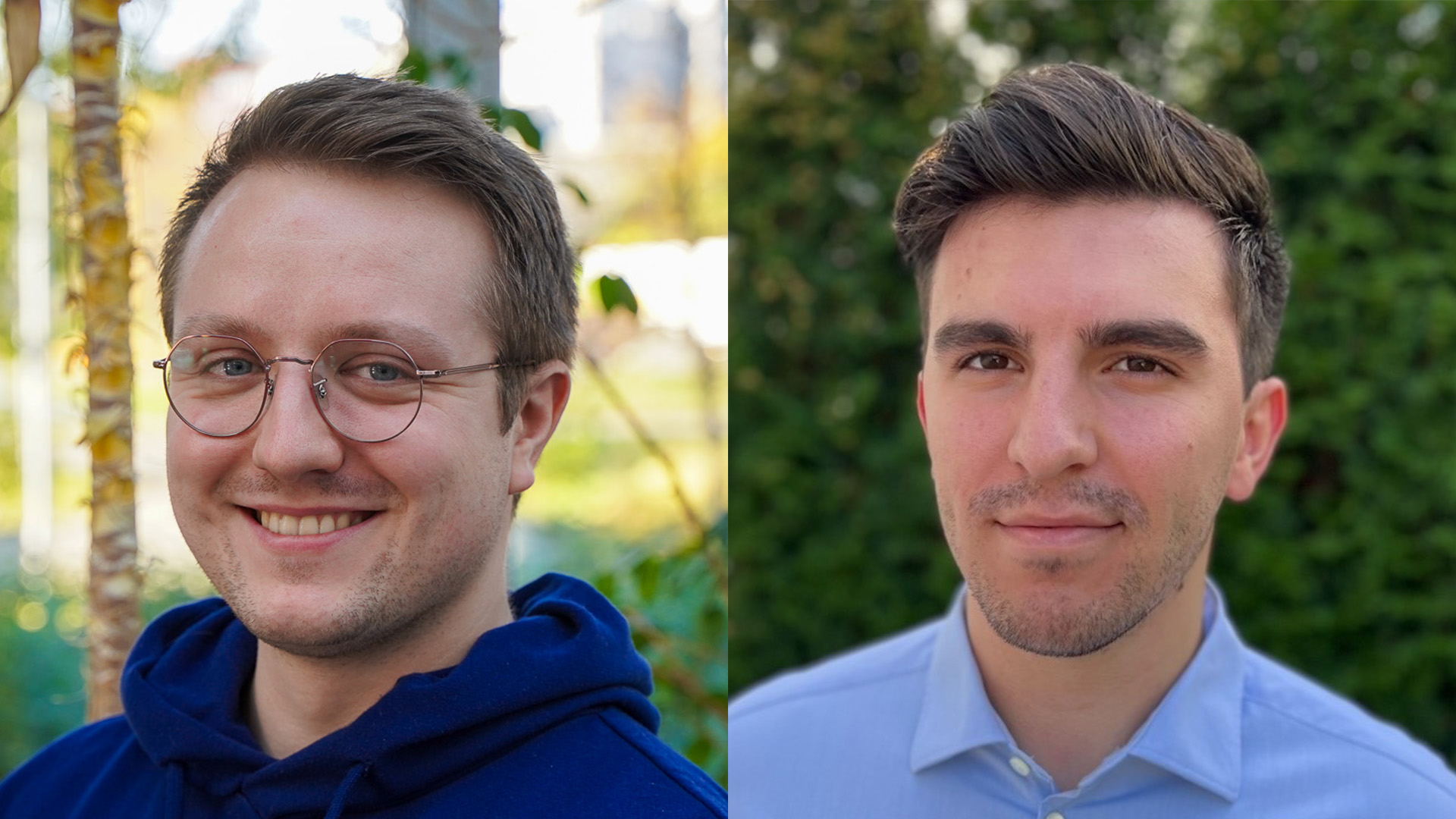
From the left: Sigurd Almli Hanssen and Adrian Duric
We happily welcome Sigurd Almli Hanssen and Adrian Duric as new PhD Candidates at SFI Visual Intelligence's hubs in Tromsø and Oslo respectively.
We happily welcome Sigurd Almli Hanssen and Adrian Duric as new PhD Candidates at SFI Visual Intelligence's hubs in Tromsø and Oslo respectively.
By Petter Bjørklund, Communications Officer at SFI Visual Intelligence
Both Hanssen and Duric recently started their doctoral research positions at SFI Visual Intelligence. Hanssen's project is tied to the centre's "Earth observation" innovation area, while Duric's project is connected to the "Marine science" innovation area.
Hanssen is originally from Evenskjer, a town near Harstad, Norway. He graduated with a master's degree in Applied Physics and Mathematics from UiT The Arctic University of Norway in Spring 2025. His thesis focused on how to apply diffusion models for oil spill detection, in collaboration with industry partner Kongsberg Satellite Services (KSAT). Building upon his master's thesis, Hanssen's PhD project will focus on using satellite imagery and machine learning for sustainable oil spill monitoring.

Satellite images used for environmental monitoring are often huge in size. Current methods, which slice the images into smaller, more manageable patches, tend to remove the context in which the patches exist in. A core idea of the project is to research methods which allow us to reincorporate the large-scale context of these images.
"This could hopefully reduce some sources of false alarms – that is, when a detection system reports an oil spill even though no actual spill is present. This is critical as false alarms, especially far from shore, can be quite expensive and resource-intensive to investigate," Hanssen explains.
Hanssen says it's inspiring to work with what he deems as an interesting and accomplished group of researchers, both at KSAT and UiT.
"Having worked for years with manual image analysis, I really appreciate the importance of and effect I can have through my research, which I find really exciting," says Hanssen.
Duric is from Oslo, Norway and has a master's degree in Robotics and Intelligent Systems from the University of Oslo, specializing in AI and machine learning. His thesis, written in collaboration with the Simula Research Laboratory, focused on using explanations generated by explainable AI techniques as additional data features to enhance the deep learning models' prediction performance.

His PhD project focuses on developing and utilizing the latest deep learning advances to improve performance on various image recognition tasks within marine imaging. Echosounder data captured from Norwegian waters, which is used to estimate different fish populations at specific locations, will have an important focus.
"From a more technical aspect, I will work on several different research topics that contribute in different ways towards the project: foundation models, distrubuted ML and compression, representation learning and explainable AI being some of them," Duric explains.
Duric says he's eager to produce high-impact contributions that can help society, both on a scientific and applied level.
"This is something that drives me and continues to motivate me every day, and a main reason I decided to pursue a PhD in the first place. I really look forward to collaborating with my colleagues and other fellow researchers," Duric says.
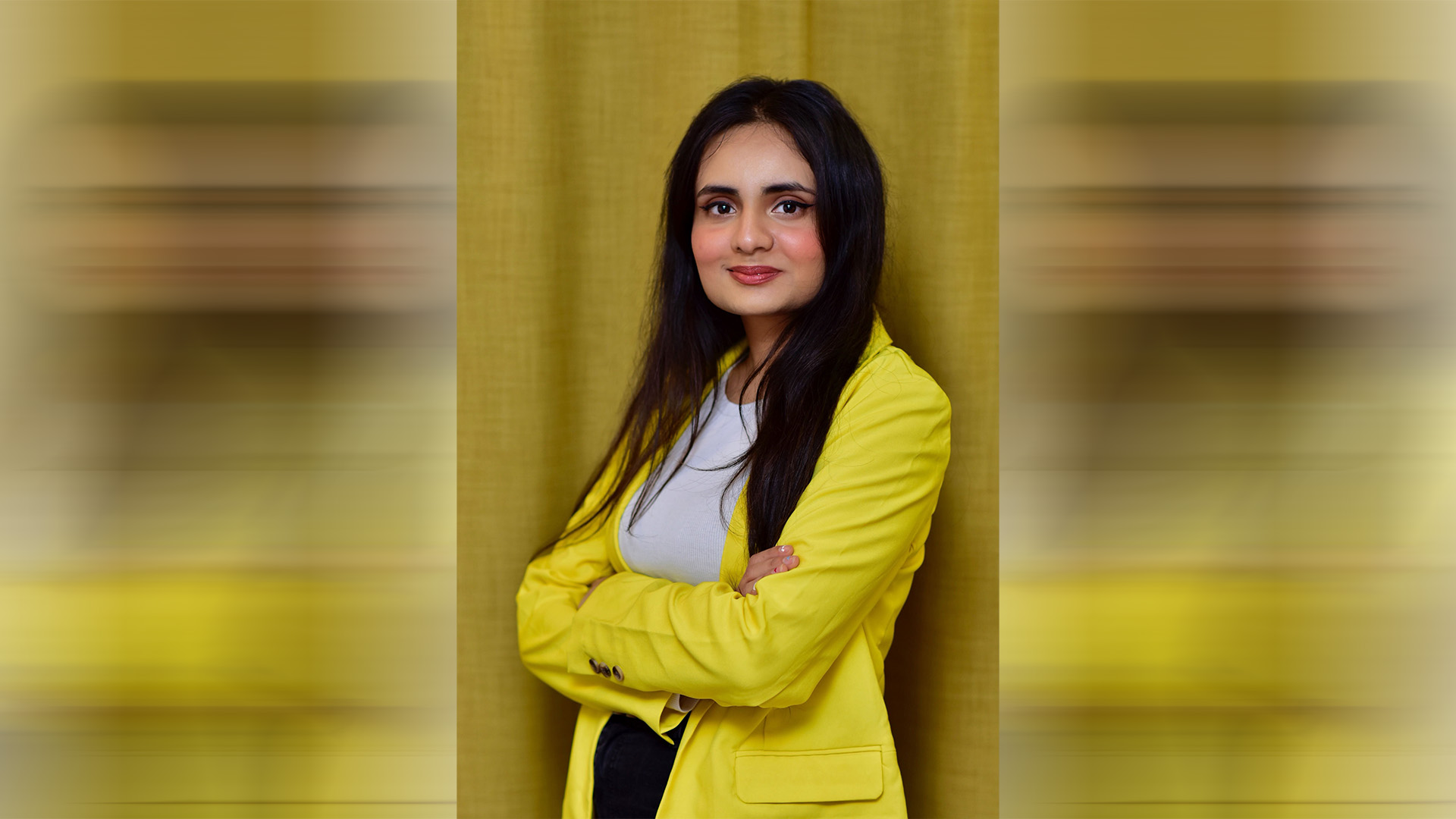
We congratulate PhD Fellow Suaiba Salahuddin, who will start as new Head Engineer at the Climate-Ecological Observatory for Arctic Tundra (COAT)
.jpg)
Researchers at Visual Intelligence have developed AI to predict the risk of getting breast cancer within one to five years. It can help detect more cases of breast cancer earlier.
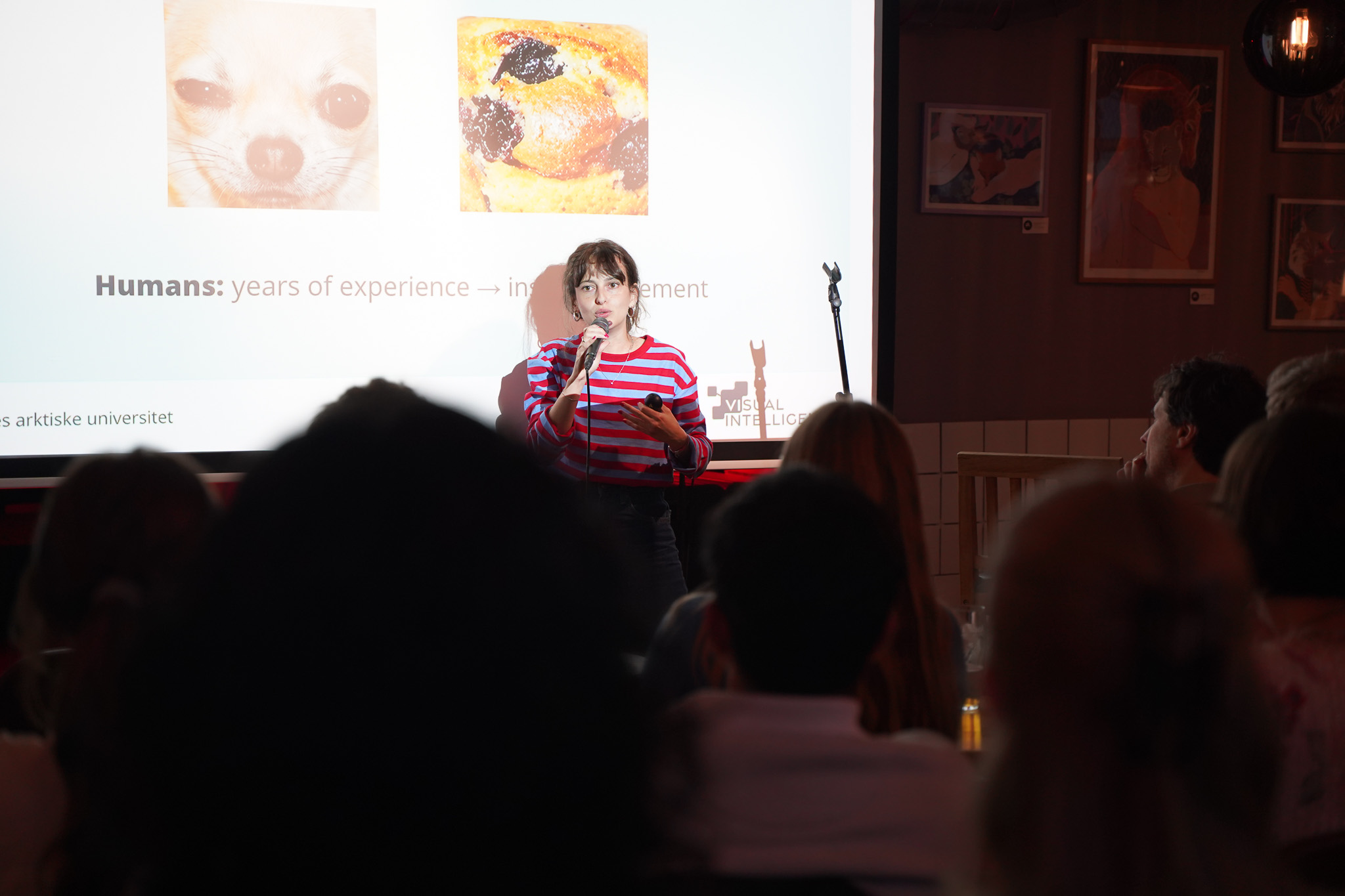
Visual Intelligence researchers contributed with various activities during Forskningsdagene 2026: Norway's annual research festival.
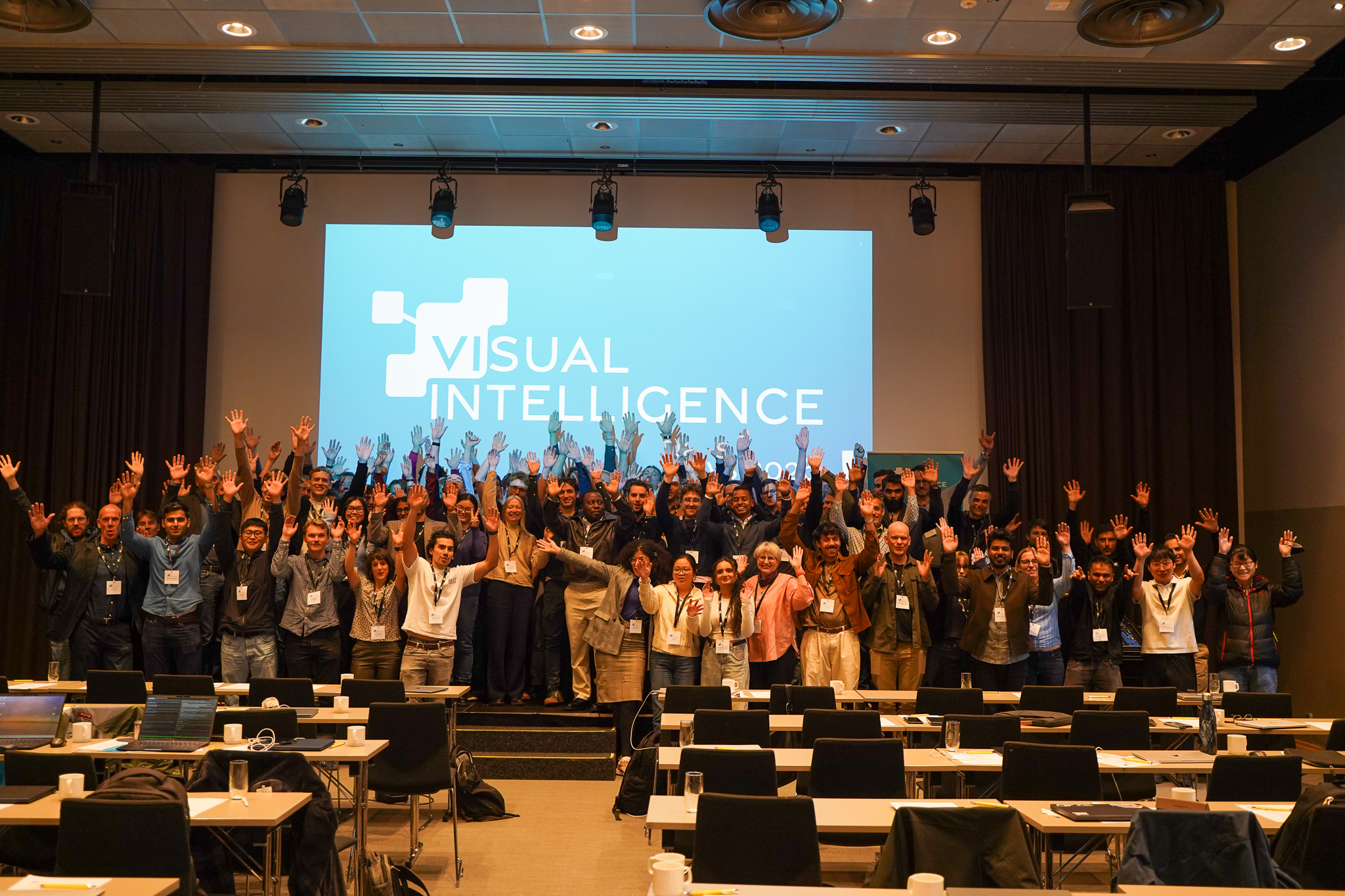
100 researchers, user partners and invited guests gathered in Oslo, Norway for the Visual Intelligence Days: the centre's annual conference for sharing knowledge and updates on the latest research and innovations.
Why should we think twice before using AI as a therapist, romantic partner, or to help out with homework? AI expert Elisabeth Wetzer explains (Popular science article on sciencenorway.no / forskning.no).
Associate Professor Kristoffer Wickstrøm was interviewed by Norsk rikskringkasting (NRK) about the ongoing debate on whether to halt current and future AI development
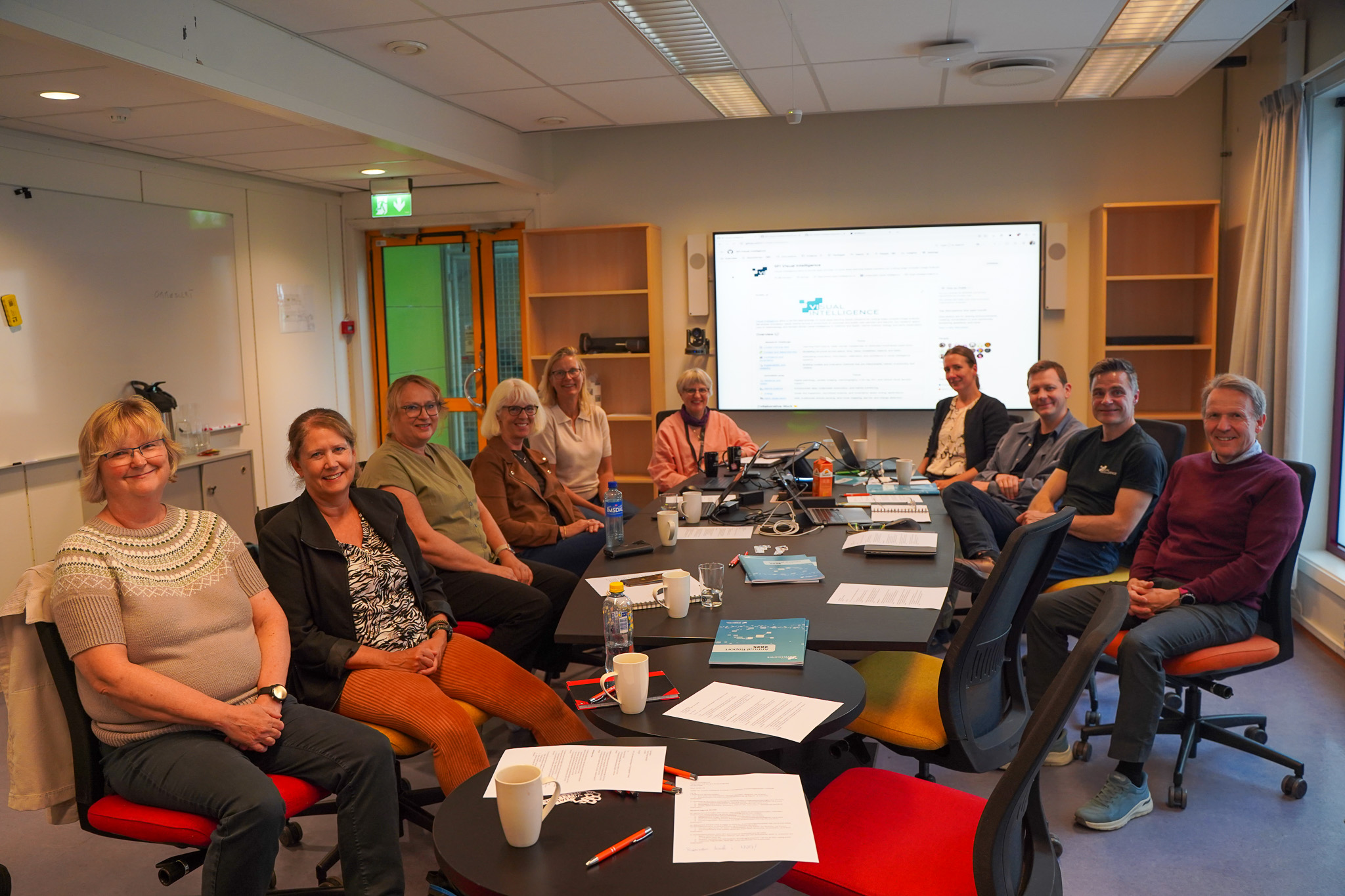
Representatives from the Research Council of Norway came to Visual Intelligence's hub in Tromsø for a site visit meeting.
.jpg)
Harald Lykke Joakimsen, a PhD Candidate at Visual Intelligence's hub in Tromsø, will compete in Forsker Grand Prix: Norway's national popular science competition.
.png)
Congratulations to Centre Director Robert Jenssen, who was appointed as a new fellow of the International Associaton for Pattern Recognition (IAPR).
.jpg)
Why should we think twice before using AI as a therapist, romantic partner, or to help with homework? AI expert Elisabeth Wetzer explains.
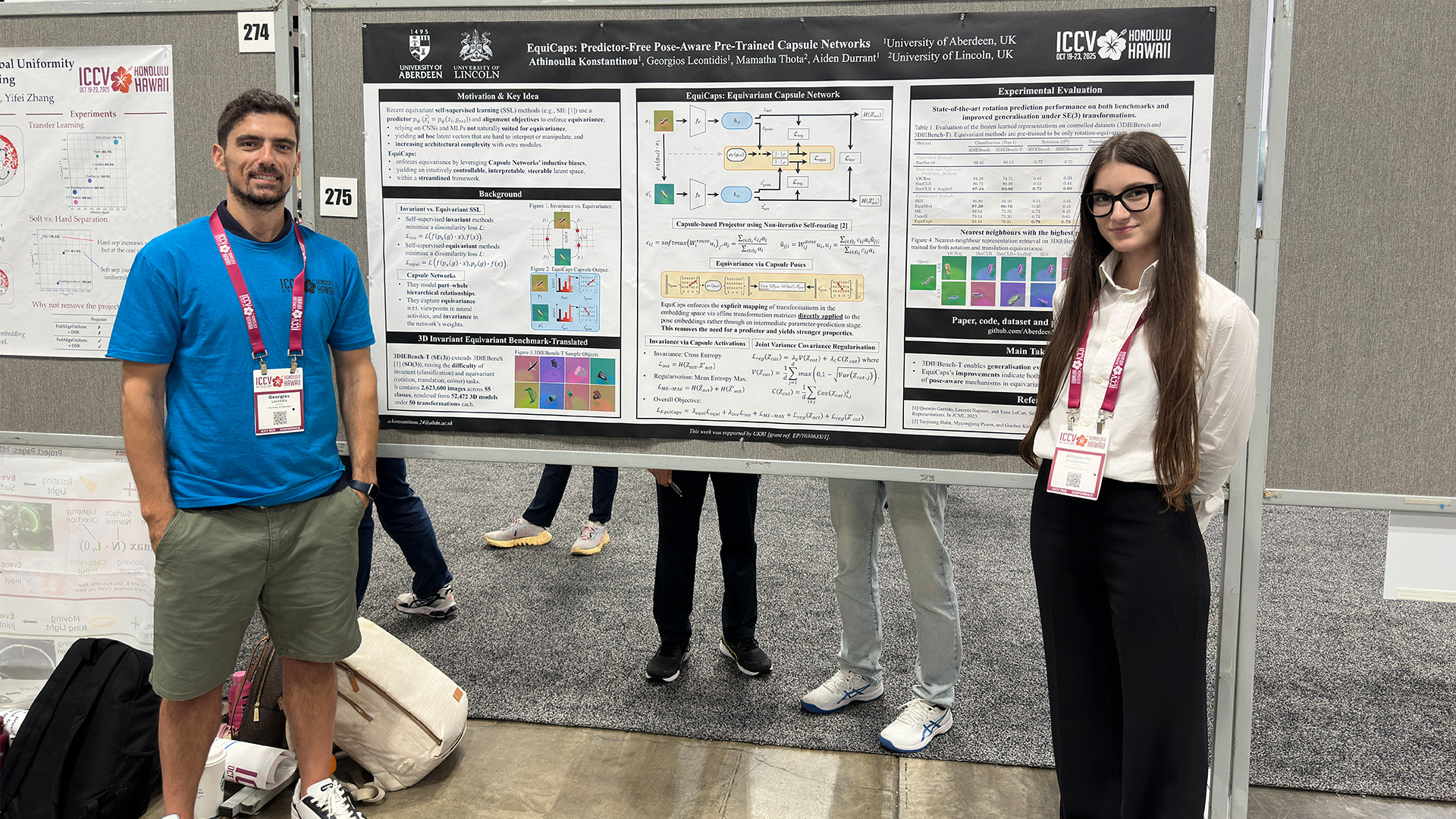
Athinoulla Konstantinou is a PhD student at the University of Aberdeen. She visited Visual Intelligence's hub in Tromsø to work with equivariant modelling.
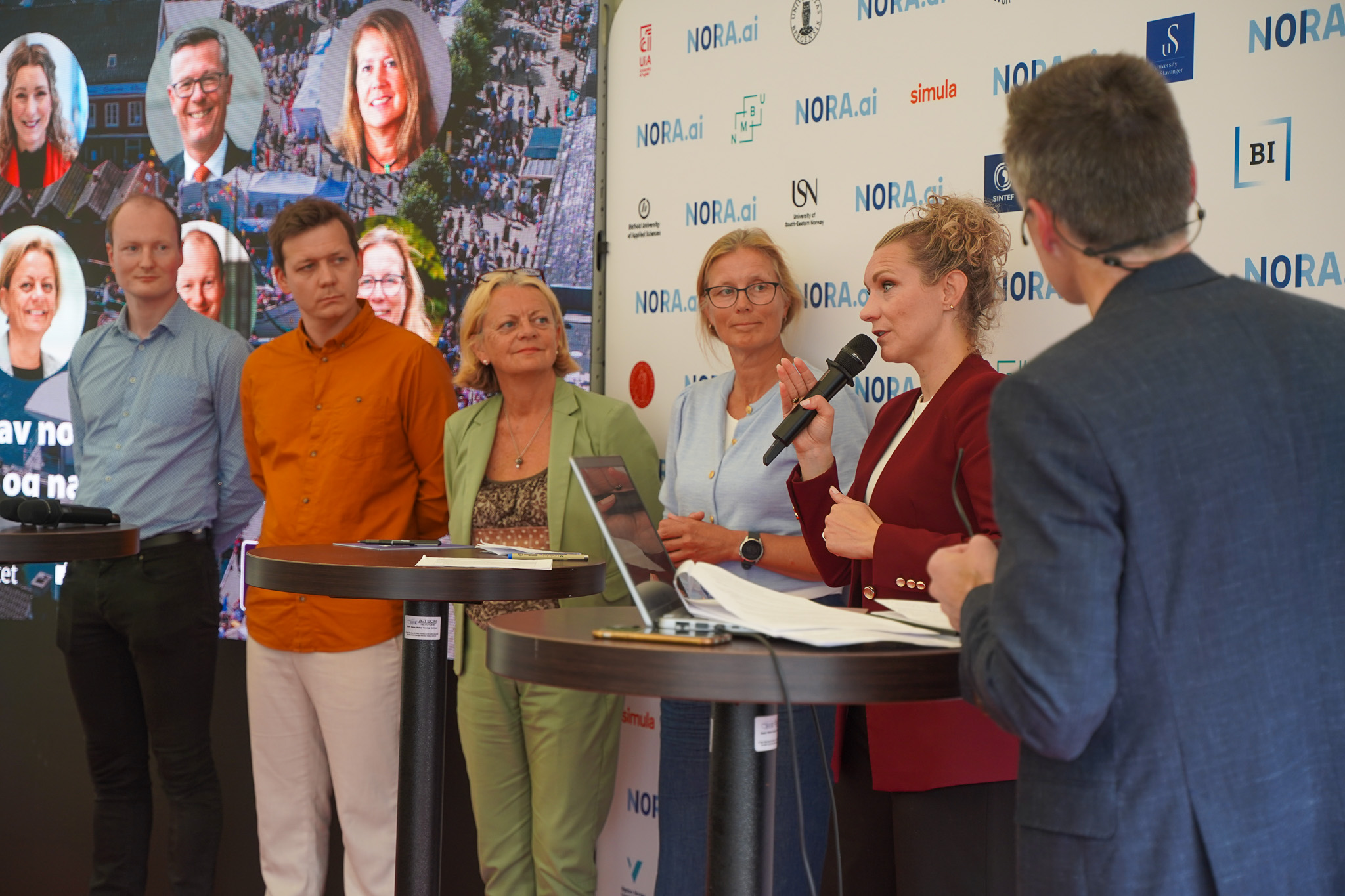
Visual Intelligence gathered experts from Norwegian politics, research council, industry, the public sector, and academia to discuss the value of Norwegian AI competence and Norwegian-developed models.

Visual Intelligence researchers are attending two AI-oriented events at Arendalsuka 2026: Norway's largest annual political festival.
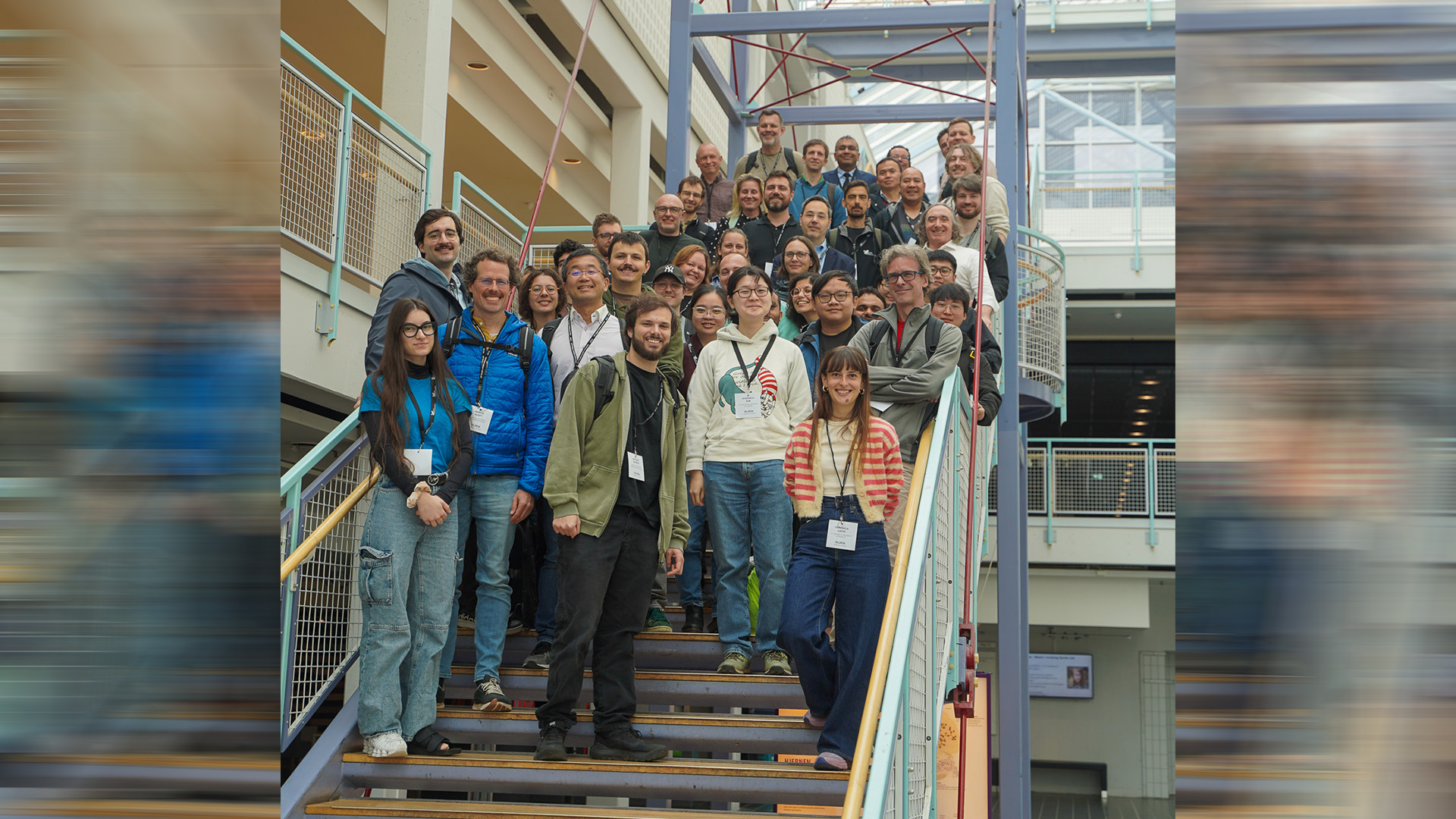
Visual Intelligence hosted over 45 international AI researchers for the DL2026 workshop at UiT The Arctic University of Norway.

Visual Intelligence will be well represented at MICCAI 2026, one of the leading AI conferences on medical imaging and computer assisted intervention, with two accepted research papers.
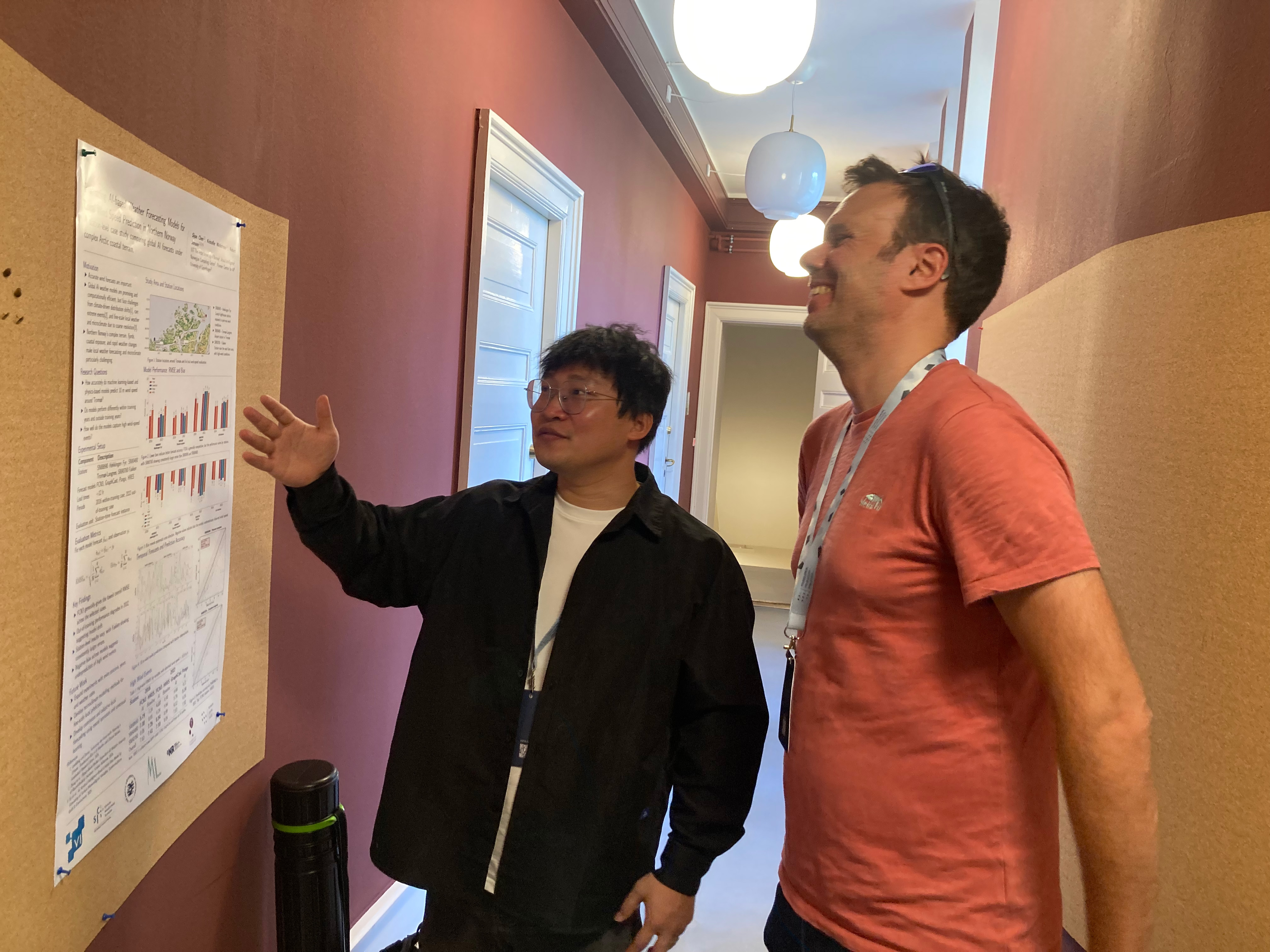
Visual Intelligence co-organized and attended the "Foundations of Arctic AI and Generative Forecasting": an inaugural workshop in the P1 Arctic AI program.
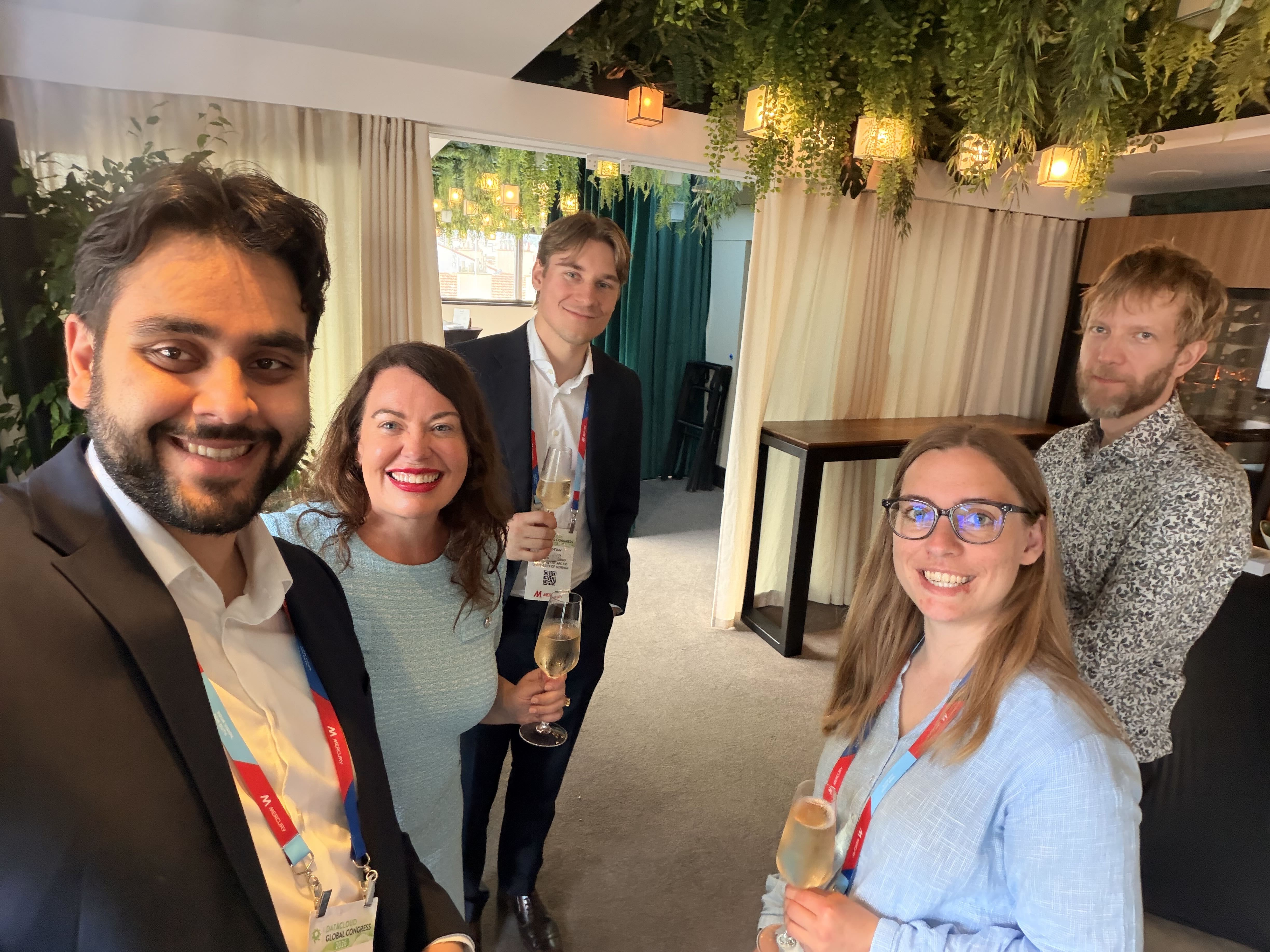
PhD Candidates Solveig Thrun and Christian Salomonsen attended the Datacloud Global Congress' Talent in Tech programme, which invited emerging talent to a unique programme designed to inspire, educate, and connect young professionals with senior leaders from global tech giants.
We warmly welcome Georgios Leontidis as a new Professor at SFI Visual Intelligence's hub at UiT The Arctic University of Norway.
Centre Director Robert Jenssen was interviewed by Norsk rikskringkasting (NRK) about the Japan-Norway AI Innovation Forum in Tokyo, Japan.
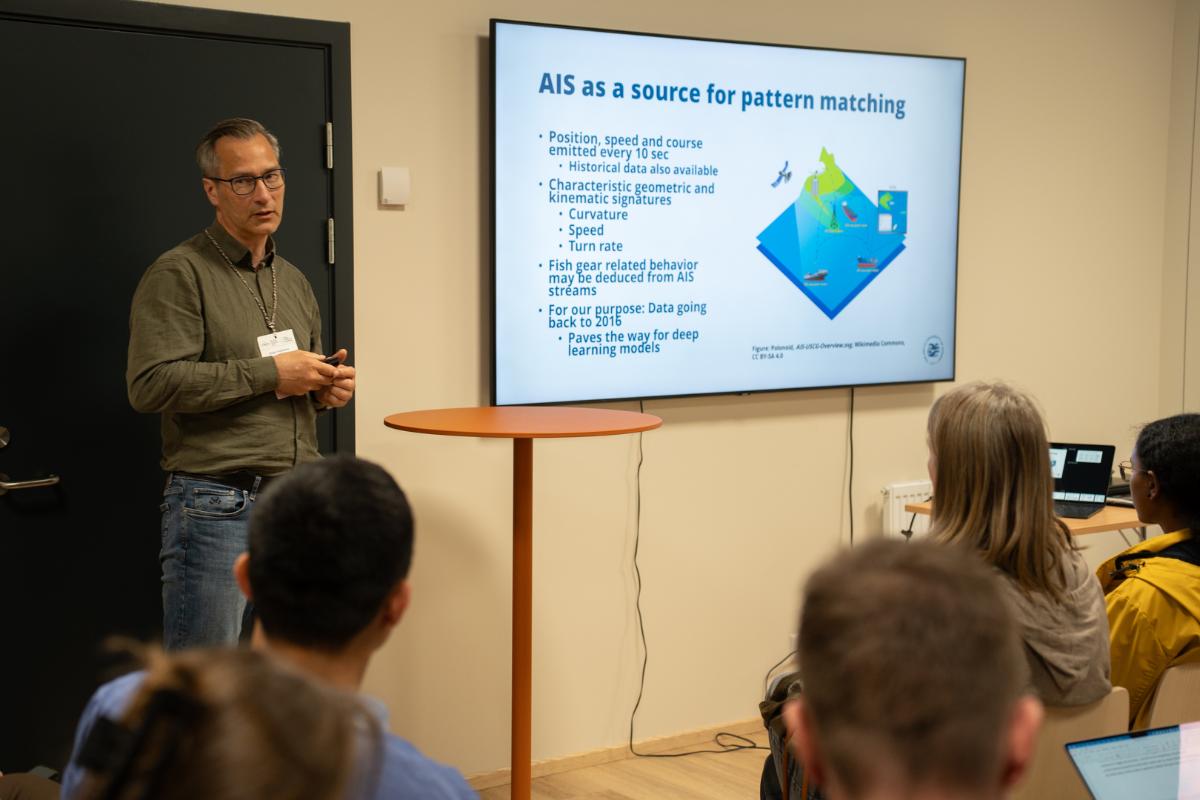
En ny AI-løsning utviklet ved UiT kan gjøre det enklere å avdekke feilrapportering og ulovlig fiske. Nå skal Norges Råfisklag teste teknologien i praktisk bruk (News article on kystogfjord.no)