


We develop deep learning models and applications for monitoring and detecting energy resources.
Subsurface data, such as seismic data and borehole imagery, is crucial for oil and gas exploration. However, the amount of data is huge, and analyzing it is a time-intensive and arduous task.
Automatic analysis of subsurface data can lead to more efficient and precise oil and gas exploration, as well as save significant amounts of time and resources.
Our deep learning research in the energy domain has contributed to numerous innovations for automatic analysis of digital subsurface data, including methods for:
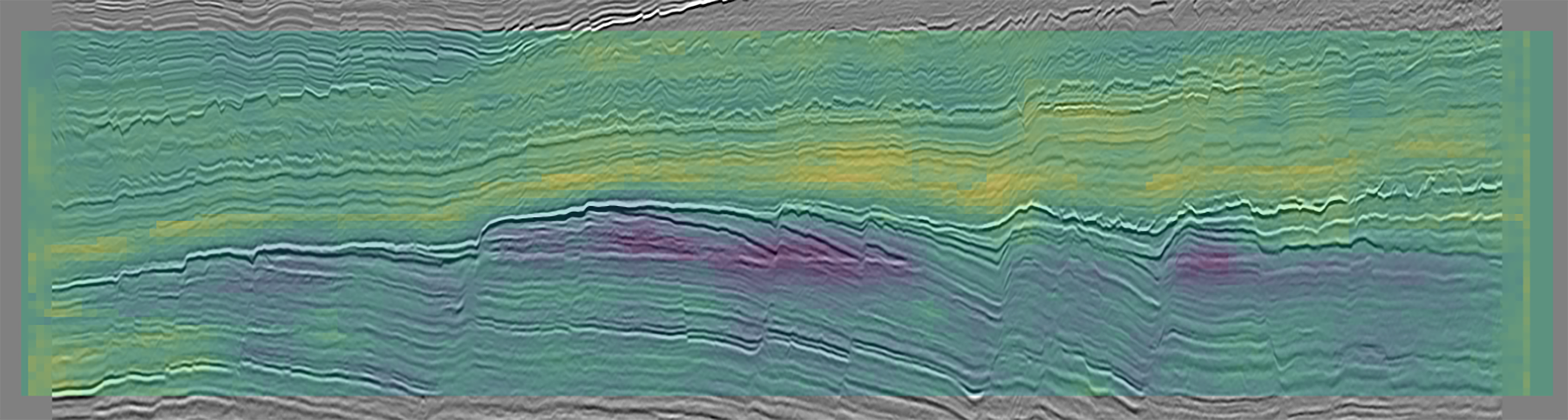
This method maps out and compares geological structures and objects in 3D seismic data, providing geologists with a helpful tool when mapping structures within seismic volumes, such as potential hydrocarbon reservoirs.
This method enables interactive search and segmentation of seismic data based on pre-trained visual image transformers and a slim few-short learning pipeline
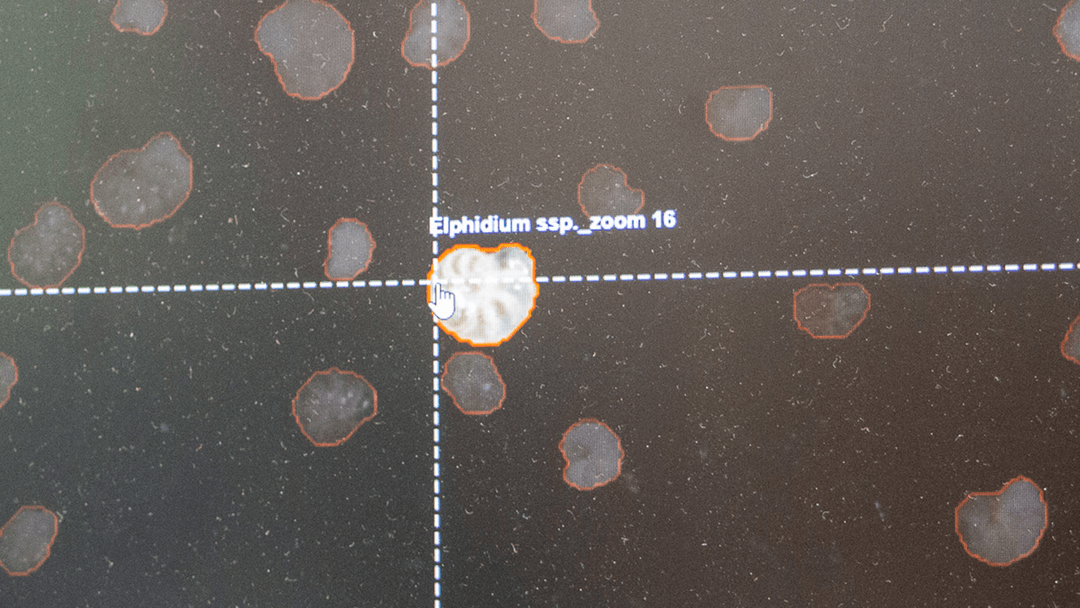
The model represents an efficient pipeline for detecting and classifying microfossils from microscope images, giving geologists valuable information about suitable areas for carbon capture and storage and the Earth’s past climate. Read more.
This open-source foundation model, dubbed the NCS model, represents an efficient approach for interpreting various types of geological data, providing geologists with a useful tool for understanding the subsurface. Read more.
This method illustrates how deep learning can ahieve human-level performance in estimating the uncertainty when classifying foraminifera, shelled microorganisms that are abundant in the Earth’s seabed. Read more.
This method uses self-supervised learning to connect samples of seismic tiles into super tiles.
The above methods were developed in close collaboration with user partner Equinor.
The amount and quality of labelled training data is a significant challenge in the energy domain. The annotation quality for a particular seismic task is often unknown and its interpretations are generally incomplete. Our innovations tackle these research challenges in different ways
For instance, the seismic CBIR system includes a self-supervised framework for explaining embeddings, increasing the system’s reliability and trustworthiness.
Our microfossil classification pipeline offers a novel way for automatically extracting features via self-supervision, making this and similar models less reliant on labelled data. Uncertainty estimation constitute a core part of this pipeline, contributing to improved performance.

Our seismic CBIR system and microfossil pipline as closely connected method-wise and benefit from each other. Both include components from a pre-trained visual image transformer using self-supervised learning, as well as a CBIR component which explores and analyses the resulting embedding space.
Self-supervised learning is a general topic that encompasses all four innovation areas. For example, the seismic CBIR system shares many similarities with a VI-developed framework for CT image retrieval using self-supervised learning.
By authors:
Johansen, Thomas Haugland; Sørensen, Steffen Aagaard; Møllersen, Kajsa; Godtliebsen, Fred
Published in:
Applied Sciences 2021 ;Volum 11.(14)
on
July 16, 2021