

August 25, 2026
We propose the FC-DLIF model, which offers a non-invasive alternative that is flexible to temporal shifts and different scan durations.
By Christian Salomonsen, Doctoral Research Fellow at SFI Visual Intelligence
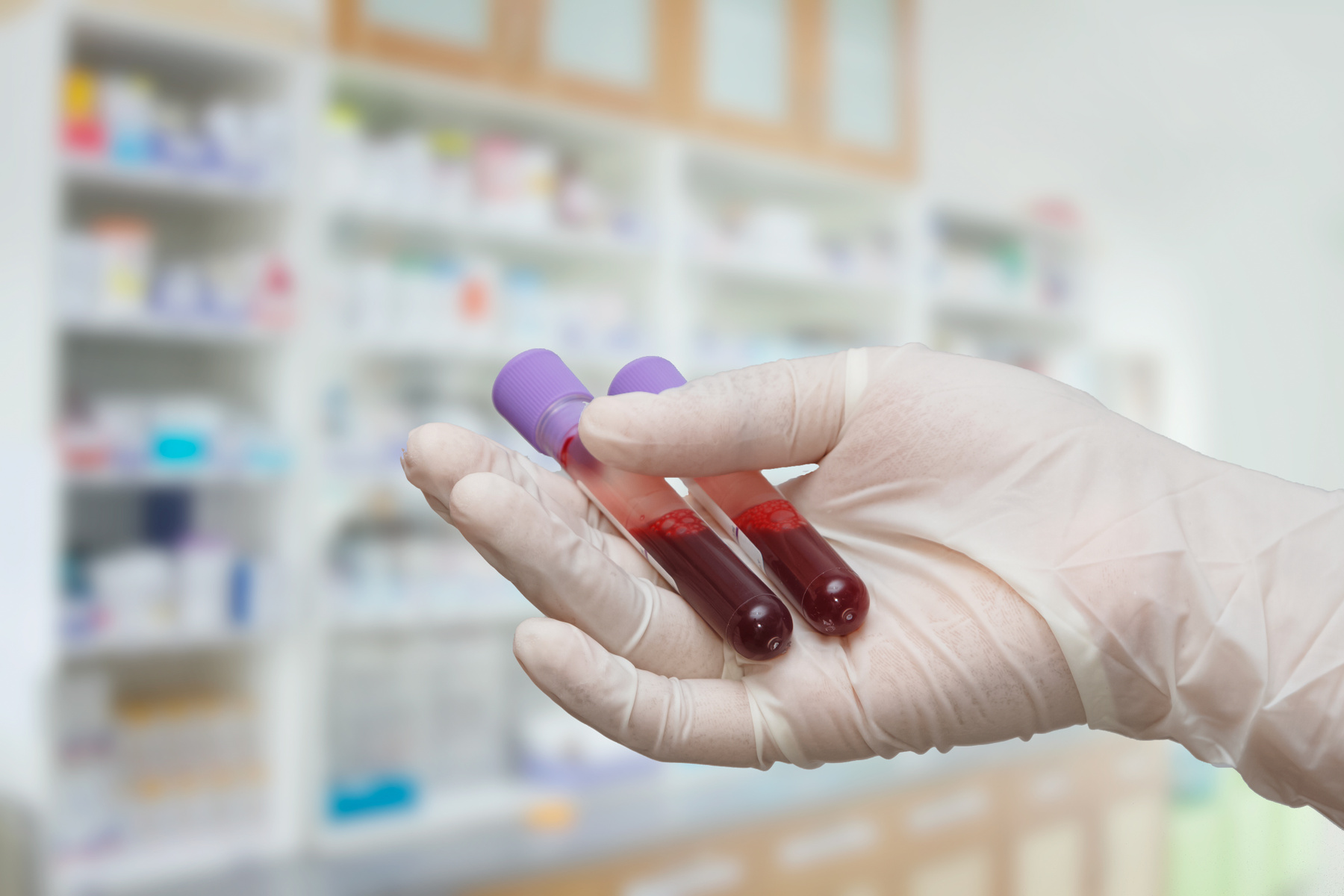
Dynamic PET imaging offers valuable insights into metabolic processes such as cancer tumor growth, organ activity and treatment response in patients. The imaging procedure involves injecting the patient with a radioactive tracer that accumulates in the body, while the PET scanner constructs a three-dimensional video of how organs and tissue interact with the tracer. To accurately determine the concentration of the radiotracer in blood and tissue, surgical arterial cannulation is done during the PET scan to determine the “arterial input function”.
In humans, the arterial sampling is both painful and can last for up to 80 minutes, and increases the risk for infections and requires laborious work by medical staff. Our study focuses on mice, where the arterial cannulation presents serious limitations. Mice arteries are around 0.5 mm wide, making the procedure much more difficult and time-consuming, while having a limited amount of blood to sample. The procedure is also terminal for mice, making long-term studies impossible.
Alternatives to blood sampling exist, such as estimating it by looking at the images at a reference region, but suffer from inaccuracies when the image resolution is coarse.
We propose a deep learning-based method for predicting the arterial input function directly from the dynamic PET scan using a fully convolutional neural network, effectively removing the need for arterial blood sampling. A benefit with our approach compared to recent similar approaches is its ability to handle scans taken with different protocols, such as varying scan durations, and tracer injection timing, making it versatile and robust over diverse settings.
Our method first treats each time frame in the PET scan as independent samples, extracting spatial features using shared weights. The spatial feature extractor compresses each input image into a compact curve representation for each frame, capturing regional tracer distribution. Each spatial feature is passed into a temporal feature extractor that sequentially processes over time using one-dimensional convolutions, learning temporal dynamics.
The network is trained end-to-end on dynamic PET data with an accompanying arterial input function ground truth, achieving state-of-the-art performance on its task. Our two-part approach allows us to easily investigate the compact spatial features and show their alignment with respect to time, providing interpretability in deeper layers of the model.
Manual cannulation is invasive, labor-intensive and carries an infectious risk, being especially problematic in small-animal studies. By removing the strict requirement for arterial sampling, we enable longitudinal studies in mice with increased robustness and versatility, without compromising predictive performance. Our approach has the potential to significantly reduce the burden on patients and clinical staff, making dynamic PET imaging more accessible and practical in both research and clinical settings, while also improving the welfare of laboratory animals and enabling more comprehensive long-term studies.
March 9, 2026
Christian Salomonsen, Luigi T. Luppino, Fredrik Aspheim, Kristoffer Wickstrøm, Elisabeth Wetzer, Michael Kampffmeyer, Rodrigo Berzaghi, Rune Sundset, Robert Jenssen & Samuel Kuttner
Background Dynamic positron emission tomography (PET) and kinetic modeling are pivotal in advancing tracer development research in small animal studies. Accurate kinetic modeling requires precise input function estimation, traditionally achieved through arterial blood sampling. However, arterial cannulation in small animals, such as mice, involves intricate, time-consuming, and terminal procedures, precluding longitudinal studies. This work proposes a non-invasive, fully convolutional deep learning-based approach (FC-DLIF) to predict input functions directly from PET imaging data, which may eliminate the need for arterial blood sampling in the context of dynamic small-animal PET imaging. The proposed FC-DLIF model consists of a spatial feature extractor that acts on the volumetric time frames of the dynamic PET imaging sequence, extracting spatial features. These are subsequently further processed in a temporal feature extractor that predicts the arterial input function. The proposed approach is trained and evaluated using images and arterial blood curves from [18F]FDG data using cross validation. Further, the model applicability is evaluated on imaging data and arterial blood curves collected using two additional radiotracers ([18F]FDOPA, and [68Ga]PSMA). The model was further evaluated on data truncated and shifted in time, to simulate shorter, and shifted, PET scans.
Results The proposed FC-DLIF model reliably predicts the arterial input function with respect to mean squared error and correlation. Furthermore, the FC-DLIF model is able to predict the arterial input function even from truncated and shifted samples. The model fails to predict the AIF from samples collected using different radiotracers, as these are not represented in the training data.
Conclusion Our deep learning-based input function offers a non-invasive and reliable alternative to arterial blood sampling, proving robust and flexible to temporal shifts and different scan durations.


