


We develop more efficient deep learning methodsfor diagnosis support and decision support for diseases such as cardiovasculardiseases and cancer.
In recent years, research on deep learning has contributed to significant progress for aiding diagnostic and decision support, treatment planning and healthcare resource allocation. This is primarily done by extracting relevant information from medical data, as well as clinical data sources such as time series measurements or radiology reports.
However, analyzing medical data is a challenging and time-consuming task. Our innovations in medicine and health domain aim to create more efficient diagnostic and decision support tools for diseases like cardiovascular diseases and cancer by using deep learning.
By developing well-performing deep learning models in the medical domain, we assist healthcare professionals by increasing certainty and streamlining analyses of medical images.

Our deep learning research in the medical domain has contributed to several innovations which aim to assist healthcare professionals in the clinical workflow, including methods for:
This method can measure the left ventricle more accurately and consistently, providing quicker results for patients and less workload for doctors. Read more.
This method demonstrates consistent improvements in predicting breast cancer risk up to five years in advance, paving the way for more personalized screening, earlier identification of high risk patients, and more efficient use of screening resources. Read more.
The model represents a resource-efficient deep learning pipeline for estimating TIL density in this lung cancer type, which could lead to faster treatment of lung cancer, less costly examinations, and more personalized cancer treatment. Read more.
This model estimates the AIF directly from PET data, providing a non-invasive and cost-effective alternative to arterial blood sampling. Read more.
The model proposes a new approach to augment CT images with the purpose of detecting lesions in the liver, and is currently being incorporated for prospective studies.
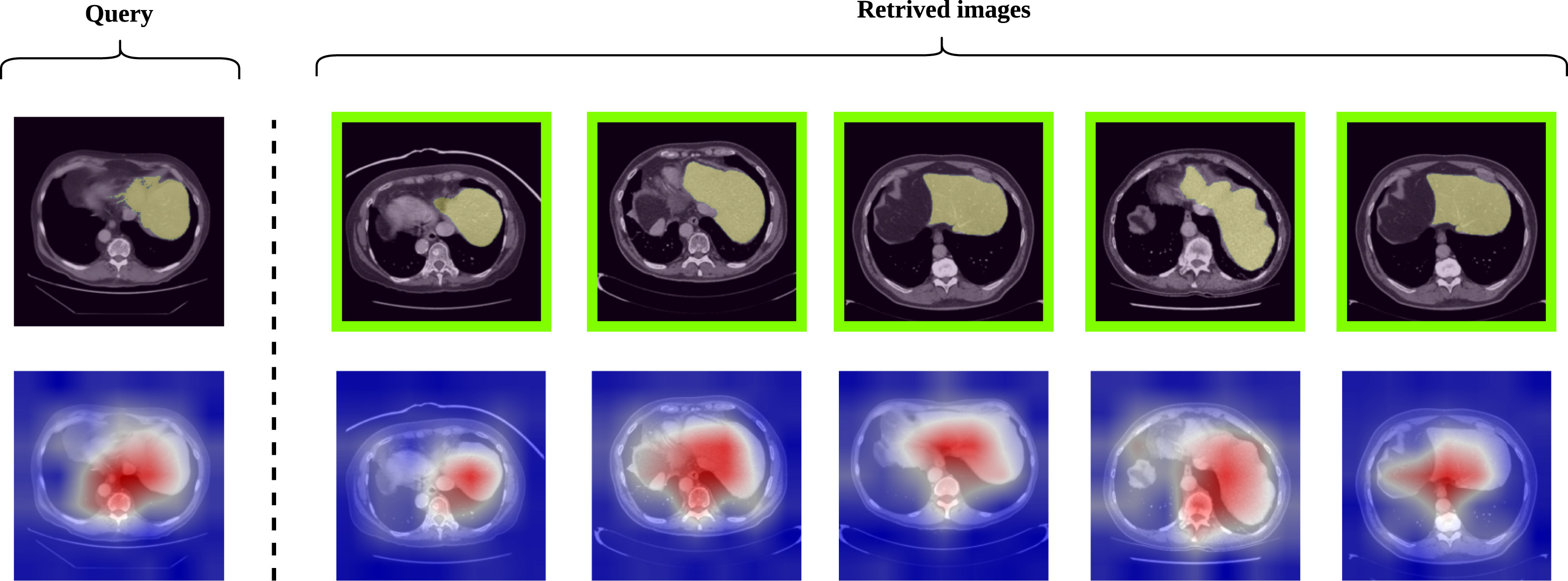
This system automatically retrieves CT images of the liver from a large database, without the need for manual and time-consuming searches. Read more.
.webp)
Developing deep learning methods for medical purposes involve several research challenges, such as the availability of training data, estimating the models’ confidence and uncertainty, as well as their lack of explainability and reliability. The aforementioned innovations address these challenges in multiple ways.
For instance, the methods’ ability to learn from limited data is at the core of the data augmentation technique for CT images. The method also leverages context and dependicies by exploiting knowledge about the signal-generating process.
Explainability and reliability constitute a significant part of our method for detecting cancer in mammography images, as well as our content-based CT image retrieval method.

When developing deep learning solutions for medical and health-related challenges that our user partners face, it is important to transfer knowledge and methodologies both within and across innovation areas. Our proposed medical methods synergize well with our other three innovation areas.
Our semi-automatic landmark prediction model depends on context provided by echocardiography scan lines. This is inspired by centre-developed methods which leverage anatomical knowledge, such as for detecting cancer in mammography images.
Self-supervised deep learning, which is a staple of our medical innovations, has also proven useful for addressing research challenges in marine, energy, and earth observation domains. For example, our CT image retrieval framework shares similarities with a content-based image retrieval system for seismic data.
By authors:
Corbetta, Valentina,Dijkstra, Floris Six,Beets-Tan, Regina,Kervadec, Hoel,Kristoffer Wickstrøm,Silva, Wilson
Published in:
2025 IEEE/CVF International Conference on Computer Vision Workshops (ICCVW), Honolulu, HI, USA, 2025, pp. 7371-7380
on
October 19, 2025
By authors:
Thea Brüsch, Kristoffer Wickstrøm, Mikkel N. Schmidt, Robert Jenssen, Tommy Sonne Alstrøm
Published in:
Explainable Artificial Intelligence. xAI 2025. Communications in Computer and Information Science, vol 2579. Springer
on
October 14, 2025
By authors:
Vilde Schulerud Bøe, Andreas Kleppe, Sebastian Foersch, Daniel-Christoph Wagner, Lill-Tove Rasmussen Busund, Adín Ramírez Rivera
Published in:
MICCAI Workshop on Computational Pathology with Multimodal Data (COMPAYL), DAEJEON, South Korea, 2025
on
September 27, 2025
By authors:
Zijun Sun, Solveig Thrun, Michael Kampffmeyer
Published in:
Medical Image Computing and Computer Assisted Intervention – MICCAI 2025. MICCAI 2025. Lecture Notes in Computer Science, vol 15974. Springer
on
September 18, 2025
By authors:
Durgesh Kumar Singh, Qing Cao, Sarina Thomas, Ahcène Boubekki, Robert Jenssen, Michael Kampffmeyer
Published in:
Simplifying Medical Ultrasound, ASMUS 2025 Workshop, MICCAI 2025
on
September 17, 2025