

The program will be available shortly. Please check back later.
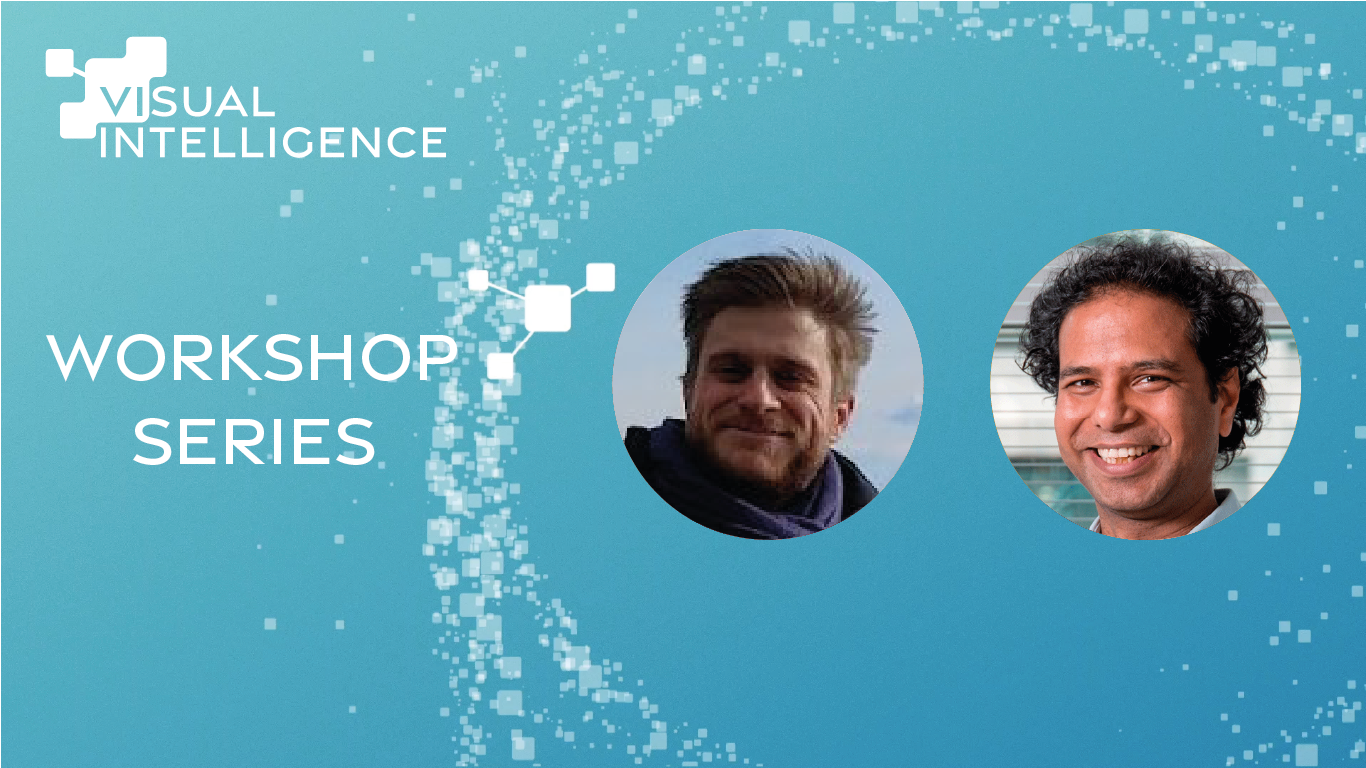
Presented by Emtiyaz Khan, Professor at TU Darmstadt and Timothée Lesort, Researcher at Imec AI.labs
Join us for a workshop on continual learning, exploring how AI systems can adapt efficiently as data, tasks, and environments evolve.
The workshop will feature two presentations covering the foundations of continual learning and new approaches to sustainable, rapid adaptation across applications
The 2nd part of the workshop transitions over to the bi-weekly Visual Intelligence seminar.
Presented by Timothée Lesort, Researcher at Imec AI.labs
Most machine learning systems are frozen when deployed. The world they are deployed in is not. Data shifts, new categories appear, and users change their habits, causing a model's performance to inevitably decay without updates. Continual learning tackles this problem: how to efficiently learn from a data stream without forgetting.This talk introduces the field. We will first cover the main data evolution scenarios. We will then survey the main families of continual learning approaches. We will finish with recent CL progress concerning foundation models and world models, and the open problems that stand between today’s research and reliable deployment.
Presented by Emtiyaz Khan, Professor at TU Darmstadt
AI training is so costly that most people cannot afford it, and it is clear that the inflated demand for data and compute is difficult to sustain. In this talk, I will discuss a sustainable alternative: adaptive intelligence systems that can learn quickly and continually through everyday interactions, just like humans and animals. I will present a new variational-Bayesian method called “posterior correction” that not only quantifies the interference between the old and new information, but can also reduce it by simply matching the old and new predictions, gradients, and Hessians. I will show several examples, including continual learning, federated learning, unlearning, and model merging, and some early results boosting LLM training. Overall, I will argue that quick adaptation has the potential to drastically reduce the cost of existing AI systems, and conclude with a proposal to accomplish this in the near future.
This workshop is open for members of the consortium. If you want to participate as a guest, please sign up.
Presented by Emtiyaz Khan, Professor at TU Darmstadt and Timothée Lesort, Researcher at Imec AI.labs
This workshop is open for members of the consortium. If you want to participate as a guest, please sign up.
Presented by Emtiyaz Khan, Professor at TU Darmstadt and Timothée Lesort, Researcher at Imec AI.labs
This workshop is open for members of the consortium. If you want to participate as a guest, please sign up.